 how-to
How to Sell Dental Gold for Cash: A Complete Guide
Table of Contents
- What Is Dental Gold Made Of
- Understanding Dental Gold Value and Karat
- How to Determine the Value of Your Dental Gold
- How to Sell Gold Safely
- Step-by-Step: How to Sell Dental Gold for Cash
- Where to Sell Dental Gold Safely
- Tax Implications and Environmental Impact
- Frequently Asked Questions
Last Updated: October 2, 2026
What Is Dental Gold Made Of
Dental gold is an alloy, not pure gold. It combines gold with other metals like copper, silver, and sometimes palladium to create a strong material that can withstand chewing and grinding forces in your mouth.
Gold content varies widely, crowns may contain 16-22 karat gold, while older bridges use lower karats mixed with base metals for durability and cost-effectiveness.
Dental gold includes crowns, bridges, inlays, onlays, and partial dentures. Even broken or damaged pieces retain value because they contain genuine gold that can be refined and reused.
Understanding Dental Gold Value and Karat
Your dental gold's value depends on its karat rating and the current spot price of gold.
How Karat Affects Price
Karat measures gold purity on a scale of 1 to 24. Higher karat means more pure gold content and higher value per gram:
- 24 karat = pure gold (rarely used in dental work)
- 22 karat = 91.7% pure gold (high-end dental crowns)
- 18 karat = 75% pure gold (common in bridges and crowns)
- 14 karat = 58.3% pure gold (older dental work)
- 10 karat = 41.7% pure gold (budget pieces)
A 22-karat dental crown is worth roughly twice as much as a 10-karat piece of the same weight. The remaining percentage in lower karats is base metal that has little to no resale value.
Don't worry about sorting pieces of different karats, a professional gold buyer uses certified testing equipment to identify the karat of each piece on the spot.
Spot Price and Market Value
The spot price is what gold trades for per troy ounce on the global commodities market, changing multiple times daily. Your dental gold's value is calculated by determining karat, weighing the gold, converting to troy ounces, multiplying by current spot price, and deducting a small refining fee. Most reputable buyers base offers on live spot price.
How to Determine the Value of Your Dental Gold
Before you sell, get a clear picture of what you're holding. This takes just a few minutes and removes guesswork from the process.
Visual Identification: What Dental Gold Actually Looks Like
Most people can't distinguish dental gold from base metal alloys by sight, but learning key visual markers helps you understand what you have.
Visual markers of dental gold:
- Color and shine, Warm, consistent yellow tone (whiter or grayer pieces are likely base metal)
- Markings, Karat stamps ("18K", "22K") on interior surfaces indicate gold content
- Weight, Gold is dense; crowns typically weigh 1-3 grams
- Discoloration, Real gold doesn't rust; green, black, or white oxidation indicates base metals
- Magnetic response, Dental gold is not magnetic; magnetic pieces contain iron or nickel
Common dental gold pieces:
- Crowns, Hollow caps; older crowns are yellow, newer ones may have gold backing
- Bridges, Multiple crowns fused together with gold framework underneath
- Inlays and onlays, Small, flat pieces often pure or high-karat gold
- Partial dentures, Metal framework with acrylic or ceramic teeth
- Posts and cores, Metal supports frequently made of gold or high-karat alloy
Using a Dental Gold Value Calculator
A dental gold value calculator estimates worth based on weight and karat: weigh your gold in grams, note the karat from markings or dental records, enter the current spot price, and the calculator shows an estimated range. Keep in mind this is a ballpark figure; actual offers depend on exact karat, weight, and current market conditions.
Getting an Appraisal
An appraisal from a professional buyer is the only way to know exact value. A proper appraisal includes visual inspection, testing with certified equipment, precise weight measurement, and a written quote based on current spot price. Most gold buyers offer free appraisals with no obligation to sell.
How to Sell Gold Safely
Safety matters when you're dealing with cash and valuable items. Follow these steps to protect yourself and ensure a smooth transaction.
Preparing Your Dental Gold: Hygiene and Handling
Don't clean your dental gold before selling. Certified testing equipment works on gold as-is, and cleaning can scratch delicate pieces or reduce value. Aggressive cleaning with chemicals can create sharp edges or damage thin plating.
Safe handling: Store in a clean, dry container, wash hands before handling, avoid touching testing surfaces, rinse visibly dirty pieces gently under cool water only, air-dry completely, and keep separate from other metals.
If mailing to a refinery: Use padded envelope or box, include detailed list of pieces and markings, use insured shipping, photograph pieces for documentation, and keep tracking number and receipt until payment is received.
Verify the Buyer's Credentials
Confirm buyers are legitimate: licensed to buy precious metals, transparent about testing and pricing, willing to provide written quotes, and have customer references. Avoid buyers who pressure you, refuse to explain their process, demand cash-only, or show up unannounced. Look for buyers who meet you at a location near a bank or police station for added security and convenience.
Testing and Verification
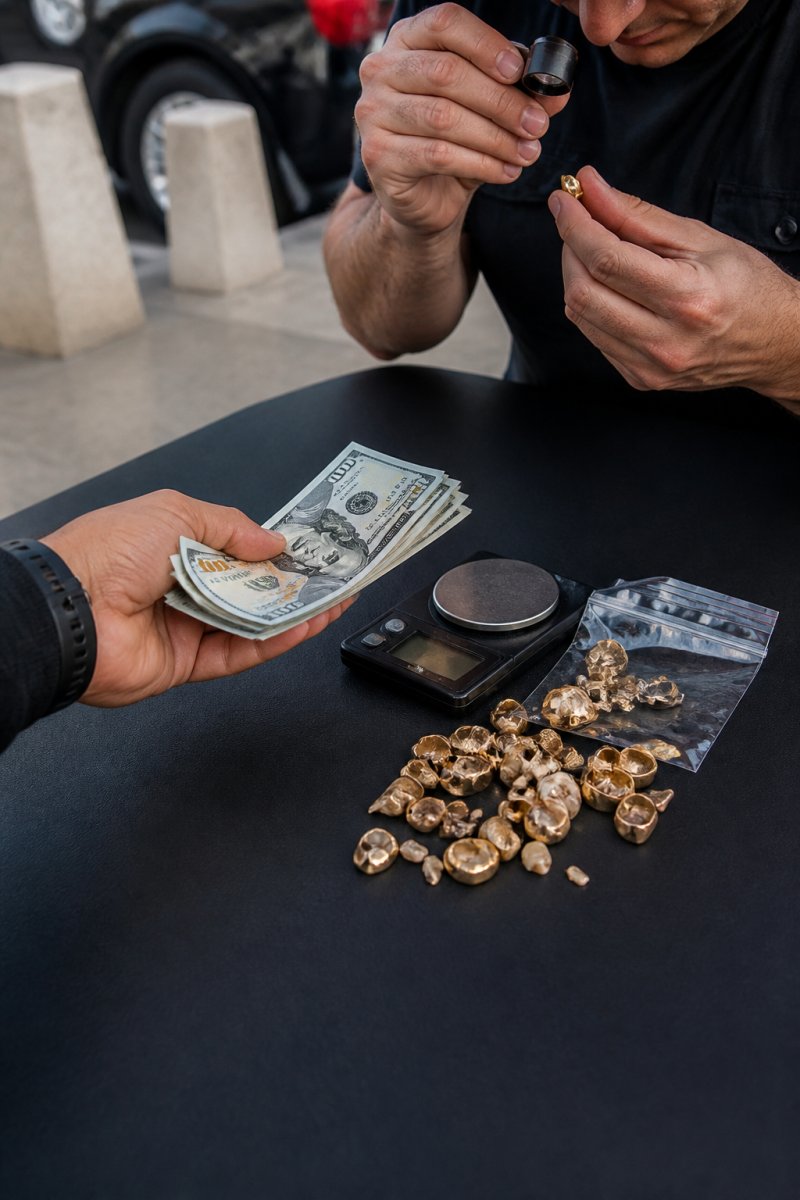
Legitimate buyers test your gold in front of you using certified equipment. You should be able to watch the entire process.
Common testing methods include:
- Acid testing, A small scratch is made, and acid is applied to confirm karat. This is destructive but accurate.
- X-ray fluorescence (XRF), Non-destructive testing that identifies karat without damaging the piece. This is the preferred method for valuable or delicate items.
- Weight and calculation, Precise scales measure the gold, then value is calculated based on karat and current spot price.
The buyer should explain each step as they go. If they won't let you watch or refuse to explain their process, that's a red flag.
Step-by-Step: How to Sell Dental Gold for Cash
Here's exactly what happens when you decide to sell.
Step 1: Gather and Organize Your Dental Gold
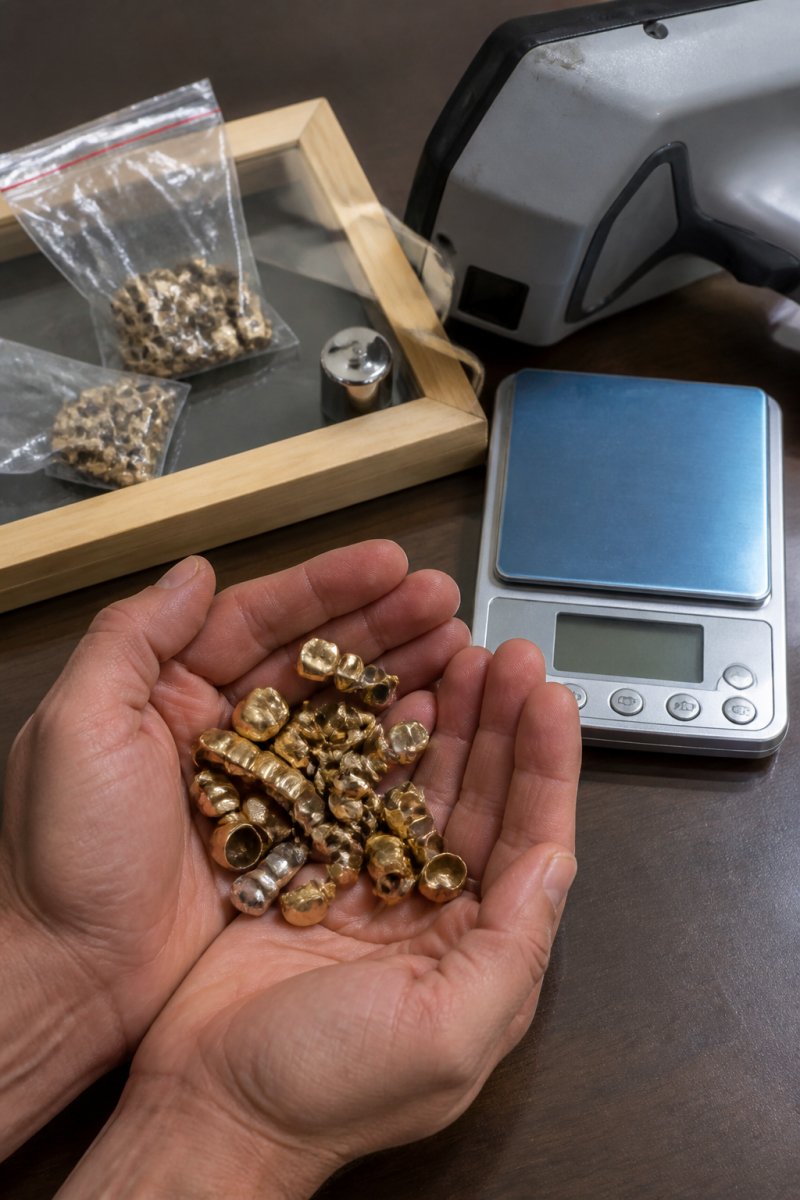
Pull together everything you want to sell. Check drawers, old jewelry boxes, and storage areas.
Include:
- Old crowns and bridges you've had replaced
- Broken dental work
- Partial dentures with gold components
- Any dental gold pieces you've inherited
Don't clean or polish the pieces. Buyers prefer to see them in their natural state. Damage doesn't matter, a broken crown is still worth its gold content.
Step 2: Research Your Options
You have three main paths to sell dental gold for cash:
Refineries accept bulk shipments and mail your gold in. Payment takes 1-2 weeks. Refineries typically require you to ship your gold and wait for payment.
Pawn shops buy gold on the spot but often lowball offers.
Step 3: Get an On-the-Spot Appraisal
Contact your chosen buyer and request an appraisal. Most reputable buyers offer this free and without obligation.
During the appraisal:
- The buyer tests each piece to confirm karat
- They weigh everything precisely
- They calculate the value based on current spot price
- They provide a written quote
- You can accept, decline, or ask questions
Step 4: Receive Your Payment
If you accept the offer, payment happens right away. Most buyers offer multiple payment options:
- Cash on the spot
- Bank transfer (Zelle, ACH)
- Check
- Your preferred payment method
Where to Sell Dental Gold Safely
You have options for where and how to complete the transaction. Each has pros and cons.
Refinery vs. Pawn Shop vs. Mobile Buyer
| Option | Best For | Speed | Price | Convenience |
|---|---|---|---|---|
| Refinery | Large quantities | 1-2 weeks | Fair market rate | Must ship |
| Pawn Shop | Quick cash | Same day | 10-20% below market | Visit in person |
| Mobile Buyer | Convenience and fair price | Same day | Market-based | Comes to you |
Refineries are ideal if you have a large amount of dental gold and don't mind waiting. They typically offer prices close to spot market because they process high volumes. The downside: you ship your gold (insured), wait for testing, and receive payment by check weeks later.
Tax Implications and Environmental Impact
Two often-overlooked aspects of selling dental gold deserve attention.
Tax Considerations
Consult a tax professional if you're selling a significant amount of gold. The tax impact depends on your specific situation.
Environmental Impact
Selling dental gold for cash doesn't have to be complicated or risky. The key is understanding what you have, knowing the current market value, and choosing a buyer you trust. Piratesfindsgold serves the San Diego area with certified testing equipment and transparent pricing based on the live spot market. We come directly to you and meet near a bank or police station for safety and convenience.
Frequently Asked Questions
How much is dental gold actually worth?
The value of dental gold depends on its karat weight, purity, and the current spot price of gold. Dental gold typically ranges from 10 to 22 karat. To find your specific value, gather your dental pieces, note the karat markings if visible, weigh them, and check the current spot price. A dental gold value calculator or professional appraisal provides an accurate estimate based on these factors.
What is the best way to sell dental gold for cash?
An effective approach combines convenience with fair pricing. Gather all your dental gold pieces, get them tested by a certified buyer using proper assay methods, and compare offers from multiple sources. Choose a buyer who prices against the live spot market, provides transparent testing, and offers on-the-spot payment. Mobile buyers who come to your location eliminate travel time while maintaining the security of a professional transaction.
How do I know if a gold buyer is giving me fair market value?
Fair market value is determined by the current spot price of gold minus a small refining fee. Legitimate buyers use certified testing equipment to verify karat and weight, then calculate your payment based on live market rates. Ask the buyer to explain their testing method and pricing formula. Reputable buyers welcome questions and operate with complete transparency about how they arrive at their offer.
Can I sell broken dental gold, or does it need to be intact?
Broken, damaged, or incomplete dental gold is absolutely worth selling. Refining facilities melt down all dental scrap, crowns, bridges, fillings, and broken pieces, and extract the pure gold content. The condition doesn't affect the value; only the karat purity and total weight matter. Even a single broken crown or partial bridge has real value based on its gold content.