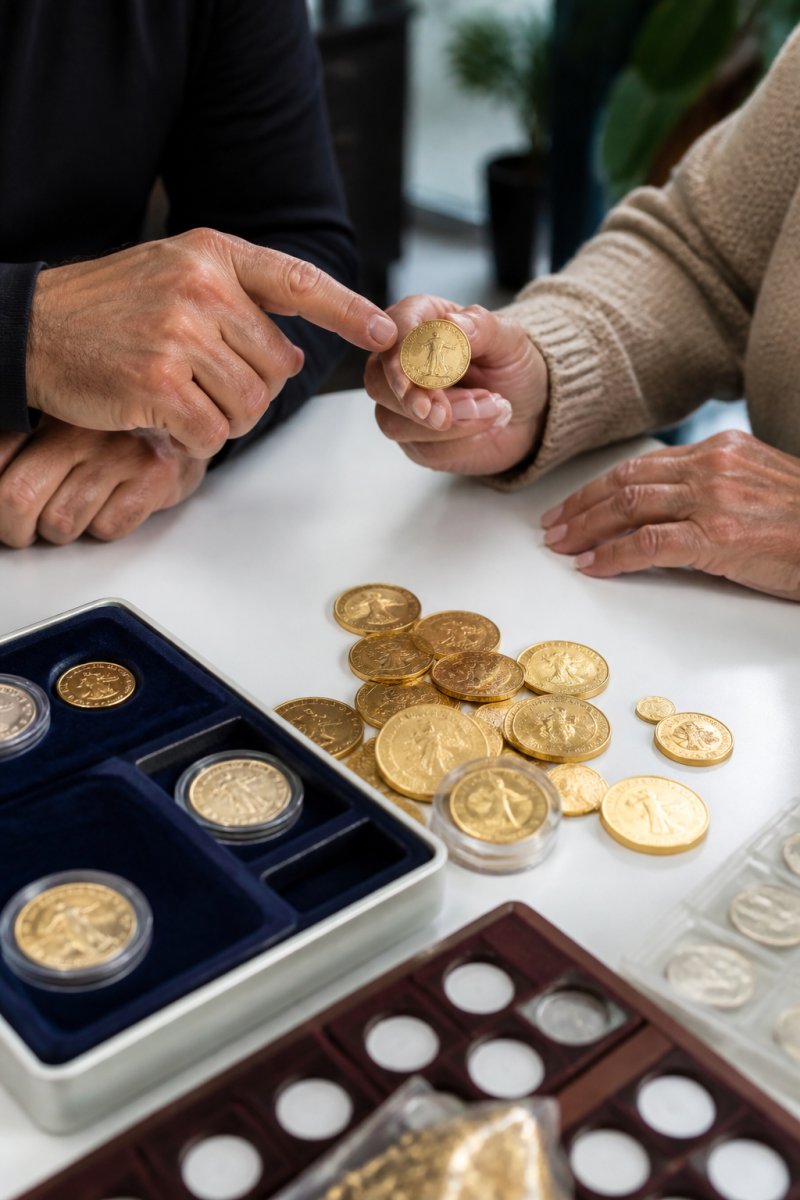
 how-to
How to Sell Inherited Gold Coins: A Step-by-Step Guide
Table of Contents
- Step 1: Secure and Inventory Your Inherited Gold Coins
- Step 2: Understand Numismatic vs. Bullion Value
- Step 3: Get a Professional Gold Coin Appraisal Near You
- Step 4: Understand Tax Implications of Selling Inherited Gold
- Step 5: Choose Where to Sell Your Inherited Gold Coins
- Step 6: Complete the Sale and Verify Fair Market Value
- Avoid Common Mistakes When Selling Inherited Gold Coins
- Frequently Asked Questions
Last Updated: September 23, 2026
Step 1: Secure and Inventory Your Inherited Gold Coins
Secure your inherited gold coins immediately in a safe, safety deposit box, or home safe. Create a detailed inventory documenting coin type, year minted, condition, mint marks, quantity, and photos from multiple angles. This protects you and gives appraisers a clear picture of your collection.
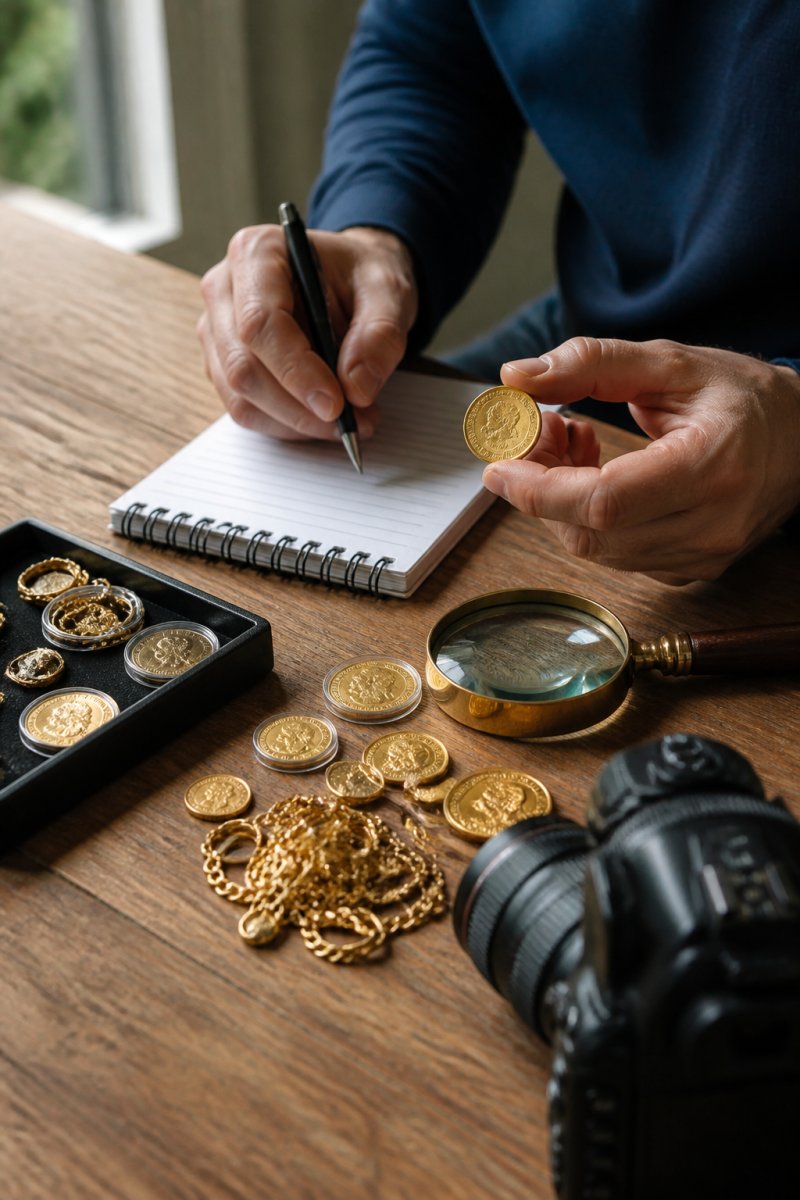
Store photos and inventory separately from the coins, keep copies in a safe deposit box and cloud storage for insurance and proof of ownership.
Step 2: Understand Numismatic vs. Bullion Value
Your coins fall into two categories: numismatic (value from rarity, age, condition, and collector demand) and bullion (value based solely on gold content and spot price). A rare key-date coin can be worth far more than its gold weight alone, while a common bullion coin is worth only its metal content.
A rare key-date coin in mint condition can be worth 5 to 10 times its gold weight value, while common coins are worth primarily their gold content. Professional grading (PCGS, NGC) commands higher prices. Most collections mix bullion and numismatic pieces.
A professional appraiser will separate numismatic from bullion value, identifying which coins command collector premiums, critical for your selling strategy.
Step 3: Get a Professional Gold Coin Appraisal Near You
Get a professional appraisal before selling. It establishes fair market value and protects you when negotiating with buyers.
What a Professional Appraisal Includes
A qualified appraiser will examine each coin for authenticity, grade condition using industry standards, research comparable sales via PCGS and NGC databases, calculate bullion value, identify mint marks and collector factors, and provide a written report organized by numismatic versus bullion value for tax purposes.
How to Find and Vet an Appraiser
Look for appraisers credentialed by the American Society of Appraisers (ASA), Professional Numismatists Guild (PNG), or International Society of Appraisers (ISA). Verify credentials through their directories.
Ask appraisers about their experience with inherited collections, credentials, testing equipment, valuation methodology, written reporting, and fee structure. Reputable appraisers charge hourly or flat fees, not percentages of value.
Avoid appraisers who offer to buy your coins, charge percentage-based fees, lack verifiable credentials, or rush the process without written documentation.
The Appraisal Process: What to Expect
A thorough appraisal takes 1-3 hours and includes inspection under magnification, weight and purity testing, research of comparable sales, separation of numismatic from bullion value, and a detailed written report with photographs and valuations.
Cost and Timeline
Request fee structure upfront. Written appraisal reports typically take 1-2 weeks after the in-person evaluation.
Getting Multiple Appraisals
Obtain at least two independent appraisals for significant collections. If valuations differ by more than 15%, ask each appraiser to explain their methodology. Multiple appraisals protect you from undervaluation.
Keeping the Appraisal Report
Store your appraisal report securely for tax purposes (establishes cost basis), insurance claims, buyer negotiations, and estate documentation.
Step 4: Understand Tax Implications of Selling Inherited Gold
Selling inherited gold coins has tax consequences. Understanding these upfront prevents surprises later and ensures you meet all reporting obligations.
The Step-Up Basis: Your Tax Advantage
The "step-up in basis" is a major tax benefit: inherited assets are valued at fair market value on the date of death, not the original purchase price. If coins worth $10,000 at death sell for $12,000, you owe tax only on the $2,000 gain. This applies automatically, but you must document the date-of-death value with a professional appraisal.
Capital Gains Tax Rates on Collectible Gold
Gold coins are taxed as collectibles: short-term gains (under one year) are taxed as ordinary income (up to 37%), while long-term gains (over one year) are taxed at a maximum of 28%, higher than regular long-term capital gains (15-20%). Hold coins for at least one year if possible to qualify for the lower rate.
Documentation You Must Keep
Keep detailed records for seven years: date of death, date-of-death appraisal, sale date, sale price, itemized breakdown by coin, buyer information, fees, and receipts. The IRS can audit back seven years.
Reporting Large Cash Transactions: IRS Form 8300
If you receive more than $10,000 in cash, the buyer must file IRS Form 8300 within 15 days, this is a reporting requirement, not a tax. The threshold applies to cash, cashier's checks, and money orders, not bank transfers. Ask buyers about payment methods to ensure compliance and get a clear paper trail.
Reporting the Sale on Your Tax Return
Report the sale on Schedule D (Capital Gains and Losses) of Form 1040, listing sale date, coin description, cost basis, sale price, and gain or loss. Consult a tax professional if unsure, the cost is often less than an audit or penalty.
When to Consult a Tax Professional
Consider speaking with a CPA or tax attorney before you sell if:
- The collection is worth more than $50,000
- You inherited coins as part of a larger estate with complex tax implications
- You're uncertain about the step-up basis or how to calculate your gain
- You received coins from a non-U.S. citizen or foreign estate
- You plan to sell coins over multiple years and want to optimize your tax strategy
- You're selling coins in a year when you have other significant income or capital gains
A tax professional can help you understand your specific situation, ensure you meet all reporting requirements, and potentially identify ways to minimize your tax liability legally.
Record-Keeping Strategy
Organize your documentation in a single folder:
- Copy of the will or inheritance document showing you received the coins
- Professional appraisal report dated at or near the date of death
- Photos of the coins before sale
- Sale receipts and invoices from the buyer
- Payment documentation (check, bank transfer confirmation, etc.)
- Any Form 8300 received from the buyer
- Tax return filing confirmation
Store this folder digitally (cloud backup) and physically (safe deposit box or home safe) for at least seven years.
Step 5: Choose Where to Sell Your Inherited Gold Coins
You have several options for where to sell inherited gold coins. Each has pros and cons.
Local coin dealers offer immediate payment and can handle the entire transaction in one visit. They examine your coins, make an offer, and pay you on the spot. The downside is that local dealers may not offer the best prices, especially for rare coins.
Online buyers often provide competitive pricing because they have a larger market reach. You ship your coins to them, they evaluate and make an offer, and they send payment. The process takes longer, and you need to trust the buyer with valuable items in the mail.
Auction houses work well for rare or high-value coins. They have access to serious collectors willing to pay premium prices for exceptional pieces. The downside is fees, auction houses typically take 10-20% commission on the final sale price.
Estate liquidators specialize in handling inherited collections. They manage the entire process from appraisal to sale. This is convenient but typically costs more in fees.
Direct to collectors through online marketplaces can work for common coins. You list what you have and deal directly with buyers. This requires more effort and carries some risk of fraud.
A gold buyer who comes to you offers a straightforward alternative. Piratesfindsgold comes directly to your location with certified testing equipment and evaluates your coins on the spot.
Step 6: Complete the Sale and Verify Fair Market Value
Before you finalize any sale, verify that you're getting fair market value. This is your last chance to protect yourself.
Request a detailed breakdown showing:
- Each coin individually listed with description and weight
- The current spot price used for calculations
- The markup or dealer premium applied
- The final offer for each coin
- The total payment amount
Verify the buyer's credentials before handing over your coins:
- Are they licensed and insured?
- Do they have positive customer reviews or references?
- Will they provide documentation of the transaction?
- Do they offer secure payment methods?
Avoid Common Mistakes When Selling Inherited Gold Coins
Many people make preventable mistakes when selling inherited gold coins. Learning from these saves you money and hassle.
Frequently Asked Questions
Do you have to pay taxes when you sell inherited gold coins?
Yes, capital gains tax may apply when you sell inherited gold coins, but the tax treatment depends on when you inherited them and the sale price. Under federal tax law, inherited assets receive a "step-up in basis" at the date of death, which can significantly reduce your tax liability. If you sell the coins shortly after inheriting them at approximately the same value, you typically owe little to no capital gains tax. However, if the coins increase in value between inheritance and sale, you'll owe capital gains tax on that appreciation. Consult a tax professional to understand your specific situation and reporting requirements.
What is the difference between numismatic value and bullion value when selling inherited gold coins?
Numismatic value is based on a coin's rarity, historical significance, condition, and collector demand, while bullion value is determined solely by the gold content and current spot price. A rare coin with low gold content may have high numismatic value; a common coin with high gold purity may be worth more as bullion. When selling inherited gold coins, a professional appraisal will identify which coins have collector value and which should be valued by weight and purity. This distinction directly affects your sale price and tax reporting, making accurate appraisal essential before you proceed.
How do I determine the value of inherited gold coins before selling them?
Start by documenting each coin's date, mint mark, condition, and any certification. Research recent sales of comparable coins using online databases or numismatic references. For the most accurate valuation, hire a certified professional numismatist or appraiser who can assess both numismatic and bullion value using certified testing equipment and current market data. A professional appraisal provides documentation for tax purposes and ensures you understand fair market value before accepting any offer. Many reputable buyers offer free, no-obligation appraisals on-site.
Should I get an appraisal before selling inherited gold coins?
Yes, a professional appraisal is essential before selling inherited gold coins. It establishes fair market value for tax reporting, protects you from lowball offers, and identifies which coins have collector value versus bullion value. An appraisal also creates a documented record of the coins' condition and value at the time of sale, which is required for IRS reporting if the transaction exceeds certain thresholds. Choose an appraiser with industry credentials and certified testing equipment to ensure accuracy and legitimacy.