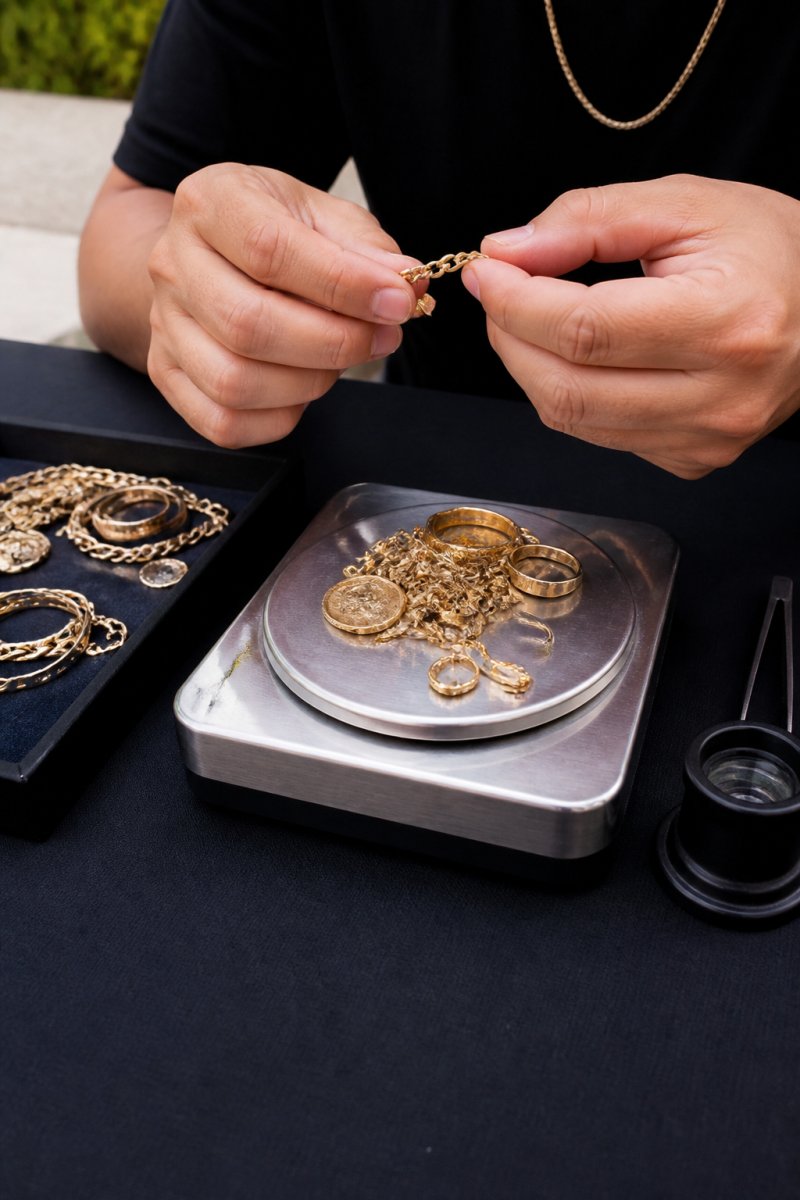
 how-to
How to Sell Broken Gold Jewelry: A Step-by-Step Guide
Table of Contents
- Why Broken Gold Jewelry Still Has Value
- How to Identify Gold Karat Marks and Purity
- Understanding the Gold Spot Price and Melt Value
- Calculating Gold Melt Value for Your Jewelry
- Preparing Your Broken Gold for Sale
- How to Avoid Gold Buying Scams and Low-Ball Offers
- Choosing Where to Sell Your Broken Gold Jewelry
- What to Expect During the Appraisal Process
- Frequently Asked Questions
Last Updated: September 20, 2026
Why Broken Gold Jewelry Still Has Value
When you sell broken gold jewelry, you're converting pieces sitting in a drawer into cash based on what the gold inside is worth. Even if a necklace is snapped, a ring is cracked, or earrings are missing backs, the metal retains its full value. The key is understanding that you're not selling jewelry anymore. You're selling the raw material.
This is where most people get it wrong. They assume broken pieces are worth less because they can't be worn. In reality, a buyer cares only about the weight and purity of the gold itself. A perfectly intact bracelet and a shattered one made from the same gold will fetch the same price per gram.
The gold market moves every single day. When you decide to sell broken gold jewelry, you're tapping into a global commodity market. Your broken pieces can be melted down, refined, and turned into new jewelry or bullion. This is why the timing of your sale matters, and why understanding the market helps you get a fair deal.
How to Identify Gold Karat Marks and Purity
Gold purity is measured in karats, and every legitimate piece of gold jewelry carries a hallmark stamp that tells you exactly what you have. Look for tiny numbers stamped inside the band or on the back of the piece: 10K, 14K, 18K, 22K, or 24K. These numbers represent the percentage of pure gold in the alloy.
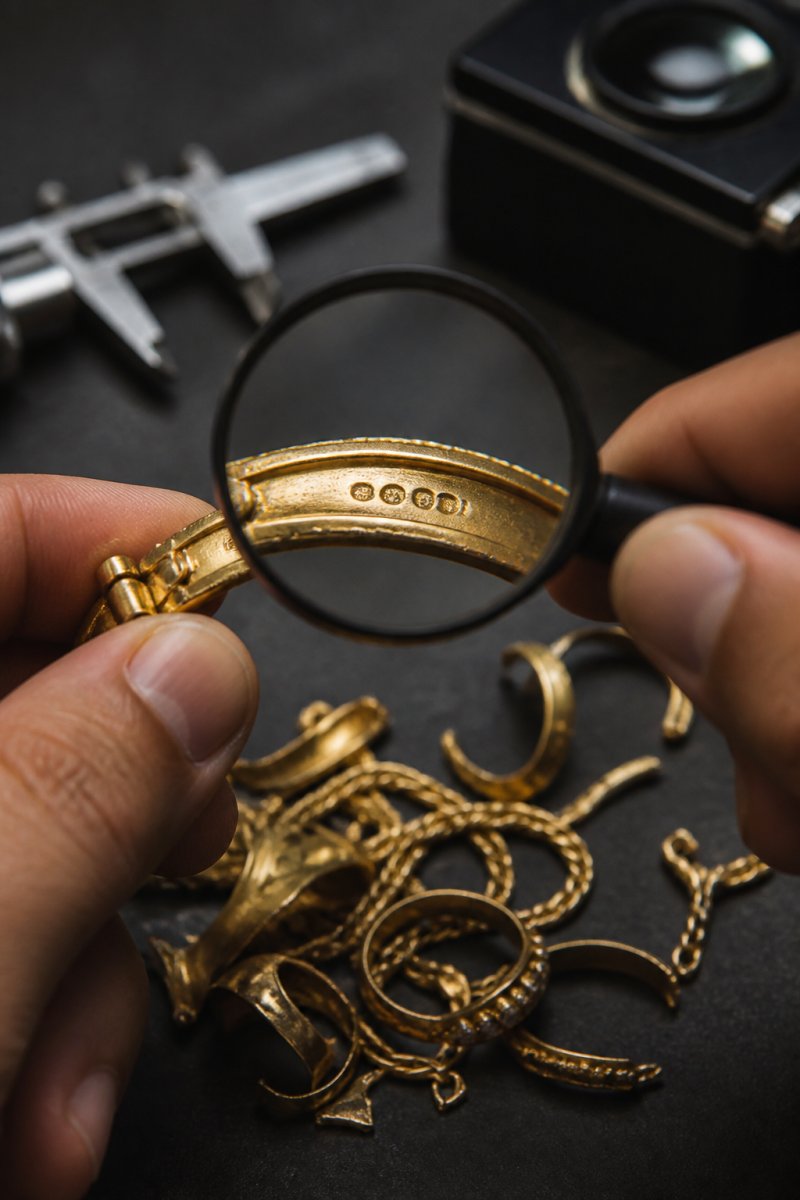
Here's what each karat marking means:
- 24K: Pure gold (99.9% pure). Rare in jewelry because it's soft and bends easily.
- 22K: 91.7% pure gold. Common in fine jewelry and coins.
- 18K: 75% pure gold. Popular for engagement rings and high-quality pieces.
- 14K: 58.3% pure gold. The most common karat in jewelry sold in the United States.
- 10K: 41.7% pure gold. The minimum karat to legally call something "gold" in the U.S.
If you can't find a hallmark, the piece may still contain gold, but you'll need professional testing to confirm. Some older jewelry or pieces made abroad may not have clear markings. This is where a professional appraisal becomes essential.
Gold-filled and gold-plated jewelry is different from solid gold. Gold-filled has a thick layer of gold bonded to a base metal, while gold-plated has only a thin coating. Neither will fetch the same price as solid gold, but some buyers still purchase them. Always be upfront about what you have, misrepresenting the type of gold is a red flag that undermines your credibility.
Understanding the Gold Spot Price and Melt Value
The spot price is the current market rate for one troy ounce of pure gold. This price changes constantly throughout the trading day, driven by global supply and demand. When you check the spot price, you're seeing what refined, pure gold is worth right now.
Your broken gold jewelry won't sell for the full spot price. The difference between the spot price and what you actually get is where the buyer's margin comes in. They buy your gold, refine it, and sell the pure gold at spot price. The spread between what they pay you and what they sell for covers their testing, refining, and profit.
Melt value is what your specific pieces are worth based on their weight and purity. Here's the simple formula: weight in grams × purity percentage × current spot price per gram = melt value. This is your baseline. A fair buyer will offer you 80-95% of the melt value. Anything lower than 70% is a lowball offer.
Understanding this math protects you. Many people walk away from a deal without knowing whether they got a fair price. Once you know the melt value, you can negotiate with confidence.
Calculating Gold Melt Value for Your Jewelry
Start by weighing your gold. You need an electronic scale that measures in grams. Digital kitchen scales work fine for this, accuracy matters because even a few grams changes the total value.
Separate your jewelry by karat. All your 14K pieces together, all your 18K pieces together. This matters because each karat has a different purity percentage, and you'll calculate separately for each group.
Here's the step-by-step process:
- Weigh each karat group in grams
- Convert the karat to a decimal (14K = 0.583, 18K = 0.75, 22K = 0.917)
- Multiply weight × karat decimal to get grams of pure gold
- Check the current spot price per gram online
- Multiply pure grams × spot price to get the melt value
Example: You have 10 grams of 14K gold. Multiply 10 × 0.583 = 5.83 grams of pure gold. If the spot price is $65 per gram, your melt value is 5.83 × $65 = $379.
This is what your gold is worth at minimum. A reputable buyer will offer you a percentage of this number. Pirates Finds Gold uses certified testing equipment and prices against the live spot market, so you know exactly what your gold is worth before you agree to anything.
Preparing Your Broken Gold for Sale
Before you contact a buyer, get your gold ready. This takes 15 minutes and makes the appraisal faster.
Sort everything by type and condition. Put all broken pieces together, all coins together, all dental gold together. Buyers appreciate organization because it speeds up their testing process. If you have mixed lots, some 14K, some 18K, some gold-filled, separate those too.
Clean your gold lightly. You don't need anything fancy. A soft cloth and warm water remove dust and debris. Don't use harsh chemicals or scrub hard, you're not restoring it, just removing surface dirt. Buyers test the metal itself, not the appearance, but clean pieces are easier to inspect.
Gather any documentation you have. Old appraisals, receipts, certificates, bring these along. They don't change the melt value, but they add credibility and show you're organized.
Weighing Your Gold at Home
You don't need professional equipment to get an accurate weight. A digital scale accurate to 0.1 grams costs under $15 and gives you a baseline before any appraisal.
Place a small container on the scale and zero it out. Add your gold pieces slowly until you have the total weight. Write down the number. Do this twice to confirm accuracy.
Organizing by Karat and Type
Separate your collection into distinct piles. This matters because you need to know what percentage of your total is high-karat versus low-karat gold. High-karat gold (22K, 24K) is worth more per gram than 10K.
Create a simple list:
- 10K: 15 grams
- 14K: 22 grams
- 18K: 8 grams
- Dental gold: 3 grams
How to Avoid Gold Buying Scams and Low-Ball Offers
The gold-buying market attracts predatory buyers who count on sellers not knowing the math. Here's how to protect yourself.
Choosing Where to Sell Your Broken Gold Jewelry
You have several options, and each has trade-offs. The best choice depends on your priorities: speed, convenience, price, or privacy.
Local Jewelers and Precious Metal Dealers
Local jewelers often buy gold directly from customers. They have the equipment to test and weigh your pieces on the spot. The advantage is immediate feedback and often a fair price because they have lower overhead than large chains.
Mobile Gold Buyers
Mobile buyers come to your home or office, test your gold on-site, and pay you on the spot. This is the most convenient option if you value your time and privacy. You don't have to leave home or carry your gold to a store.
Pawn Shops and Other Options
Pawn shops buy gold, but they're not specialists. They buy everything, guitars, tools, jewelry, gold, so their staff may not be as knowledgeable about precious metals. Their offers are often lower because they need a bigger margin to cover the cost of holding inventory they might not sell quickly.
What to Expect During the Appraisal Process
The appraisal process takes 15-30 minutes for most collections. Here's what happens step by step.
Frequently Asked Questions
How much is broken gold jewelry worth today?
The value of broken gold jewelry depends on its karat purity, total weight in troy ounces, and the current gold spot price, which fluctuates daily based on market conditions. A 14-karat gold bracelet weighing 5 grams contains roughly 3.5 grams of pure gold. To calculate approximate value, multiply pure gold weight by the spot price. However, dealers typically pay slightly less than spot price to cover refining costs. For an accurate valuation, contact a precious metal dealer for a free appraisal.
How do I calculate the melt value of my gold?
First, identify the karat mark on your jewelry (10K, 14K, 18K, etc.), then weigh it in grams using a digital scale. Next, multiply the weight by the karat purity percentage (10K = 41.7%, 14K = 58.3%, 18K = 75%). This gives you the pure gold content in grams. Convert grams to troy ounces by dividing by 31.1. Finally, multiply troy ounces by the current gold spot price. For example, a 10-gram 14K ring contains 5.83 grams of pure gold, or 0.187 troy ounces. At a spot price of $2,000 per troy ounce, the melt value would be approximately $374 before dealer commission.
How can I avoid being ripped off when selling broken gold jewelry?
Research the current gold spot price before any appraisal, and request transparent testing of your items using certified equipment. Ask the buyer to explain their testing method and show you the results. Get multiple quotes from different buyers to compare offers. Avoid dealers who pressure you to sell immediately or refuse to answer questions about their pricing formula. Reputable precious metal dealers will clearly explain the difference between spot price and their buyback rate, and they'll provide written documentation of weight, purity, and offered payment. Never accept a cash offer on the spot without time to consider other options.
Does the condition of broken gold jewelry affect its resale value?
The condition of broken jewelry has minimal impact on scrap gold value, since dealers melt the gold regardless of whether it's intact or damaged. What matters is the karat purity and total weight. However, if your jewelry has gemstones, antique value, or designer appeal, selling it intact to a jeweler or collector may yield more than selling it as scrap. For purely broken or unwanted pieces, melt value is determined solely by gold content, not appearance or condition.