 how-to
7 Documents You Need to Sell Gold Jewelry
Last Updated: November 1, 2026
Quick Summary
To sell gold jewelry, bring a government-issued photo ID and some proof of ownership, such as a receipt, bill of sale, or a signed self-declaration if you have no receipt. Optional paperwork like appraisals, certificates, or original packaging can speed up evaluation and support a better quote.
- A driver's license, state ID, passport, or military ID all work as photo ID.
- Expired IDs are usually rejected, and the name should match any receipt you bring.
- Inherited gold can be supported by a will, executor letter, or gift letter.
- Pawn shops are typically more paperwork-heavy and issue an itemized pawn ticket.
- Ask what a buyer records from your ID and request copies of everything you sign.
Table of Contents
- Why Documents Matter When You Sell Gold Jewelry
- The Essential Document Checklist: What to Bring to a Gold Buyer
- What ID Is Required to Sell Gold Jewelry?
- How to Sell Gold Jewelry Without a Receipt
- Documents by Selling Channel: Pawn Shop, Jeweler, or Mobile Buyer
- How to Find a Safe Place to Meet a Gold Buyer
- Protecting Your Privacy and Identity Documents
- Book a Free, No-Obligation Home Appraisal
- Frequently Asked Questions
Why Documents Matter When You Sell Gold Jewelry
Selling gold jewelry often involves identification and ownership checks before a buyer pays out.
The rules exist for two reasons. First, they help stop stolen gold from entering the market. Second, they create a paper trail that protects you if a sale is ever questioned.
Below, we break down exactly what to bring, what to do if your paperwork is missing, and how to keep your personal information safe while you sell gold jewelry.
The Essential Document Checklist: What to Bring to a Gold Buyer
The core checklist is short: a government-issued photo ID, some form of proof the gold is yours, and any supporting paperwork you happen to have. Everything else is optional.
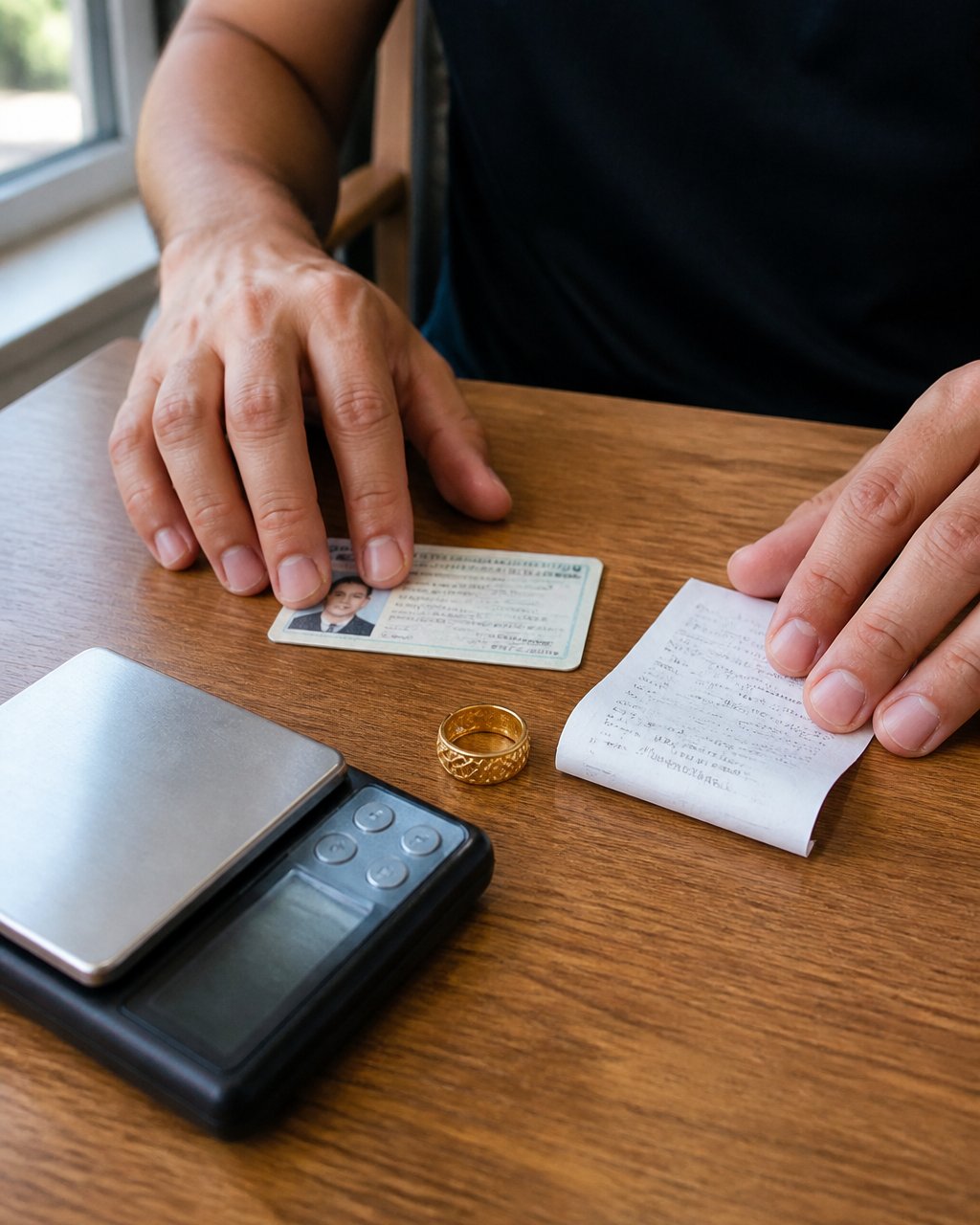
Here is what to bring to a gold buyer, in order of importance:
- Government-issued photo ID (required by nearly every buyer)
- Proof of ownership such as a receipt or bill of sale
- Original packaging or appraisal if you have it
- A list of the items you are selling, with weights if known
- Any certificate of authenticity or assay card for coins and bullion
Government-Issued Photo ID
A driver's license, state ID card, passport, or military ID all work. Bring the physical card, not a photo on your phone.
Proof of Ownership
This is the flexible part. A purchase receipt is ideal, but a credit card statement, insurance rider, or even an old photo of you wearing the piece can support your claim. Buyers understand that jewelry is often bought decades ago.
Supporting Paperwork (Optional but Helpful)
Appraisals, grading reports, and hallmark documentation help confirm karat and value. They are not required, but they can speed up evaluation and sometimes support a better quote.
What ID Is Required to Sell Gold Jewelry?
A valid, unexpired government-issued photo ID is the standard requirement to sell gold jewelry. Most buyers accept a driver's license, state-issued ID, passport, or military ID. Some also ask for a second form of identification or proof of address, such as a utility bill.
Why the extra step? Buyers often ask for ID to help trace transactions and protect both parties.
A few practical notes on ID:
- The name on your ID should match the name on any receipt you bring
- Expired IDs are usually rejected
- A passport works even without a local address
- Never hand over your only ID and let it leave your sight
If you are selling on behalf of someone else, expect the buyer to require that person's ID or a signed authorization. Ask ahead so you are not turned away.
How to Sell Gold Jewelry Without a Receipt
You can sell gold jewelry without a receipt in most cases. You may be asked to sign a self-declaration or ownership statement confirming the gold belongs to you.
Signing a Self-Declaration or Ownership Statement
A self-declaration is a short form stating that you lawfully own the items you are selling. It usually includes your name, the date, a description of the items, and your signature. Some buyers pair it with a thumbprint or a photo of the items.
Sign it honestly and keep a copy if one is offered. This document protects both sides.
Documents for Inherited, Gifted, or Estate Jewelry
Inherited and gifted gold is common, and buyers know the original receipt rarely survives. Useful documents include:
- A will or estate document naming you as beneficiary
- A letter from the executor of the estate
- A gift letter signed by the person who gave you the piece
- Photos of the jewelry with family members
If you need more detail on handling inherited pieces, our guide on safe ways to sell inherited gold walks through the ownership questions that come up most often.
Documents by Selling Channel: Pawn Shop, Jeweler, or Mobile Buyer
Every channel asks for the same core items, photo ID and some proof of ownership, but the paperwork around the transaction changes a lot. Below is what to expect at each type of buyer, including the documents competitors usually skip.
| Channel | ID Required | Ownership Proof | Extra Paperwork to Expect | Payment Record |
|---|---|---|---|---|
| Pawn shop | Government photo ID | Self-declaration | Thumbprint, itemized pawn ticket, state holding period | Pawn ticket or receipt |
| Jewelry store | Government photo ID | Receipt, appraisal, or self-declaration | In-store grading sheet, buy ticket | Itemized purchase receipt |
| Mobile buyer | Government photo ID | Self-declaration | On-site test record, signed offer sheet | Receipt with item list and amount |
| Online buyer | Government photo ID (uploaded) | Self-declaration, photos | Prepaid shipping label, insured parcel receipt, tracking number | Payment confirmation and 1099-B if reportable |
| Auction house | Government photo ID | Consignment agreement, provenance if available | Consignment contract, seller's commission terms, settlement statement | Settlement statement after sale |
Pawn Shops
Pawn shops are typically more paperwork-heavy than other channels. Keep the pawn ticket, which serves as your record of the transaction and the amount you were paid.
Jewelry Stores
If you have an appraisal or grading report, bring it; it can help the evaluation. Ask for an itemized receipt that lists each piece separately rather than a single lump-sum line.
Mobile Buyers
A mobile buyer comes to you, so the paperwork can happen at your kitchen table or office. Ask for a copy of everything you sign and a receipt that lists each item and the amount paid.
Online Buyers
Online buyers add shipping paperwork to the mix. Keep any parcel receipt and tracking number, and photograph the items and the packed box before shipping.
Auction Houses
Auctions generally involve a consignment agreement rather than an outright sale. Read the seller's commission terms and the settlement timeline before signing.
If you are weighing a store visit against a home appointment, our comparison of selling gold jewelry vs a pawn shop covers which route tends to pay more. For a full walkthrough of the at-home option, see how a mobile gold buying service works and our guide to selling gold jewelry at home.
How to Find a Safe Place to Meet a Gold Buyer
Meet in a public, well-lit place during daylight. Tell someone where you are going and share the buyer's name and contact details. Trust your gut if anything feels off.
Safe meeting spots include:
- A bank lobby or parking lot
- A police station parking area
- A busy coffee shop or shopping center
- Your own home, only if you have scheduled the visit and told someone
For a longer list of checks, read our guide on whether it is safe to sell gold at home. It covers what to confirm before you invite a buyer inside.
Protecting Your Privacy and Identity Documents
Your ID is a sensitive document in any transaction, so it is worth asking what happens to it after the sale.
What Buyers Usually Record and Why
Ask the buyer which details they record, how long they keep records, and whether they store copies digitally.
A Document-Safety Protocol
Use this sequence when you sell:
- Show, don't surrender. Hand your ID to the buyer for verification, but keep it in your sight and take it back before the transaction continues.
- Ask what gets copied. If the buyer wants a photocopy or photo, ask which fields they need. Many buyers only need the front, the ID number, and the expiration date.
- Redact what is not required. If you send a copy by email or upload it to an online buyer, black out your address, organ-donor status, and any unrelated endorsements unless the buyer specifically requires them.
- Get a receipt for every item. The receipt should list each piece, the karat, the weight, and the amount paid. This is your record if the sale is ever questioned.
- Keep your own copies. Photograph every form you sign before you hand it over, and store the images somewhere you can find them later.
Sharing ID With Online Buyers
Before you upload an ID image to any online buyer, confirm the site uses an encrypted connection and read its privacy policy for how long ID images are retained. Ask why before you provide any personal identifier.
Selling on Behalf of Someone Else
If you are selling jewelry that belongs to a family member or an estate, the buyer will typically require that person's ID or a signed authorization. Bring a signed letter of authorization that names you, describes the items, and is dated. This protects both you and the buyer, and it avoids a second trip.
For a longer list of safety checks around the meeting itself, read our guide on whether it is safe to sell gold at home. It covers what to confirm before you invite a buyer inside.
Book a Free, No-Obligation Home Appraisal
The paperwork is the easy part once you know what to bring. Look for a buyer who explains the process, tests your gold in front of you, and makes a fair offer without pressure.
That is what we built Pirates Finds Gold around. We come to your home or office, test your gold with certified equipment, and price it against the live gold spot market. You get a no-obligation offer, and we pay by cash or Zelle.
Get started with Pirates Finds Gold and turn your drawer of old gold into cash without leaving your house.
Frequently Asked Questions
Can you sell gold jewelry without a receipt?
Yes, most buyers do not require an original receipt. You will typically need a government-issued photo ID and may sign a self-declaration stating you own the item. Having a receipt can help confirm ownership and potentially speed up the process, but it is not mandatory. If you inherited the jewelry, bring any estate paperwork or a signed statement explaining how you acquired it.
Do you need a government-issued ID to sell gold jewelry?
Yes, legitimate buyers will ask for a government-issued photo ID such as a driver's license, passport, or state ID card. This helps with identity verification and can help prevent the sale of stolen goods. The buyer will record your name and ID number, but you should never leave your ID with them or allow them to keep a copy without a clear privacy policy.
What should you bring when selling gold jewelry?
Bring a government-issued photo ID, any proof of ownership you have (receipt, appraisal, certificate of authenticity), and the jewelry itself. If you have inherited or gifted pieces, bring estate documents or a signed statement. Also bring a list of the items you are selling and any known details like karat or weight. This helps the buyer evaluate your gold accurately and speeds up the offer.
How can you check whether a gold buyer is reputable?
Look for a physical business address, verified customer reviews, and transparent testing methods. A reputable buyer will test your gold in front of you using certified equipment, explain the spot price and deductions, and provide a written offer with no pressure to accept. Ask if they are licensed and insured, and confirm they follow identity verification and record-keeping rules. Meeting at a safe public location, such as near a bank or police station, is also a good sign.