 how-to
How to Find Out What Your Old Gold Is Worth
Last Updated: November 4, 2026
Quick Summary
Old gold worth depends mainly on its weight in grams and its karat, which sets the pure gold content. Multiply the pure gold weight by the day's spot price per gram, then expect a buyer's margin to lower the actual offer.
- Weigh each piece on a digital scale reading to 0.1 grams, removing stones and clasps first.
- Check the karat stamp, such as 14K or 585, which shows the parts of pure gold per thousand.
- Divide the spot price per troy ounce by 31.1035 to get the price per gram.
- Multiply by the purity fraction, for example 0.583 for 14K gold, to find pure gold value.
- Compare written offers by final dollar amount, since fees and lower tested karat reduce payouts.
Table of Contents
- What Determines the Value of Old Gold
- How to Weigh Gold Accurately at Home
- How to Identify Karat Marks and Verify Purity
- What Is My Old Gold Worth Per Gram?
- 14K Gold Scrap Price Per Gram Explained
- How to Calculate the Value of Scrap Gold
- Using a Gold Value Calculator and What Buyers Actually Pay
- Next Step: Get a Free Quote for Your Gold in San Diego
- Frequently Asked Questions
Wondering what your old gold is worth? This guide walks you through the factors that set value, how to weigh and test your pieces at home, and how to estimate a fair number before you sell. Most gold sold for cash in the United States is priced from the day's spot price, so knowing a few basics puts you in a stronger position.
Gold value is mostly about weight and purity. Gold's market price is set by the spot price per troy ounce, and buyers pay a share of that based on how pure the metal is. Design and brand only matter for some pieces, and condition matters less than most people expect.
Main factors that set value:
- Weight: the total grams of pure-metal-bearing material
- Karat: 24K is pure gold, while 14K is about 58.3 percent gold
- Spot price: the live market price on the day you sell
- Buyer's margin: the cut a buyer keeps for refining and resale
What Determines the Value of Old Gold
Old gold is valued almost entirely on its gold content. A heavy 10K chain can be worth less than a light 18K ring, even though the chain looks bigger. Start with weight and karat, then apply the day's price.
Watch out: a gold-colored piece is not automatically gold. Plated and filled items can look identical to solid gold but carry almost no metal value.
How to Weigh Gold Accurately at Home
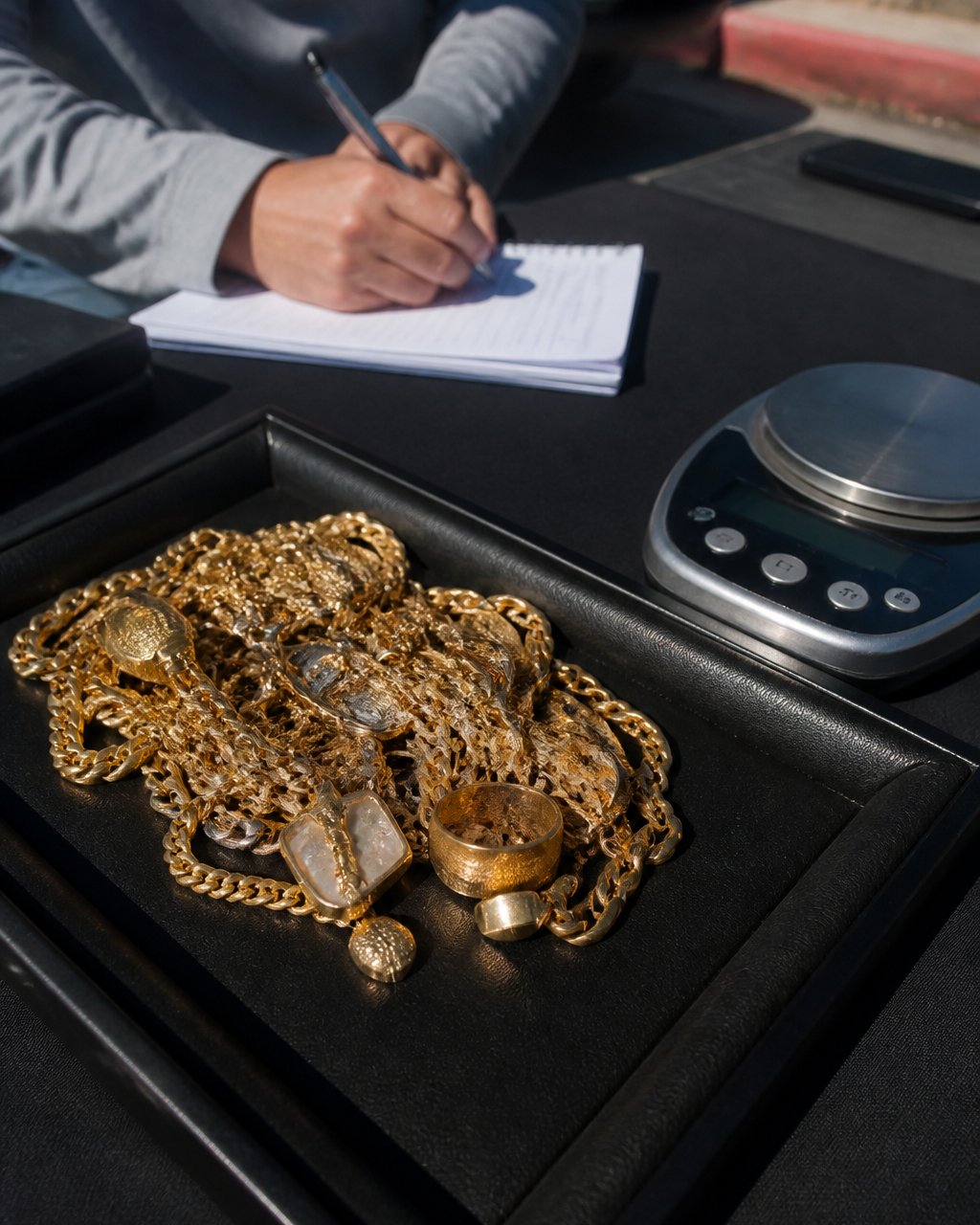
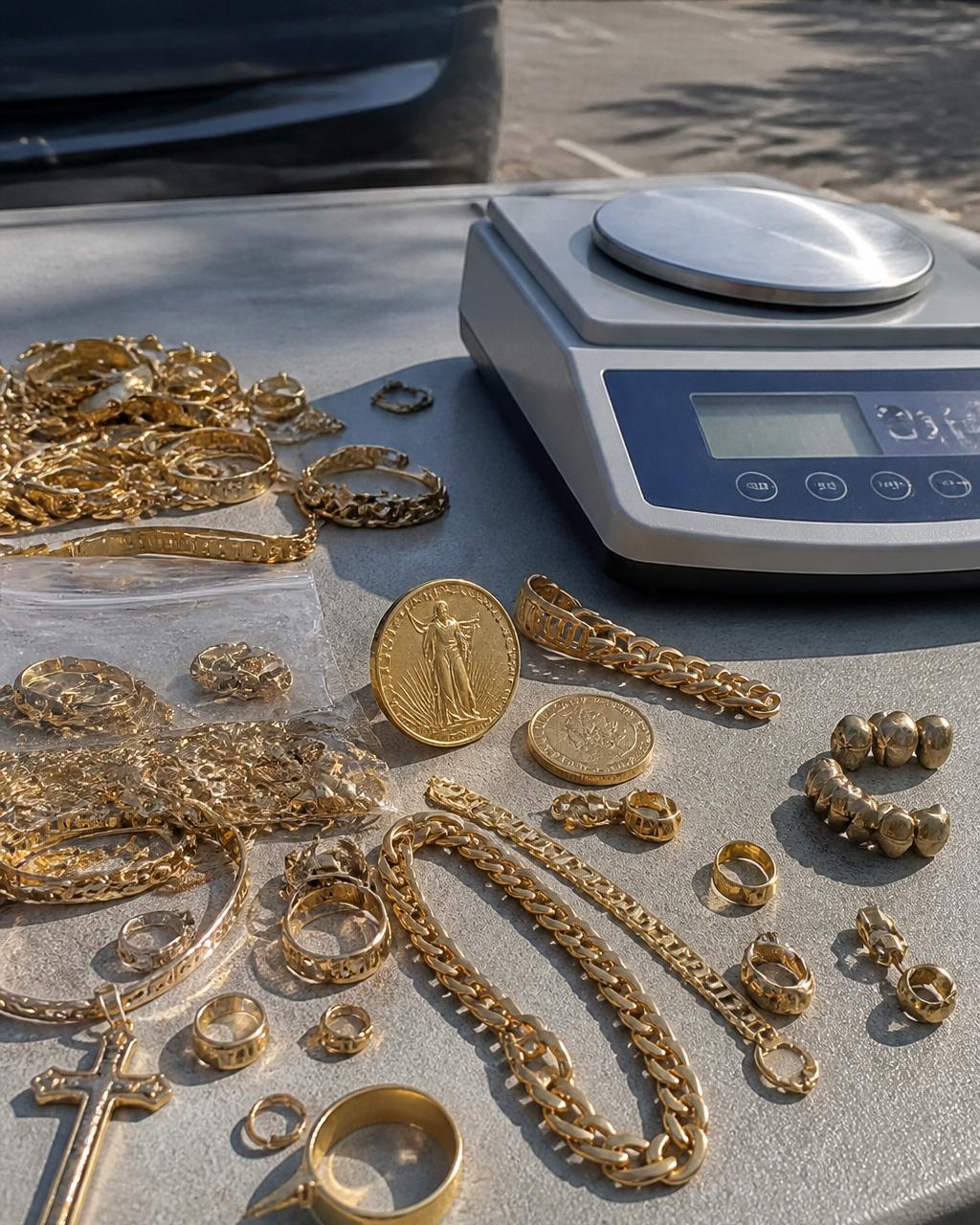
Use a digital scale that reads to 0.1 grams, and zero it with the item on it. Remove stones and clasps where you can, because their weight does not add to the gold value. Write the weight down before you go any further.
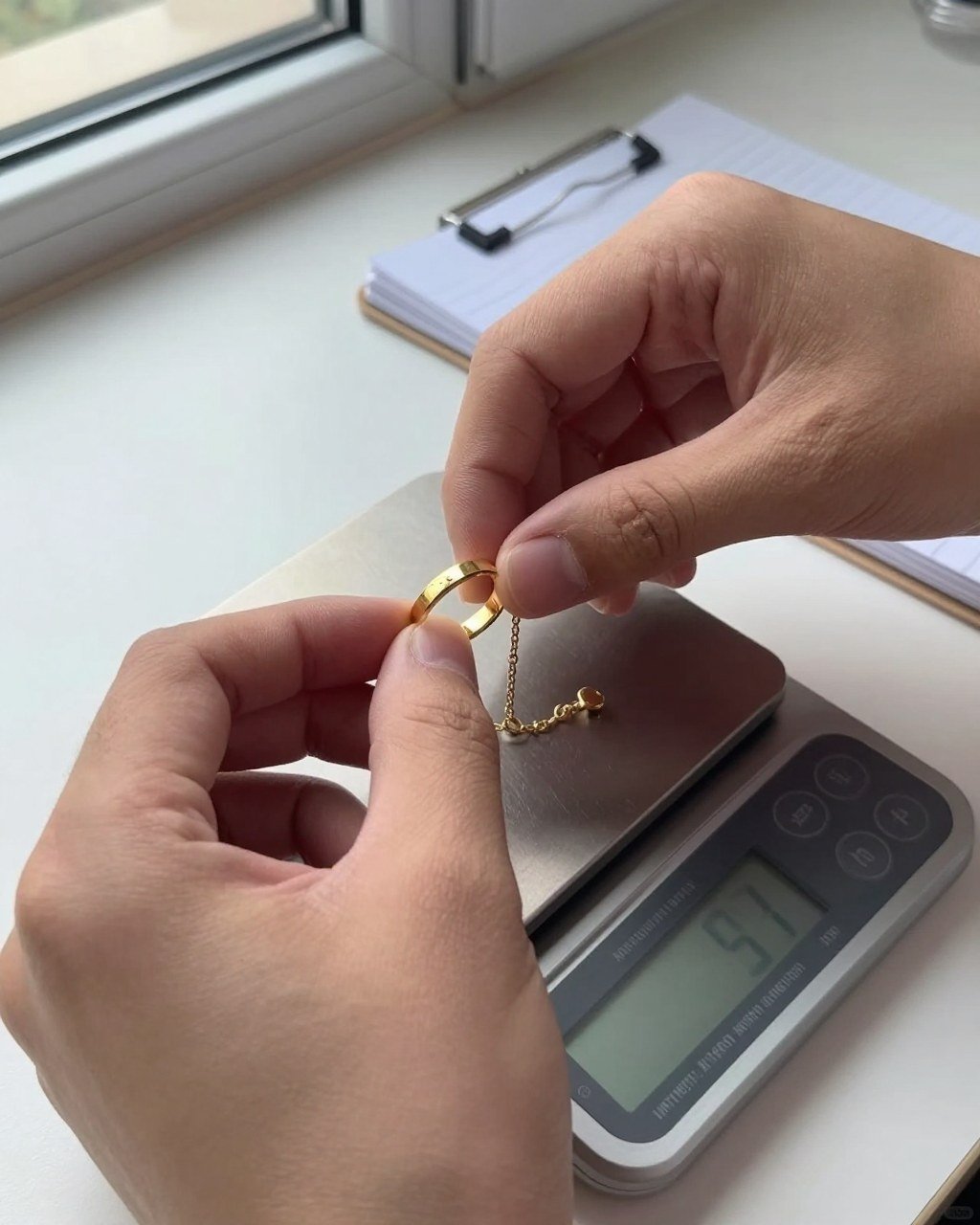
- Clean the piece so dirt does not add weight
- Weigh each item separately
- Keep a record of every reading
How to Identify Karat Marks and Verify Purity
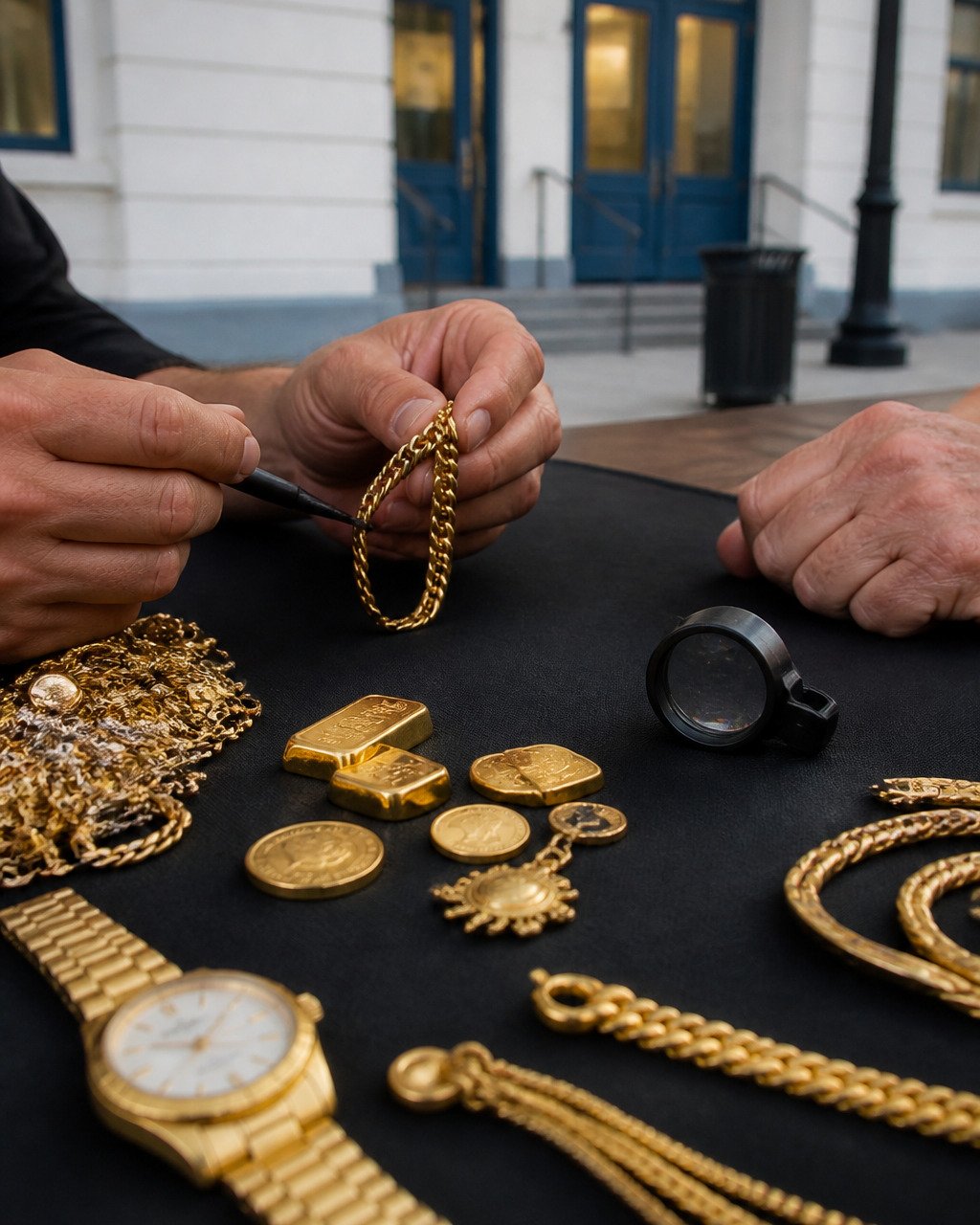
Most solid gold jewelry carries a stamp, but the stamp is often small and hidden. Check the inside of ring bands, the back of clasps, the edge of pendant bails, and the flat area inside bracelet hinges. To see how professional buyers verify purity, follow the step-by-step guide. Common marks include 10K, 14K, 18K, 22K, and 24K, plus the fineness equivalents 417, 585, 750, 917, and 999. A mark of 585 means 14K and 750 means 18K; the number is simply parts per thousand of pure gold.
Watch out: a stamp is a claim by the maker, not a guarantee. Counterfeits and misstamped imports exist, and a mark can be worn, altered, or copied. Treat the stamp as a starting point, not a final answer.
When the mark is missing, unreadable, or looks suspicious, a buyer will usually verify purity in one of a few ways:
- Acid test: a small scratch is exposed to nitric acid solutions keyed to different karats. It is fast and common in shops, but it is a surface test and leaves a tiny mark.
- Electronic gold tester: a probe measures conductivity and returns a karat estimate. It is non-destructive and quick, though results on plated or filled items can mislead.
- X-ray fluorescence (XRF): a handheld analyzer reads the metal's elemental makeup without damaging the piece. Many professional buyers use XRF because it reports the actual gold percentage and flags mixed metals.
- Fire assay: a small sample is melted and tested in a lab. It is the most accurate method and is typically reserved for high-value or disputed items.
For plated, gold-filled, and vermeil pieces, the mark may read something like "1/20 14K GF" or "14K RGP." Those items contain only a thin layer of gold over a base metal, so the payable gold weight is a small fraction of the total. A magnet test can rule out obvious fakes because gold is not magnetic, but many base metals are also non-magnetic, so a magnet alone proves very little. If you are unsure, have the piece tested before you agree to any offer, and ask the buyer which method they used and what result they got. A professional Gold buyer will test your pieces on the spot so you know exactly what you have before any money changes hands.
What Is My Old Gold Worth Per Gram?
To estimate value per gram, take the spot price per troy ounce and divide by 31.1035 grams per troy ounce. Then multiply by the purity fraction. For 14K gold, that fraction is 0.583.
Here is a simple example. If spot gold were $2,000 per troy ounce, the price per gram of pure gold would be about $64.30. A 10-gram piece of 14K gold would contain about 5.83 grams of pure gold, worth roughly $375 before any buyer margin. Actual offers are lower than this number because buyers must cover refining costs and profit.
The table below summarises the steps for estimating what your old gold is worth per gram, using the facts covered in this section.
| Step | What to do | Note |
|---|---|---|
| Find the spot price | Take the spot price per troy ounce | Use the live price on the day you sell |
| Convert to grams | Divide the spot price by 31.1035 | Troy ounce to gram conversion |
| Apply purity | Multiply by the purity fraction | 14K gold uses 0.583 |
| Multiply by weight | Multiply the pure gold price by item weight | Weight in grams |
| Deduct buyer margin | Subtract the buyer's cut | Actual offers come in lower |
14K Gold Scrap Price Per Gram Explained
Scrap buyers usually quote a price per gram for 14K gold based on the spot price, then subtract a margin. That margin covers melting, refining, and resale risk. Prices change daily, so check the current spot price before you compare offers.
Compare offers on the same basis: grams, karat, and price per gram. For a full guide to getting fair value for scrap gold, start there before you sell. A quote that sounds high may still pay less once the margin is applied.
How to Calculate the Value of Scrap Gold
Use this quick method:
- Weigh the item in grams.
- Confirm the karat and multiply the weight by the purity fraction.
- Multiply the pure gold weight by the spot price per gram.
- Subtract the buyer's margin to estimate the offer.
Example: 12 grams of 18K gold is 9 grams of pure gold. At $64 per gram of pure gold, the melt value is about $576, and the offer will be lower.
Using a Gold Value Calculator and What Buyers Actually Pay
A gold value calculator is a fast way to run the numbers. Enter the weight, the karat, and the current spot price, and it returns a melt value. To see how offers from different buyer types compare with these numbers, read Sell Gold at Home vs Store: Which Is Right for You. Treat that figure as a ceiling, not a guaranteed payout. The gap between melt value and a real offer is where most sellers get surprised, so it helps to know what sits inside that gap.
What comes out of the melt value before you get paid:
- Refining and assay costs: the refiner charges to melt, sample, and confirm the gold content, and that cost is passed through to the seller.
- Buyer margin: the buyer keeps a cut for overhead, risk, and resale. Margins vary widely by buyer type and by how much volume they handle.
- Purity adjustment: if the tested karat comes in lower than the stamp, the payable gold weight drops.
- Non-gold weight: stones, clasps, solder, springs, and hollow or mixed-metal sections are deducted because they carry little or no gold value.
- Refining loss: a small percentage of metal is lost in the melt, and that loss is typically built into the offer.
Because of these deductions, a real offer commonly lands below melt value, and the size of the gap depends on the buyer. A local jeweler who resells finished pieces may pay differently than a refiner who melts everything down. An online buyer may quote a strong per-gram rate but apply fees or minimums later. An auction can produce a high final price on a desirable piece but adds seller premiums and time.
How to compare offers on the same basis:
- Record the weight in grams and the tested karat for each item before you shop.
- Ask each buyer for a written offer that states the price per gram, the karat they tested, and any fees or deductions.
- Compare the final dollar amount for the same items, not the headline per-gram rate.
- Ask whether the offer is firm or subject to re-testing after the melt.
Watch out: a quote that sounds high per gram can pay less overall once fees, minimums, or a lower tested karat are applied. Get the final number in writing and compare like for like. If a buyer will not put the offer in writing or will not explain the deductions, that is a reason to walk away.
Next Step: Get a Free Quote for Your Gold in San Diego
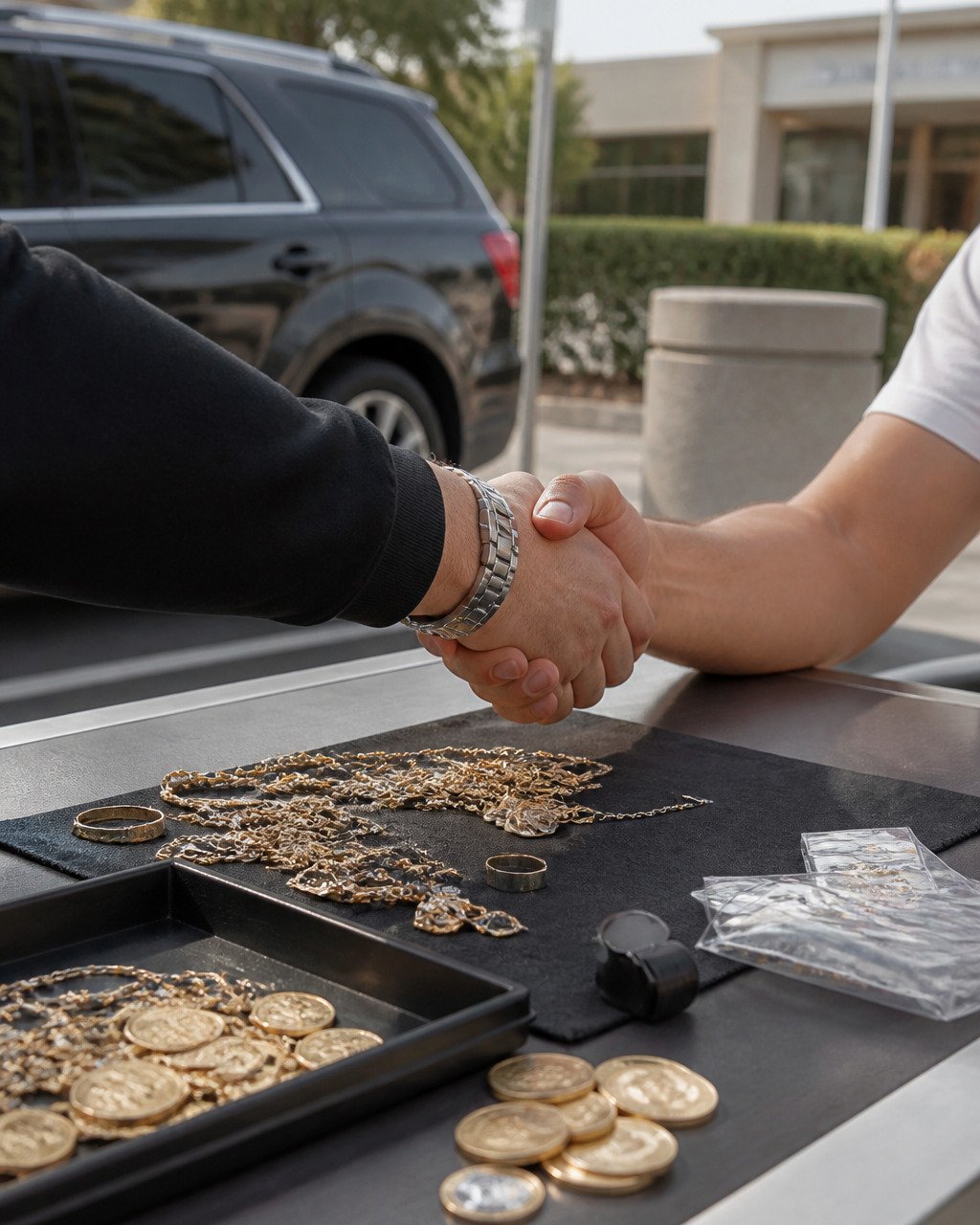
Once you have weighed and sorted your pieces, the next step is a professional test. Pirates Finds Gold provides a free, no-obligation quote for jewelry, coins, bullion, and dental gold across the San Diego area. We come to your home or office, test each item on the spot with certified equipment, and pay in cash or by Zelle.
Frequently Asked Questions
How much is 1 oz of 14K scrap gold worth?
The value of one troy ounce of 14K scrap gold depends on the current spot gold price. 14K gold is 58.3 percent pure gold, so you multiply the spot price per troy ounce by 0.583 to estimate its melt value. Buyers then subtract their refining costs and margin, so the cash offer will be lower than the melt value. Compare the live spot price with the offer you receive, and ask the buyer to show how the number was calculated.
Is my old gold jewelry worth anything?
Most gold jewelry has value even when it is broken, worn, or tarnished, as long as it contains gold. Look for karat marks such as 10K, 14K, 18K, or 24K, and check for stamps from known manufacturers. Items that are plated or filled have much lower value than solid gold. A quick test or appraisal can confirm whether your piece is solid gold and how much it contains.
Does damaged or broken gold jewelry still have value?
Yes. Broken chains, bent rings, single earrings, and dental gold are generally bought by weight and purity, not by how they look. Damage does not remove the gold content. Stones, clasps, and non-gold parts are usually removed or deducted before the weight is final, so the offer reflects only the gold.
U.S. Mint gold bullion program details