 ultimate-guide
How to Find Reputable Gold Buyers in 2026
Quick Summary
To find reputable gold buyers, confirm the business is registered and licensed, check its track record and reviews, and compare written offers on the same terms. Calculate your gold's melt value from its weight, karat and the live spot price, then judge each offer against it.
- Verify the buyer's registration and license with the issuing agency before you sell.
- Compare offers on net payout, after fees, shipping and insurance, not headline percentages.
- Calculate melt value: pure gold weight multiplied by the per-gram spot price.
- Walk away from pressure to decide immediately or from any buyer who won't explain pricing.
- Ask for the spot price, weight and karat reading in writing before handing over any gold.
Table of Contents
- Why Choosing the Right Gold Buyer Matters
- How to Check a Gold Buyer's Business Registration and Reputation
- Gold Buyer Scam Warning Signs to Watch For
- Questions to Ask a Gold Buyer Before You Sell
- How Gold Buyers Test and Weigh Gold
- How to Sell Gold Without Getting Ripped Off
- Booking Your Next Gold Sale With a Trusted Buyer
- Frequently Asked Questions
How to Find Reputable Gold Buyers in 2026
Last Updated: November 7, 2026
Why Choosing the Right Gold Buyer Matters
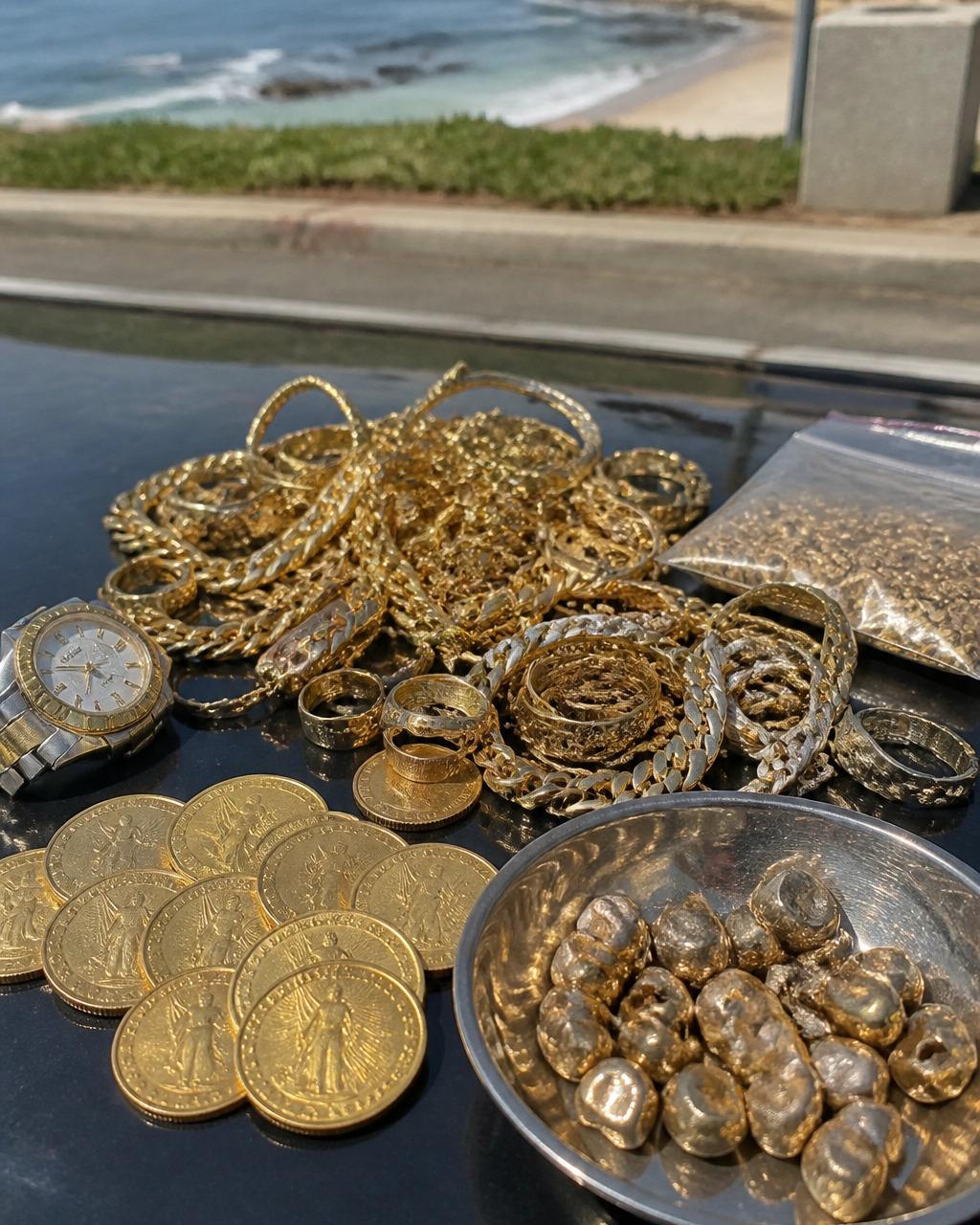
Choosing one of the most reputable gold buyers you can find is the single most important decision you will make when selling gold.
Gold prices move daily with the global spot market, so a buyer's payout depends on both the metal's weight and purity and the margin they keep. A reputable buyer shows you the math. A questionable one hides it behind vague language and pressure to decide on the spot.
How to Check a Gold Buyer's Business Registration and Reputation
Start with the basics. Confirm the business is registered and licensed to operate in your area. Confirm the buyer's name, address, and registration status match what they show you in person, and ask which license the buyer operates under so you can verify it with the issuing agency.
Next, check how long the business has operated. A company with a multi-year track record and a consistent local address is generally a safer bet than one that appears and disappears.
Reading Reviews and Complaint Records
Customer reviews are useful when you read them critically. Look for patterns rather than single dramatic posts. Multiple reports of changed offers after the item was received, or of difficulty getting payment, are a meaningful signal.
You can also search the Better Business Bureau for complaint history. A high rating alone is not proof of quality, so weigh it alongside the other checks in this section.
Comparing the Four Main Buyer Types
The buyer you choose matters as much as the buyer's reputation, because each type carries different trade-offs:
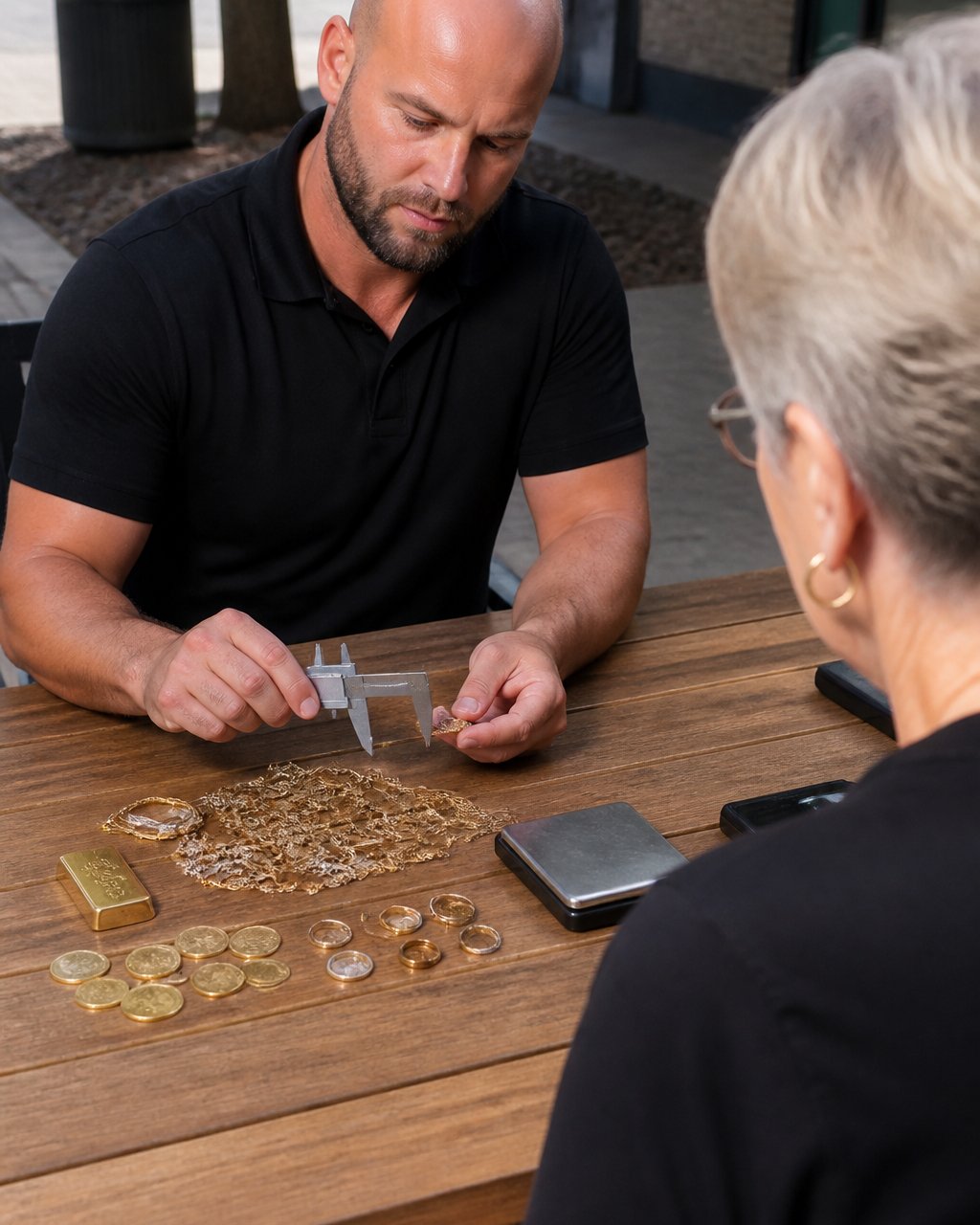
- Local and mobile buyers. They come to you or meet nearby, test in front of you, and often pay on the spot. The advantage is that you watch the weighing and testing and can walk away. The trade-off is that you are comparing a smaller set of offers unless you call several.
- Pawn shops. Convenient and regulated, but offers are frequently on the lower end because pawnbrokers price in the possibility that an item is redeemed or sits in inventory. Ask whether the quote is a purchase offer or a collateral loan.
- Jewelry stores. Strong on designer pieces, antiques, and stones that may carry value beyond melt. A store may pay closer to melt on scrap but recognize resale value on a signed piece, ask specifically whether they are pricing the item as scrap or as resale.
- Online and mail-in buyers. They can post attractive headline percentages, but the offer is not final until the item arrives and is assayed. Shipping, insurance, and the return policy all affect your net result, and you lose the ability to watch the testing.
A Simple Buyer Comparison Worksheet
Rather than comparing ratings or headline offers, build a one-page worksheet with a column for each buyer and a row for each of these:
- Offer as a percentage of melt value (and the spot price used)
- Fees, shipping, and insurance costs you would bear
- Net payout, the amount that actually reaches you
- Payment method and timing
- Whether the offer is binding once accepted, and the window to accept
- Return policy if you dispute the final offer
- Turnaround time from handover to payment
- License or registration you verified, and where you verified it
Fill it in for at least three buyers before you commit. The worksheet does what reviews cannot: it forces every offer onto the same terms so the comparison is apples to apples.
Watch out: A buyer whose headline percentage is the highest on the page but whose net payout row is blank, because fees, shipping, or a non-binding offer are buried in the fine print, is not actually the best offer.
Gold Buyer Scam Warning Signs to Watch For
Most gold-buying scams follow a recognizable pattern. Watch for these red flags:
- Pressure to decide immediately. Legitimate buyers give you time to compare offers.
- Unclear pricing. If the buyer will not explain how the offer was calculated, be cautious.
- Testing that happens out of view. You should be able to see the scale and testing process.
- Unusually high offers. A price far above the spot value for your gold's weight and purity is often a setup for a later reduction.
- Requests for upfront fees. A seller should never pay to have gold appraised or purchased.
Watch out: Some buyers quote a high price on the phone, then lower it after weighing your items in person. Ask for the offer in writing before you hand anything over.
Questions to Ask a Gold Buyer Before You Sell
Before you commit, ask a few direct questions:
- How is your offer calculated, and what spot price are you using?
- Do you test the gold in front of me, and can I watch the weighing?
- How and when will I be paid?
- Is the offer binding once I accept it, or can it change?
- What is your policy if I disagree with the result?
A reputable buyer answers each question clearly. Vague or evasive responses are themselves useful information.
How Gold Buyers Test and Weigh Gold
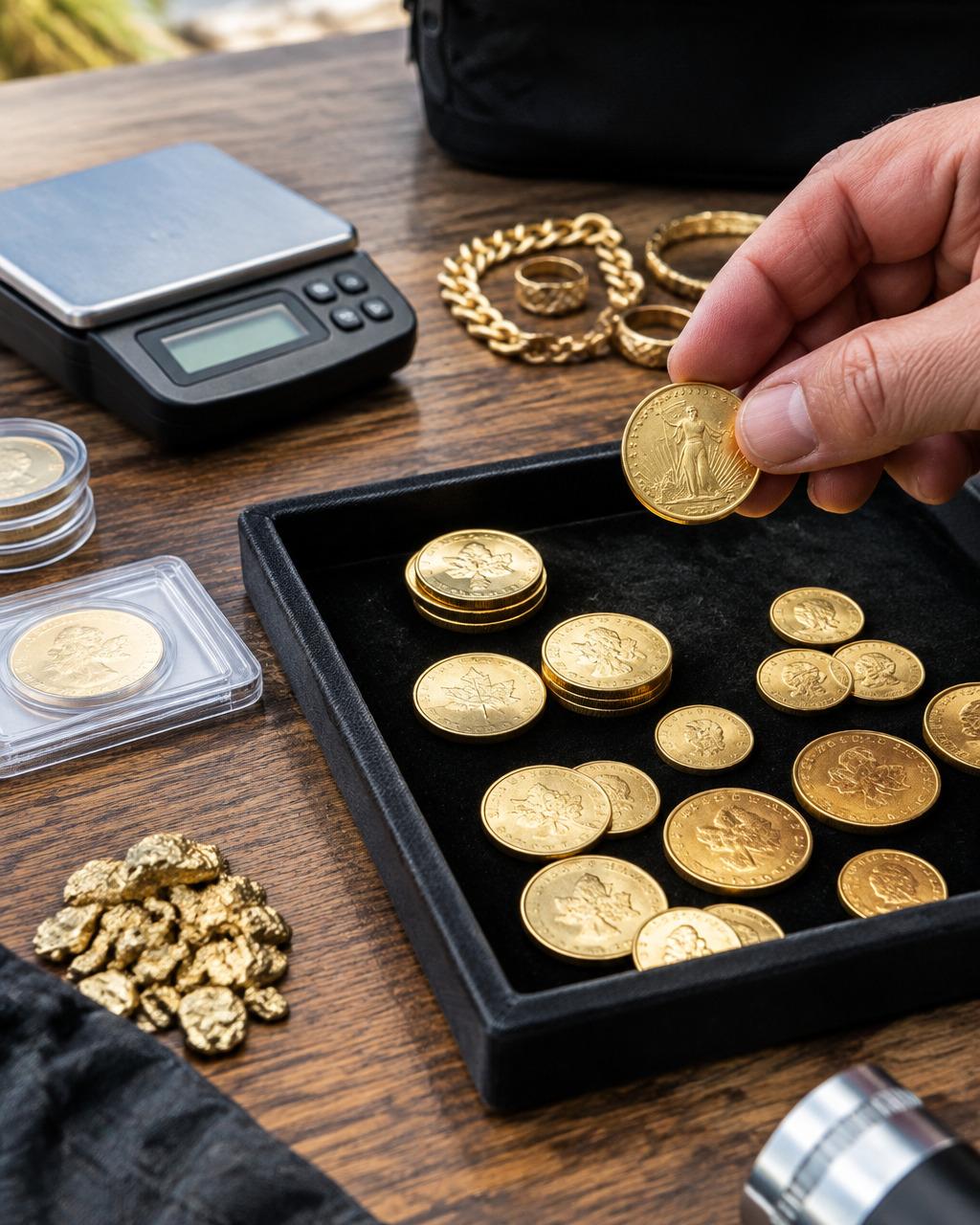
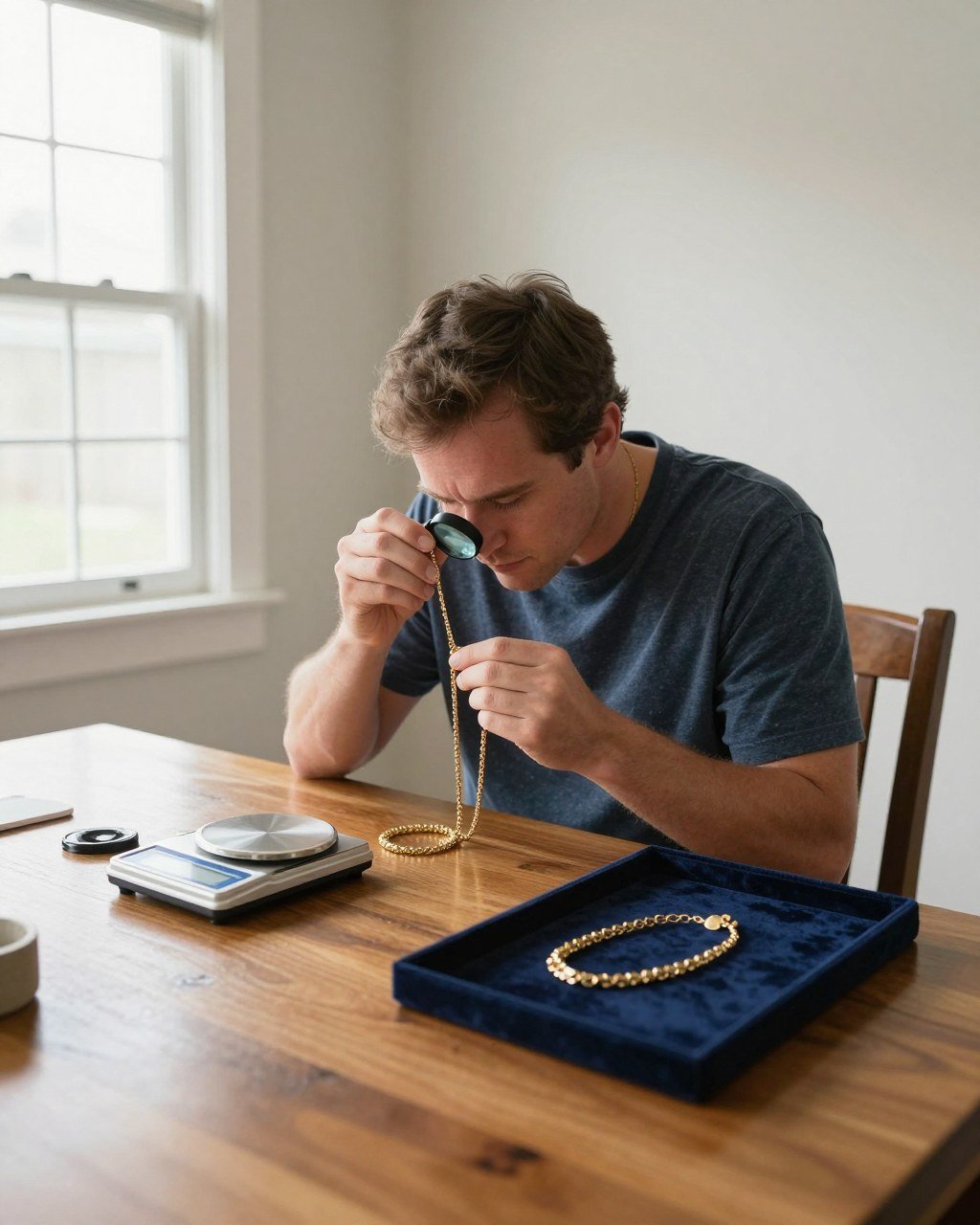
Gold buyers use a few standard methods to determine what your items are worth. Weight is measured on a precise digital scale, usually reported in grams or troy ounces.

Once weight and purity are established, the buyer calculates the pure gold content and applies the current spot price, minus their margin. This is why the same item can receive different offers from different buyers. Ask to see the numbers.
How to Sell Gold Without Getting Ripped Off
A simple method helps you judge whether an offer is fair. Multiply the pure gold weight (weight multiplied by karat divided by 24) by the current spot price per gram. That gives you the melt value.
That formula is the whole game, so it is worth walking through it slowly. Here is the step-by-step method you can run on any offer, from any buyer, in about five minutes.
Step 1: Find the live spot price
Look up the current spot price of gold per troy ounce from a public market source. Spot moves throughout the trading day, so note the time you checked. Divide the per-ounce price by 31.1035 to get the price per gram, because most consumer gold is weighed in grams while spot is quoted per troy ounce. If spot is quoted at a per-ounce figure, a per-gram figure is roughly one thirty-first of it, that single conversion is where many sellers lose track of the math.
Step 2: Determine the pure gold weight
Weigh the item on a scale that reads in grams, then convert the karat stamp to a purity fraction: 10K is 10/24 (about 41.7 percent), 14K is 14/24 (about 58.3 percent), 18K is 18/24 (75 percent), and 22K is 22/24 (about 91.7 percent). Multiply the item's total weight by that fraction to get the pure gold weight. A 10-gram 14K chain, for example, contains about 5.83 grams of pure gold.
Step 3: Calculate melt value
Multiply the pure gold weight by the per-gram spot price. Using the 5.83-gram example, if spot works out to a per-gram figure, the melt value is that figure times 5.83. This is the raw metal value, the ceiling any offer is built from.
Step 4: Apply the buyer's margin
No buyer pays full melt value; the margin covers refining, assay, overhead, and profit. Treat any offer as something to compare against your melt value estimate, not a guarantee, so you can see whether it is reasonable or far outside what the metal is worth.
Step 5: Compare net payout, not headline offer
Two buyers can quote the same percentage and still leave you with different amounts once fees, shipping, insurance, and payment method are counted. Write down the net number, what actually lands in your hand, for each offer before you decide.
Watch out: A buyer who quotes a percentage of melt value but will not tell you which spot price they used, or who weighs your items on a scale you cannot see, has given you a number you cannot verify.
Compare at least two or three offers before you accept. Keep your items in their original condition, and do not agree to a sale until you have seen the final weight and purity results. If you mail items, use insured, tracked shipping and keep the receipt.
Whichever route you choose, make sure the terms and payment method are written down before you hand over your gold.
The steps below summarise the melt-value method the article walks through, so you can check any offer in about five minutes.
| Step | What to do | Time or frequency |
|---|---|---|
| 1. Find live spot price | Look up spot per troy ounce, then divide by 31.1035 for grams | Check when you sell; spot moves daily |
| 2. Find pure gold weight | Weigh in grams, multiply by karat divided by 24 | Once per item |
| 3. Calculate melt value | Multiply pure gold weight by per-gram spot price | Once per item |
| 4. Apply buyer's margin | Compare the offer against your melt value estimate | Per buyer offer |
| 5. Compare net payout | Subtract fees, shipping and insurance from each offer | Before accepting any offer |
Booking Your Next Gold Sale With a Trusted Buyer
Once you have checked a buyer's registration, reviews, and transparency, you are ready to schedule a sale. At Pirates Finds Gold, we come directly to your home or office, test every item in front of you, and base our offers on the live gold spot market. Every quote is free and comes with no obligation. Get a free quote from Pirates Finds Gold to see how a transparent, pressure-free sale works for your gold.
Frequently Asked Questions
Who is the most reputable gold buyer?
No single buyer is best for everyone, but a reputable gold buyer can be identified by consistent evidence. Look for a verifiable business registration, a clear operating history, and a pattern of positive customer reviews over time rather than a handful of recent ones. Check whether the buyer explains how its offer is calculated from the live gold spot price, weighs and tests your items in front of you, and gives you a written quote before any payment. Buyers who do all of this openly are generally the ones to trust with your gold.
How do I know if a gold dealer is reputable?
Start by confirming the dealer is a real, registered business with a physical address or a clearly identifiable service area. Search its name alongside terms like complaints or scam to see what past customers reported. A reputable dealer will show you the testing process, explain the karat and weight of each item, and tie its price to the current spot market. If the dealer pressures you to decide immediately or refuses to put terms in writing, treat that as a reason to walk away.
How can I sell my gold without getting ripped off?
Know the approximate melt value of your gold before you walk in. Multiply the item's weight in grams by its karat purity fraction, then by the current gold spot price per gram, to estimate what the metal alone is worth. Get quotes from at least two or three buyers, including a local buyer and an online buyer, and compare them against your estimate. Ask how the buyer calculates its payout and whether any fees apply. Accept an offer only after you understand every number on the written quote.
Is it safe to sell gold to an online buyer?
Selling to an online buyer can be safe when the company is registered, has a verifiable reputation, and provides insured shipping with tracking. Read the written return policy and confirm how long the buyer has to make an offer after receiving your package. Be cautious of buyers who send you a prepaid box without clear terms, or who only offer payment after a delay with no written guarantee. Mail-in sales carry more risk than in-person sales, so document what you ship and keep the tracking number until payment clears.