 ultimate-guide
Best Way to Liquidate Estate Gold: A Practical Guide
Last Updated: November 2, 2026
Quick Summary
The best way to liquidate estate gold is to split it by item type and send each group to the channel that pays most for it. Scrap jewelry, dental gold and bullion usually go to a direct gold buyer for a fast, melt-based offer. Designer or rare pieces are better suited to a jeweler, auction house or coin dealer.
- Check the spot price over a few days before accepting any offer.
- Group estate gold into jewelry, coins, bullion and dental gold before contacting buyers.
- Calculate melt value as weight in grams times karat divided by 24 times spot price.
- Ask for every offer in writing with weight, karat and price per gram stated.
- Compare net proceeds after commissions and fees, not the headline sale price.
Table of Contents
- What Estate Gold Liquidation Involves and When to Use It
- Inventorying Estate Gold: Jewelry, Coins, Bullion and Dental Gold
- Estate Gold Appraisal: Karat, Weight, Purity and Spot Price
- Gold Buyer vs. Estate Sale: Choosing the Right Channel
- How to Sell Inherited Gold Safely and Document the Sale
- A Worked Example of Net Proceeds on Estate Gold
- Gold Selling Checklist Before Your First Offer
- Frequently Asked Questions
What Estate Gold Liquidation Involves and When to Use It
Estate gold liquidation is the process of turning gold left behind by someone who has died into cash, usually through an executor or heir.
The first decision is timing. Gold is priced against the live spot market, so a sale made on a strong day can differ meaningfully from one made on a weak day.
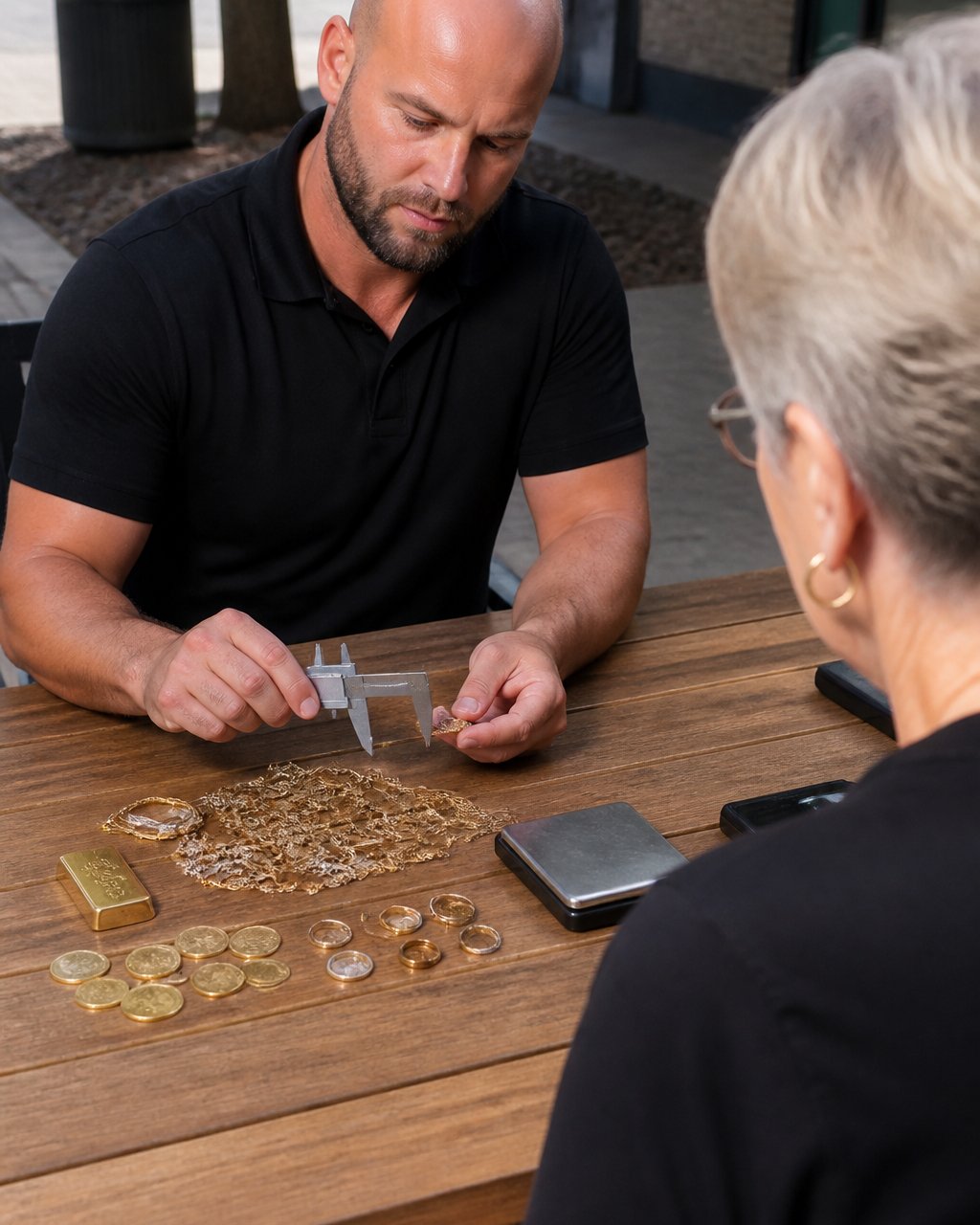
Pirates Finds Gold, a mobile gold buyer serving the San Diego area, comes to homes and offices to test and purchase gold.
Inventorying Estate Gold: Jewelry, Coins, Bullion and Dental Gold
Before contacting any buyer, list everything. Gold often hides in unexpected places: a jewelry box, a sock drawer, a safe deposit box, or a coin folder that looks like costume jewelry.
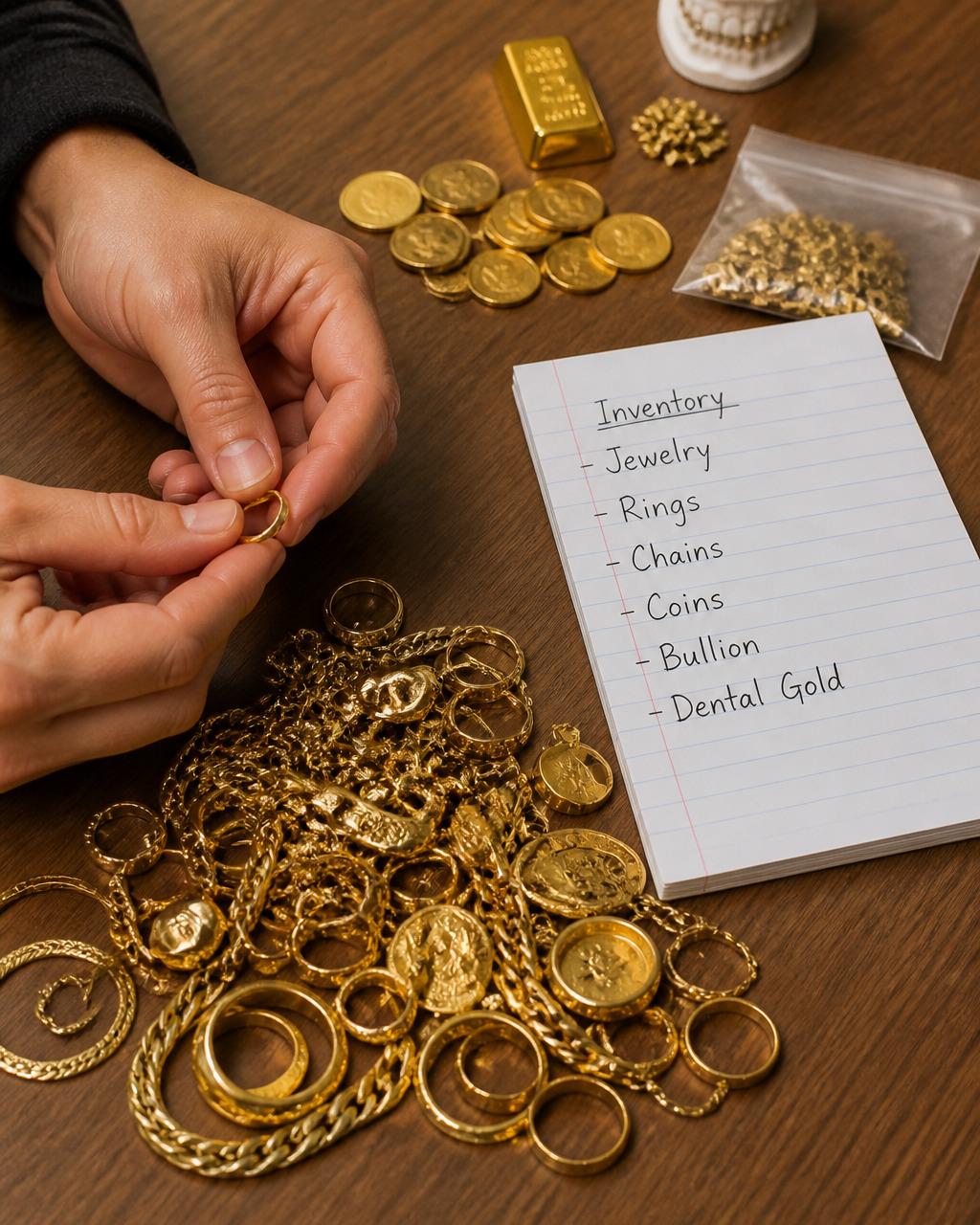
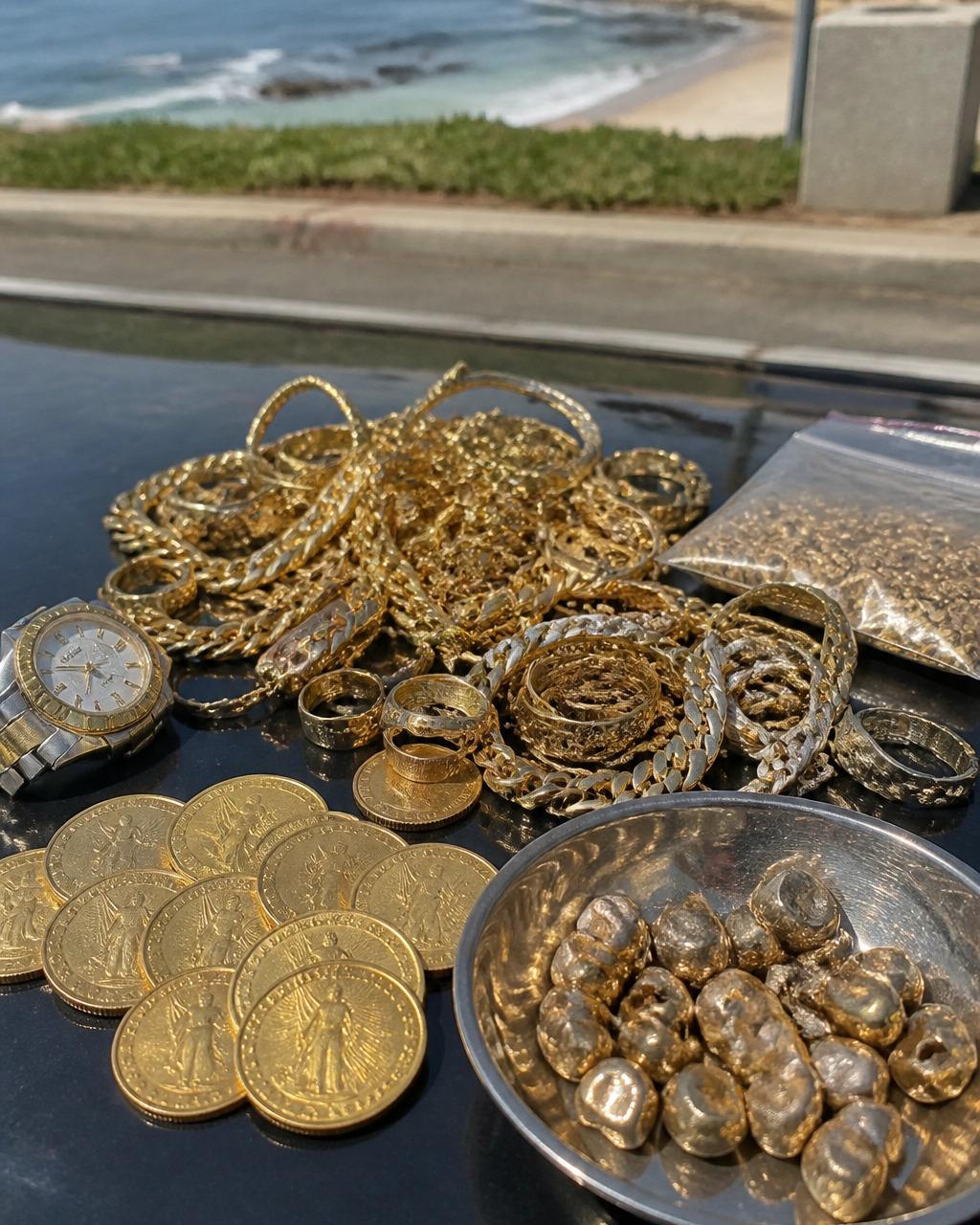
Group items by type so each category can be priced correctly:
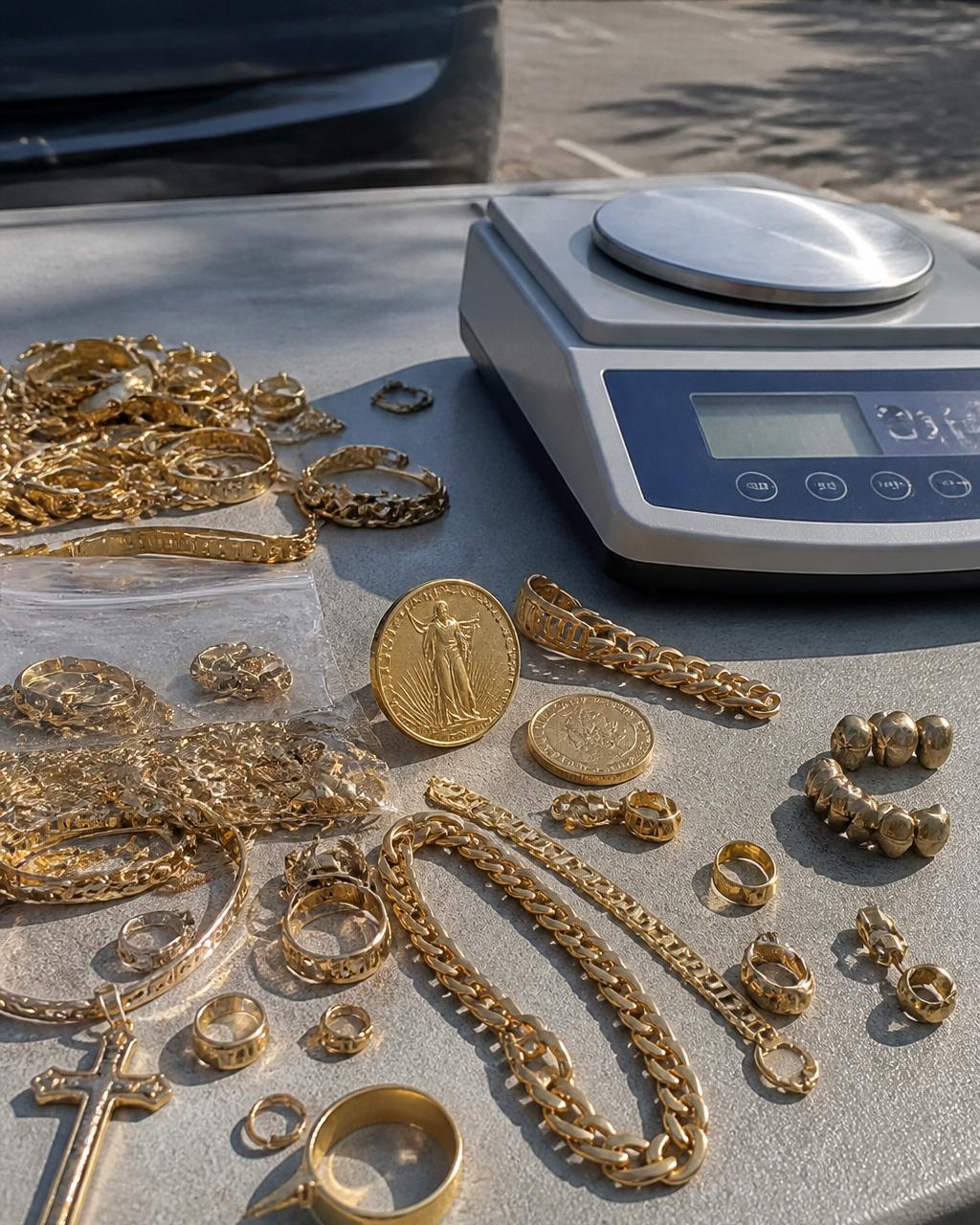
- Jewelry: rings, chains, bracelets, earrings, broken pieces and unmatched earrings
- Coins: bullion coins and numismatic (collectible) coins, which are valued differently
- Bullion: bars and rounds, usually stamped with purity and weight
Note anything stamped with karat marks such as 10K, 14K, 18K or 24K, and keep any receipts, appraisals or boxes. Dental gold deserves its own note because it is often overlooked, yet it can still carry real value. Find out whether selling dental gold is worth it and how to handle it.
Estate Gold Appraisal: Karat, Weight, Purity and Spot Price
An appraisal for gold comes down to three measurements: purity, weight and the day's spot price. Purity is expressed in karats, where 24K is pure gold and 14K is roughly 58.3% gold. Weight is usually measured in grams or troy ounces (one troy ounce equals 31.1035 grams, not the 28.35 grams in a standard ounce). Spot price is the market benchmark that buyers start from.
Reading hallmarks and stamps
Most jewelry carries a karat stamp, 10K, 14K, 18K, 22K or 24K, often alongside a maker's mark or a country-of-origin stamp. A stamp is a starting point, not proof. Stamps can be worn, misread or counterfeited, and plated pieces sometimes carry a karat mark. Look for "GP" (gold plated), "GF" (gold filled) or "HGE" (heavy gold electroplate), which signal a thin gold layer over a base metal and a much lower value than the stamp suggests.
How buyers test purity
A reputable buyer uses more than one method before making an offer:
- Acid testing: a small scratch on a touchstone is treated with nitric acid; the reaction indicates the karat range. It is quick but slightly destructive and best on scrap pieces.
- Electronic testing: a handheld tester measures conductivity to estimate karat without damaging the item. It is the most common non-destructive check.
- X-ray fluorescence (XRF): a spectrometer reads the metal's elemental composition, including trace metals, without marking the piece. It is the most precise non-destructive method and is common at professional buyers.
Ask the buyer which method they use and whether you can watch the test. A buyer who tests in front of you and explains the reading is giving you a verifiable number; one who quotes from a back room is not.
Melt value versus what an item is worth
Melt value is the floor, not the ceiling. Calculate it yourself:
Melt value = (weight in grams) × (karat ÷ 24) × (spot price per gram)
For example, a 10-gram 14K ring contains about 5.83 grams of pure gold. Multiply that by the spot price per gram on the day you sell to get the baseline.
Then adjust for what melt value ignores:
- Stones and settings: a diamond, sapphire or other stone may add value well beyond the metal, but only if the buyer can identify and resell it. Ask whether stones are included in the offer or returned to you.
- Craftsmanship and designer marks: signed pieces from recognized makers can sell for multiples of melt to a jeweler or at auction. A scrap buyer will usually pay melt regardless.
- Condition and completeness: broken chains, missing earring backs and worn settings reduce resale value but not melt value.
Comparing an offer against spot price
A buyer's offer below melt is normal, the spread covers testing, handling, refining and resale. What matters is the size of the spread and whether it is disclosed.
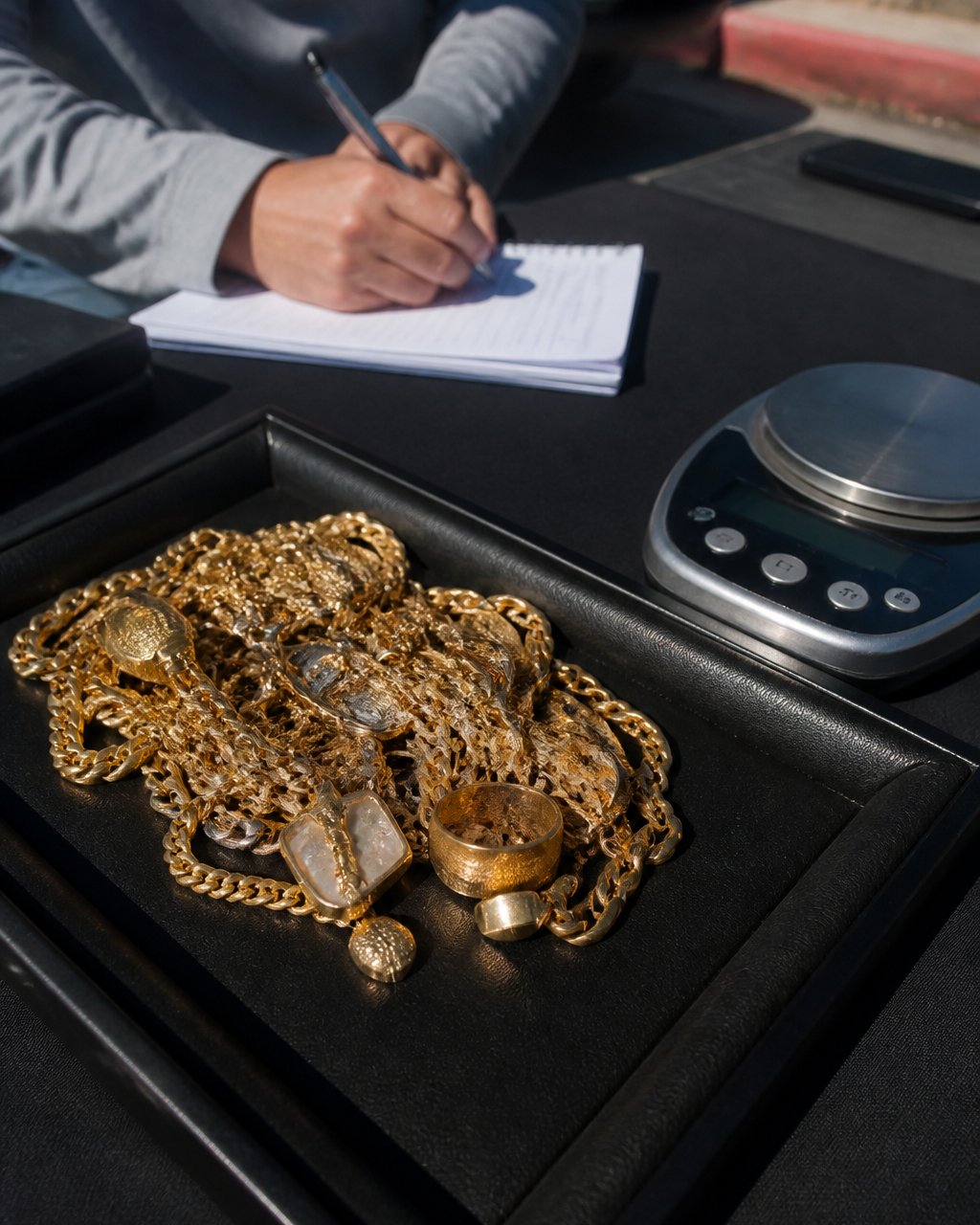
Ask for the offer in writing with the weight, karat and price per gram stated. That lets you check the math against the spot price yourself rather than trusting a headline number.
Pirates Finds Gold states that it tests with certified equipment and prices against the live spot market, and it provides a free, no-obligation quote.
Gold Buyer vs. Estate Sale: Choosing the Right Channel
Estate gold moves through several channels, and the right one depends on what the item is. A direct gold buyer, an estate sale, an auction house, a jeweler, a bullion dealer and an online buyer each trade speed, fees and likely net return differently.
The channels compared
- Direct gold buyer (mobile or storefront): fastest route. You get an offer based on weight and purity, often the same day, with payment by cash, check or transfer. Best for scrap, broken jewelry, dental gold and bullion where value is in the metal. The trade-off is that designer or collectible pieces are usually paid at melt, not at retail.
- Estate sale company: a liquidator organizes and runs a sale, typically taking a commission on gross proceeds plus setup and advertising costs. Best for households with a mix of furniture, collectibles and jewelry where the gold is one part of a larger clearance. Slower, and the commission comes off the top.
- Auction house: best for signed jewelry, rare coins and pieces with provenance. Buyers bid competitively, but the house takes a seller's commission and may charge photography, catalog and insurance fees. Payout can take weeks after the sale.
Matching the item to the channel
- Scrap and broken jewelry, dental gold, common 10K-18K pieces: direct gold buyer. Speed and a transparent melt-based offer matter more than retail markup.
- Bullion bars, rounds and common bullion coins: bullion dealer or direct buyer, whichever quotes the tighter spread over spot.
- Designer, antique or signed jewelry: jeweler or auction house, where a buyer may pay for design and provenance.
Comparing net proceeds, not gross
A headline sale price means little until fees come out. For an estate sale, subtract commission, advertising and any rental or setup costs from the expected sale price.
For a direct buyer, the net is simply the offer, since there is no commission.
A practical split many families use:
- Sell to a gold buyer: broken or scrap jewelry, dental gold, bullion, common 14K and 18K pieces
- Consider an estate sale or specialist: antique or designer jewelry, rare numismatic coins, pieces with documented provenance
The right channel depends on what the item is, and each one trades speed, fees and likely net return differently.
| Channel | Best for | Key difference |
|---|---|---|
| Direct gold buyer | Scrap, broken jewelry, dental gold, bullion | Fastest; offer based on weight and purity, often paid at melt |
| Estate sale company | Mixed households with furniture and collectibles | Commission taken from gross proceeds plus setup costs |
| Auction house | Signed jewelry, rare coins, pieces with provenance | Competitive bidding, but seller commission and fees apply |
| Jeweler | Designer or wearable pieces | May pay above melt, though many pay melt for scrap |
| Bullion dealer | Bars, rounds, bullion coins | Small premium over spot; the spread is the main cost |
| Online buyer | Shipping lots | No watching testing; shipping and insurance risk |
How to Sell Inherited Gold Safely and Document the Sale
Protect yourself with a few habits. If you are selling coins, follow this step-by-step guide to selling inherited gold coins.
Documentation matters more when the seller is an executor.
For safety, meet in a well-lit, public or secure setting, or have the buyer come to the home with another adult present. For more on safe ways to sell inherited gold, compare the options before you commit.
Watch out: do not sell the most valuable piece first on the strength of one offer. Get a second quote for anything with significant weight or collectible value, because a single offer gives you no comparison.
A Worked Example of Net Proceeds on Estate Gold
Suppose an estate includes 40 grams of 14K gold jewelry and 10 grams of 18K gold. To estimate proceeds:
- Pure gold in the 14K pieces: 40 x (14/24) = 23.33 grams
- Pure gold in the 18K pieces: 10 x (18/24) = 7.5 grams
- Total pure gold: 30.83 grams
- At a hypothetical spot price, multiply 30.83 grams by the price per gram to get the melt value.
If the melt value is $3,000, a buyer offering $2,700 is paying 90% of melt, which leaves a 10% spread to cover testing, handling and resale.
For an estate sale, subtract commission, advertising and any rental costs from the expected sale price to find the net. A piece that sells for $1,000 at a sale with a 30% commission nets $700 before other costs.
Gold Selling Checklist Before Your First Offer
Before accepting any offer, confirm the following:
- Every item is listed and grouped by type (jewelry, coins, bullion, dental gold)
- Karat marks, weights and any receipts are recorded
- You know the current spot price and have calculated a melt-value baseline
For a deeper look at a single category, read [Is Selling Dental Gold Worth It? A 2026 Guide], [How to Sell Inherited Gold Coins: A Step-by-Step Guide] and [Safe Ways to Sell Inherited Gold]. Ready for a number on your items? Get a Free Quote from Pirates Finds Gold, with no obligation and same-day payment by cash or Zelle.
Frequently Asked Questions
What is the best way to sell inherited gold?
For most families, the best route is to compare two or three options: a reputable gold buyer who tests each piece and pays against the day's spot price, an estate sale for items with collectible or sentimental value, or a liquidator who handles the whole estate. Gold buyers are usually fastest and most transparent for scrap and bullion. Estate sales can earn more for rare coins or designer pieces but take longer and carry fees. Get written offers from at least two buyers, confirm how each one tests and calculates payment, and keep records of every sale for the estate file.
How do you determine the value of gold jewelry in an estate?
Value starts with karat stamps (such as 14K or 18K), the total weight in grams, and a purity test. Melt value is the gold content multiplied by the current spot price, adjusted for karat. Collectible or designer pieces can be worth more than melt value, which is why a separate appraisal matters for signed or antique items. Ask for the testing method and the spot price used, and compare offers using the same numbers.
Should estate gold be appraised before it is sold?
For ordinary scrap jewelry and bullion, an appraisal usually adds little beyond a weight and purity test that a buyer can do on the spot. For coins, signed jewelry, antiques or pieces with unusual craftsmanship, a written appraisal from an independent appraiser is worth the cost because it documents value for the estate and helps you judge buyer offers. Keep the appraisal with the estate records.
Is it better to sell estate gold to a gold buyer or at an estate sale?
A gold buyer is better when the pieces are mostly melt-value gold, when you need cash quickly and when you want a simple, private transaction. An estate sale suits collectibles, designer jewelry and large households where the sale can cover many items at once. Estate sales involve setup time, marketing and commissions or fees, which reduce net proceeds. Compare the expected net amount from each channel before deciding.
What should you bring when selling gold from an estate?
Bring the death certificate or letters testamentary if you are the executor, a list of the items you plan to sell, any appraisals or receipts, and a photo ID. Keep sentimental pieces separate from the items to be sold. Bring the original packaging for coins and bullion if you have it. A buyer who asks for documents you do not have should explain why, and you should not hand over estate property until the terms are in writing.
How should an executor document the sale of estate gold?
Record each item with a description, weight, karat or purity, the buyer's name, the date, the price per gram or spot price used, and the amount paid. Keep the written offer, the payment receipt and any testing report. Share the records with the other beneficiaries and keep them with the estate accounting. Clear documentation protects the executor if questions come up later and makes final accounting simpler.
How can you tell whether gold jewelry is valuable beyond its melt value?
Look for maker's marks, signatures from known designers or manufacturers, antique or period styling, unusual gemstones, and intact original boxes or papers. These features can push a piece's value above its gold content. A qualified appraiser or a dealer who specializes in collectible jewelry can confirm whether a piece is worth more than its melt value. If you suspect a piece is valuable, get the appraisal before accepting a melt-based offer.
What are the safety tips for selling inherited gold?
Sell to buyers who test gold in front of you, show you the scale reading and provide a written offer before any items change hands. Avoid buyers who rush you, refuse to explain their pricing or ask you to leave items for later testing. Meet in a public or well-lit place, or choose a buyer who will come to your home or office and meet in the open. Do not carry large amounts of cash, and ask for a payment method that leaves a record.