 ultimate-guide
Safe Ways to Sell Inherited Gold
Last Updated: October 25, 2026
Quick Summary
To sell inherited gold safely, get at least three appraisals from different buyers, compare net proceeds rather than headline offers, and meet in person near a bank or police station with a trusted friend present. Understanding the gold's purity, weight, and whether it has collectible value helps you avoid underoffers and scams.
- Never clean or polish inherited gold pieces before selling, as this can reduce market value by removing patina or obscuring authenticity markings.
- Selling inherited gold soon after inheritance often produces little or no capital gains tax because your cost basis steps up to the fair market value on the date of death.
- Compare buyer offers using a worksheet that records spot price used, weight tested, purity confirmed, and net proceeds after all fees and deductions.
- Watch for red flags like pressure to decide immediately, offers significantly higher than others, or refusal to show testing methods.
- Insist on written documentation of the transaction including date, items, weight, purity, spot price, and final payment amount for tax records.
Table of Contents
- What to Do First After Inheriting Gold
- How to Value Inherited Gold Jewelry and Coins
- Getting an Inherited Gold Appraisal
- How to Compare Gold Buyer Offers
- Taxes on Selling Inherited Gold
- Secure Transaction Procedures and Scam Prevention
- Getting Your Free Gold Appraisal Today
- Frequently Asked Questions
What to Do First After Inheriting Gold
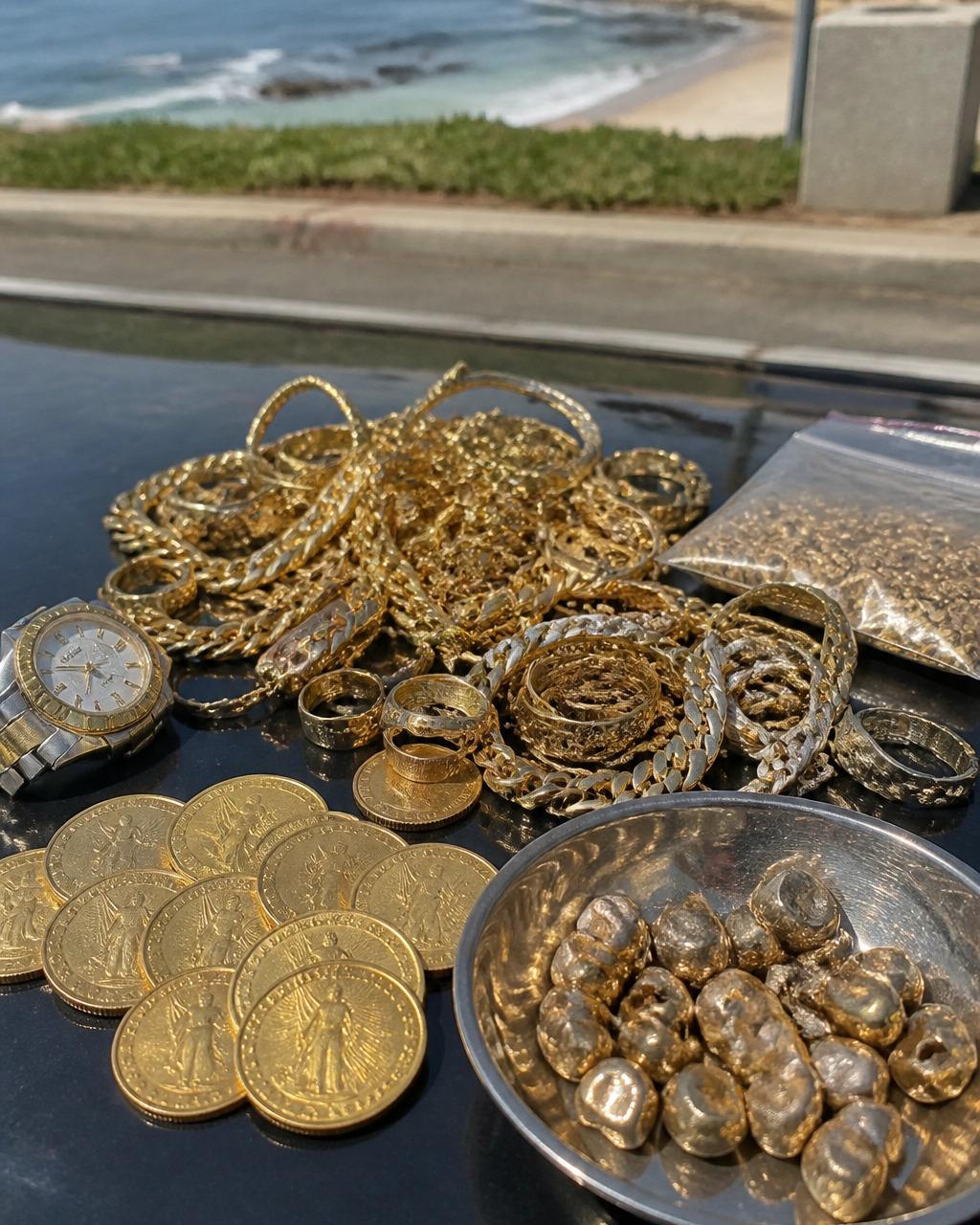
Inheriting gold, jewelry, coins, bullion, or dental gold, presents both opportunity and responsibility. First, secure the items and take inventory: photograph each piece, note markings or engravings, and store them separately from other valuables.
Next, resist the urge to clean, polish, or alter any pieces.
Consider your timeline and goals. Are you liquidating an estate quickly, or do you have time to research your options?
How to Value Inherited Gold Jewelry and Coins
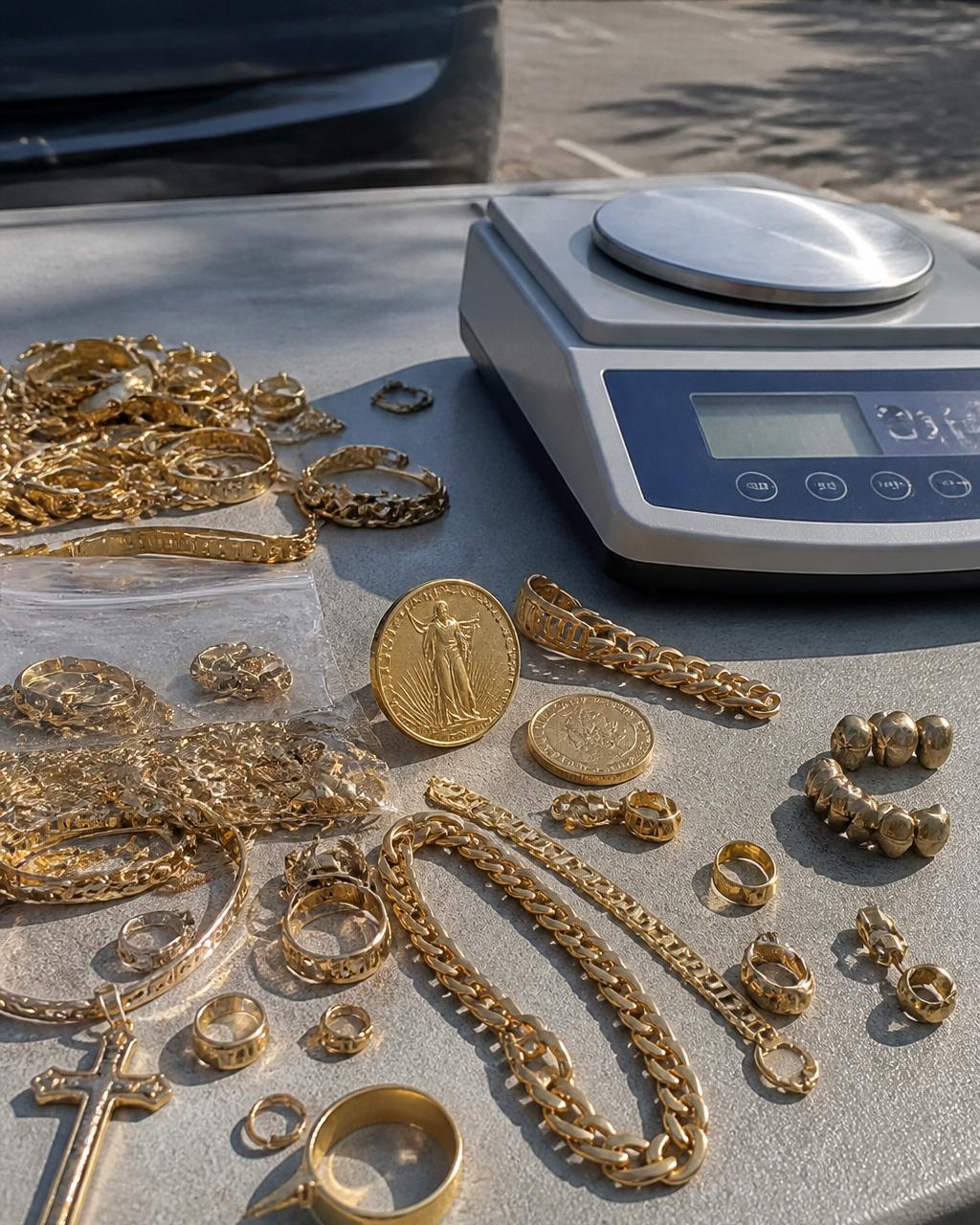
Understanding what you have is essential before approaching any buyer. Gold value depends on three factors: purity (karats for jewelry, fineness for bullion), weight, and current market conditions.
Understanding Karat and Fineness
Karat measures gold purity on a scale of 1 to 24. Pure gold is 24 karat; 18 karat is 75% gold; 14 karat is 58.3%; 10 karat is 41.7%.
Fineness is used for bullion and coins, expressed as a decimal or percentage, a coin marked ".999" is 99.9% pure gold.
Lower karat or fineness means less gold content and lower melt value, but lower-karat jewelry may still be valuable if it's collectible, vintage, or artisan-crafted.
Spot Price vs. Collectible Value
The spot price is the current market rate for one troy ounce of pure gold, updated constantly during trading hours.
Collectible or numismatic coins, vintage jewelry, or rare pieces may be worth far more than melt value.
To distinguish between the two: melt value is what a refiner will pay for the raw gold content. Collectible value is what a numismatist, antique dealer, or collector will pay for the piece as a whole.
Getting an Inherited Gold Appraisal
A professional appraisal gives you concrete information and protects you from underoffers. There are two main appraisal routes: independent appraisers and buyer appraisals.
An independent appraiser evaluates your gold without buying it, testing purity, weighing items, researching collectible or historical significance, and providing a written valuation report.
Buyer appraisals are free.
Private Gold Appraisal Services: A 2026 Guide explains the appraisal process in detail and helps you decide which route fits your situation.
How to Compare Gold Buyer Offers
Never accept the first offer. Comparing multiple buyers is the most effective way to ensure fair market value for inherited gold, since cost structures, dealer premiums, and business models vary. Compare offers on net proceeds, not headline price.
Local Dealers vs. Online and Mobile Buyers
Local jewelry stores and coin shops offer face-to-face evaluation and immediate payment, you can watch testing, ask questions, and walk away. But higher overhead often means lower offers.
Online and mail-in buyers eliminate geography: you ship your gold, they test it, and they wire payment or send a check.
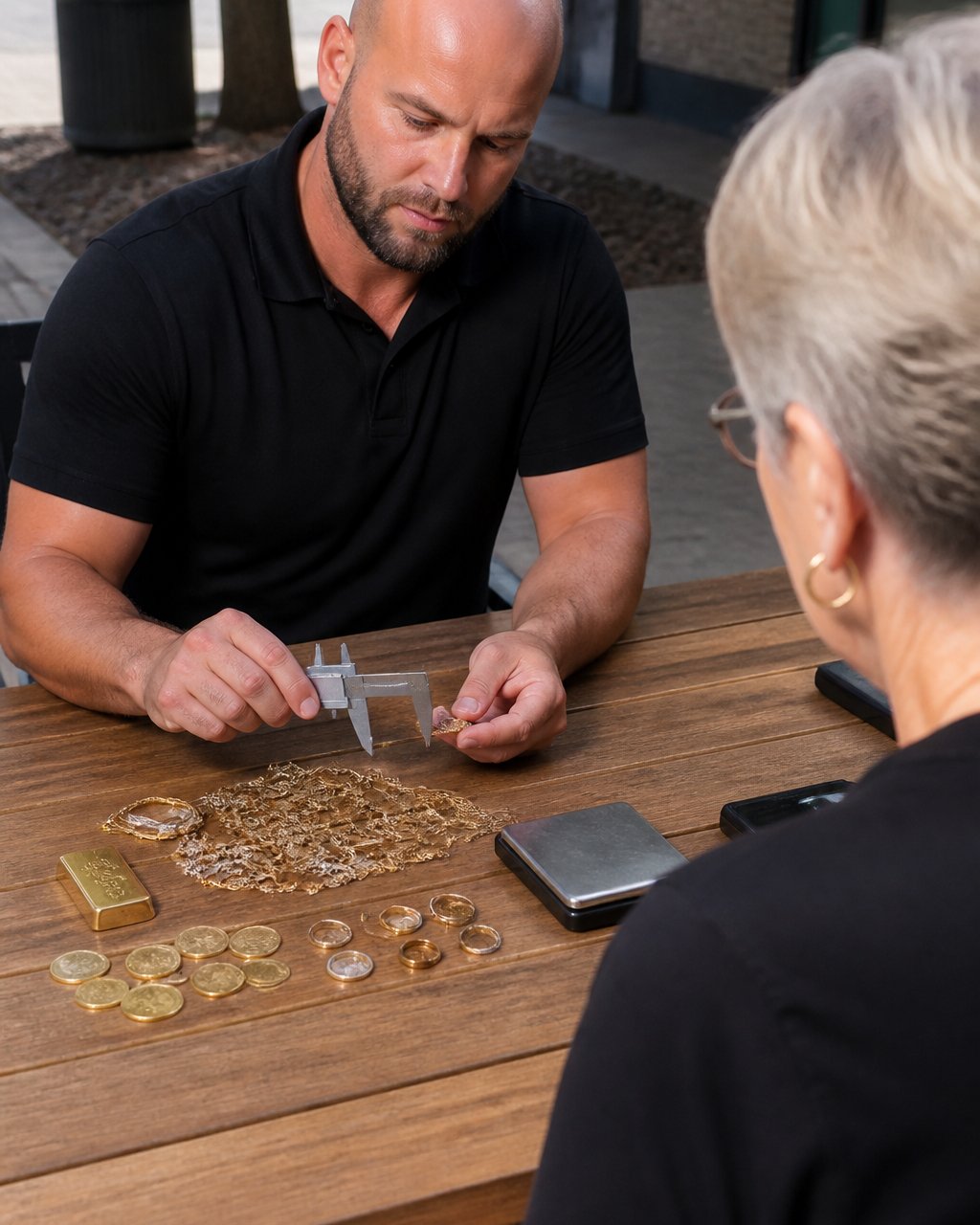
Mobile buyers like Pirates Finds Gold come to your home or office with certified testing equipment, combining in-person transparency with the convenience of not traveling, especially valuable for large quantities, mobility challenges, or privacy.
The Buyer-Comparison Worksheet
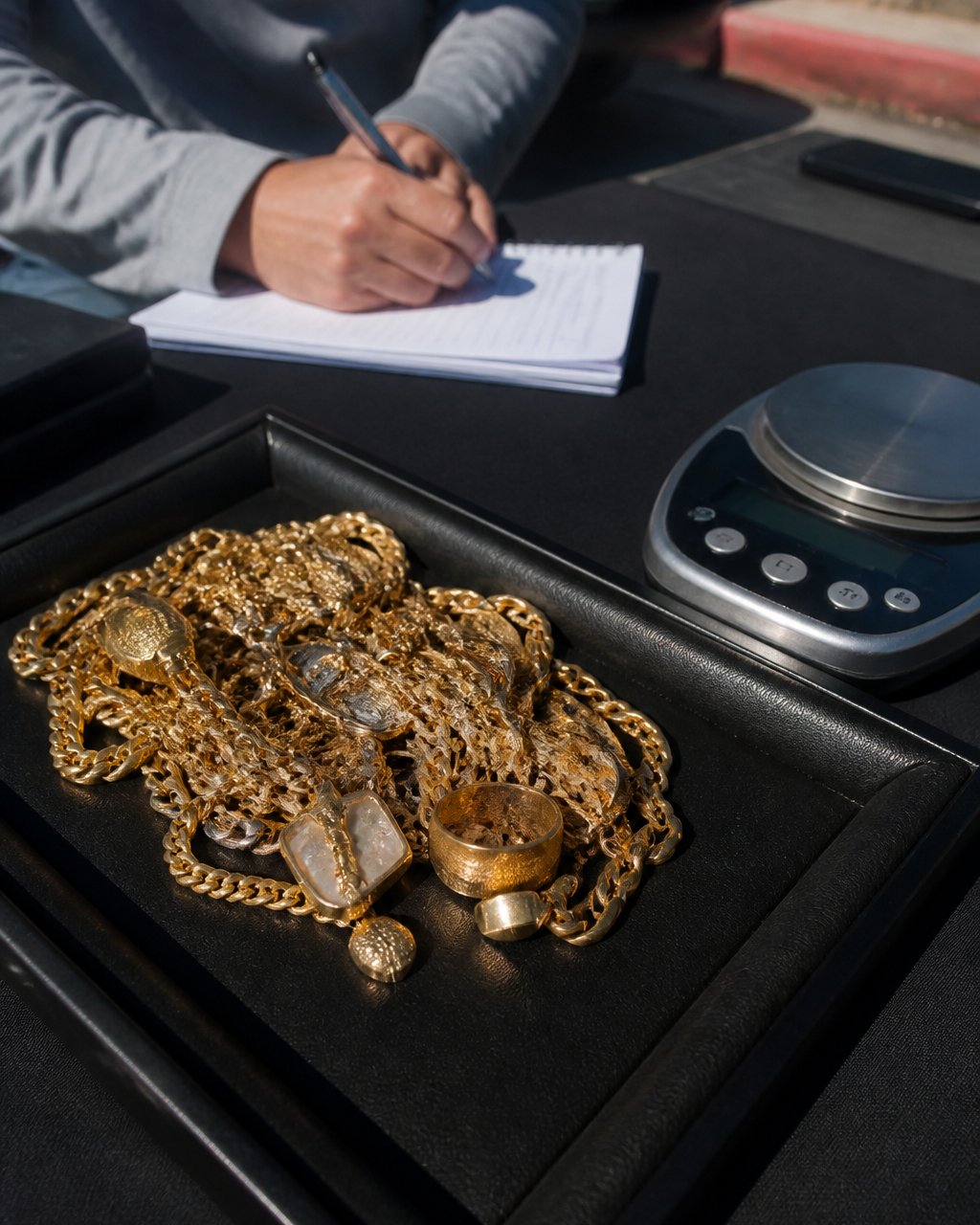
Before you request quotes, build a simple worksheet, a spreadsheet or a sheet of paper with one column per buyer. Record the same fields for every offer so you are comparing like with like:
| Field to record | Why it matters |
|---|---|
| Date and time of quote | Spot price moves; quotes are only comparable if taken close together |
| Spot price used by the buyer | Confirms they are pricing off the live market |
| Weight (grams or troy ounces) | Verify the buyer's scale matches yours |
| Purity/karat tested | Confirm the testing method and result |
| Gross offer | The headline number |
| Dealer premium or deduction | The buyer's markup, stated as a percentage or dollar amount |
| Shipping and insurance cost | Often deducted by mail-in buyers |
| Refining or assay fee | Some buyers charge this; ask directly |
| Payment method and timing | Cash now vs. check in days vs. wire |
| Net proceeds | Gross offer minus every fee and deduction |
Net proceeds is the only number that matters. A buyer quoting a higher gross offer but charging shipping, insurance, and a refining fee can easily net you less than a lower quote with no deductions.
Red Flags and Buyer Reputation Checks
Watch for buyers who pressure you to decide immediately, offer significantly more than others (a sign they may underdeliver later), or refuse to show their testing process.
Check reviews on Google, Yelp, and the Better Business Bureau for patterns: fair pricing, honest communication, professional behavior.
Ask each buyer how they calculate their offer. Do they base it on the live spot price? What dealer premium do they apply?
Taxes on Selling Inherited Gold
Tax is where most sellers of inherited gold get it wrong. The rules below are federal; state treatment can differ, so confirm your situation with a qualified tax professional before selling a meaningful amount.
The Step-Up in Basis, Explained With Numbers
When you inherit property, including gold, your cost basis generally becomes the fair market value on the date of the decedent's death (or the alternate valuation date if the estate elects it).
A simple illustration: a parent bought a 1-ounce gold coin years ago for $400. On the date of death it is worth $2,400, so your basis is $2,400, not $400.
The practical takeaway: selling soon after inheritance often produces little or no capital gains tax, because your basis is already close to market.
Short-Term vs. Long-Term and the Collectible Rate
Your holding period starts on the date of death, not when the decedent acquired the item. Sell within one year and any gain is short-term, taxed at ordinary income rates; hold longer and it's long-term.
Gold coins and bullion are generally treated as collectibles for federal tax purposes. Long-term gains on collectibles are taxed at a maximum rate of 28%, rather than the 15% or 20% rate for most other investments.
Records to Retain
Keep a file for every inherited item you sell. At minimum, retain:
- The date of death and the valuation date used for basis
- The appraisal establishing fair market value at death
- Purchase or sale receipts, including weight, purity, and spot price used
These records support your basis if the IRS or a state authority asks, and are essential if you're one of several heirs dividing proceeds.
Executors, Estates, and Multiple Heirs
Individual heirs generally don't owe income tax simply for inheriting property; income tax applies to gains after inheritance. The estate itself may have filing obligations, if large enough to require a federal estate tax return (Form 706), the executor reports the property's value there, and that value often anchors the heirs' basis.
If you're an executor selling gold for the estate, estate income tax rules apply rather than your personal return, and proceeds may need allocation among heirs per the will or state intestacy law.
This section is general information, not tax advice. Federal rules change, state rules vary, and your basis, holding period, and estate situation determine your actual liability. Consult a qualified tax professional before selling inherited gold.
Secure Transaction Procedures and Scam Prevention
Meeting Safely and Verifying Authenticity
When you've selected a buyer and agreed to meet, take security seriously: meet in a public, well-lit location during daylight hours.
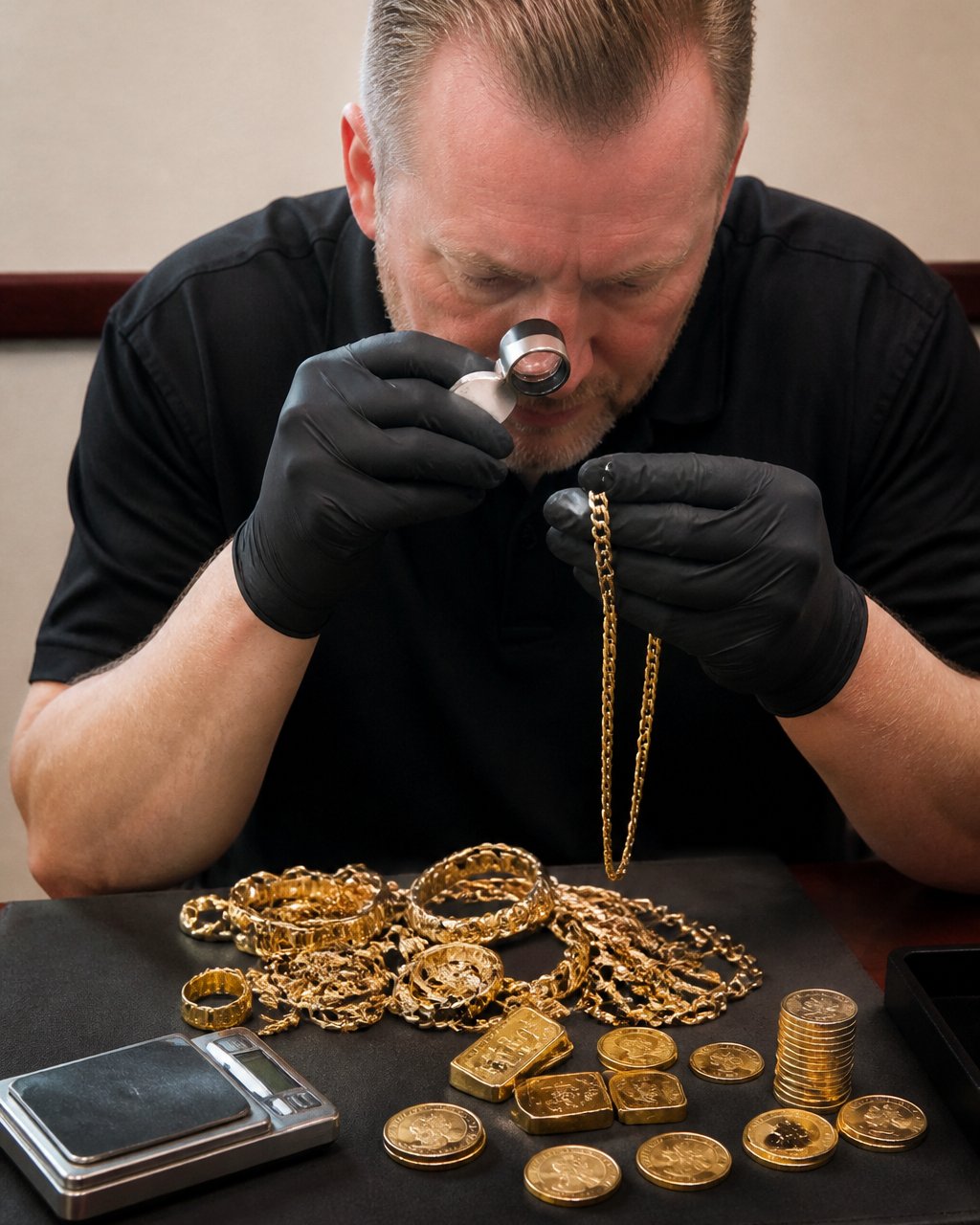
Bring a trusted friend or family member, plus your inventory and photographs for reference.
If something feels off, high pressure, unwillingness to explain their process, or an offer that's drastically different from others you've received, thank them and leave.
Payment Methods and Documentation
Insist on payment in a method you trust.
Ask for written documentation: date, items sold, weight, purity, spot price used, any dealer premium, and final amount paid. This record matters for taxes and proves the transaction if a dispute arises later.
Never leave your gold with a buyer for "further testing" or "refinement" unless you completely trust them and have a written agreement specifying when and how you'll receive payment.
Getting Your Free Gold Appraisal Today
Selling inherited gold doesn't have to be complicated or risky. The key is understanding what you have, comparing multiple offers, and working with a buyer you trust.
Pirates Finds Gold offers a free, no-obligation appraisal at your home or office.
Whether you're decluttering, managing an estate, or converting inherited gold into cash, we're here to make it simple and fair.
Frequently Asked Questions
Do you have to pay taxes when you sell inherited gold?
Tax obligations depend on your cost basis and holding period. If you inherit gold, your cost basis typically resets to the fair market value at the date of death, so you may owe no capital gains tax if you sell shortly after. However, if the gold increases in value after inheritance, you'll owe capital gains tax on that appreciation. Consult a tax professional to understand your specific situation and any estate tax implications.
How do you find out what inherited gold is worth?
Start by identifying the type and purity of your gold items. Check for karat markings on jewelry and use a scale to weigh them. Compare current spot prices online, then get a professional inherited gold appraisal from a reputable buyer. Many appraisers offer free, no-obligation quotes. For collectible coins or rare pieces, you may need a specialized numismatic appraiser to determine if the item's historical or collector value exceeds its melt value.
Where is the safest place to sell inherited gold?
The safest option combines reputation verification with secure procedures. Work with established local dealers, national buyers with verifiable credentials, or mobile services that come to your home or office. Check reviews, verify certifications, and ensure they use certified testing equipment. Meet in public places near banks or police stations when possible, or use services that prioritize privacy and security. Always get multiple offers before committing to a sale.
How can you avoid scams when selling inherited gold?
Verify the buyer's credentials and read customer reviews before engaging. Never allow testing equipment you cannot independently verify. Get written quotes with itemized details and spot price references. Compare multiple offers from different buyers. Avoid sellers who pressure you to decide quickly or offer significantly higher prices than competitors. Meet in safe locations, bring a trusted person with you, and never share personal financial information until you've confirmed the buyer's legitimacy.
Should you get inherited gold appraised before selling it?
Yes, getting an appraisal before selling is highly recommended. A professional inherited gold appraisal helps you understand the true value of your items, protects you from lowball offers, and provides documentation for tax purposes. Free appraisals from reputable buyers give you baseline information without obligation. If you have rare coins or collectible pieces, a specialized appraisal may reveal value beyond melt price that you'd otherwise miss.
What's the difference between melt value and collectible value?
Melt value is the intrinsic worth of the gold based on its weight and purity at current spot prices. Collectible or numismatic value is what buyers pay for rare, historical, or specially minted coins and jewelry based on demand, rarity, and condition. Some inherited gold coins may be worth significantly more to collectors than their melt value. A professional appraisal identifies which items fall into each category so you don't accidentally sell a rare piece at scrap prices.
Inheriting gold is an opportunity to turn items you may not use into value. By following these steps, securing your items, understanding their composition and value, comparing multiple buyers, and working with a transparent, reputable service, you'll navigate the process confidently and fairly.