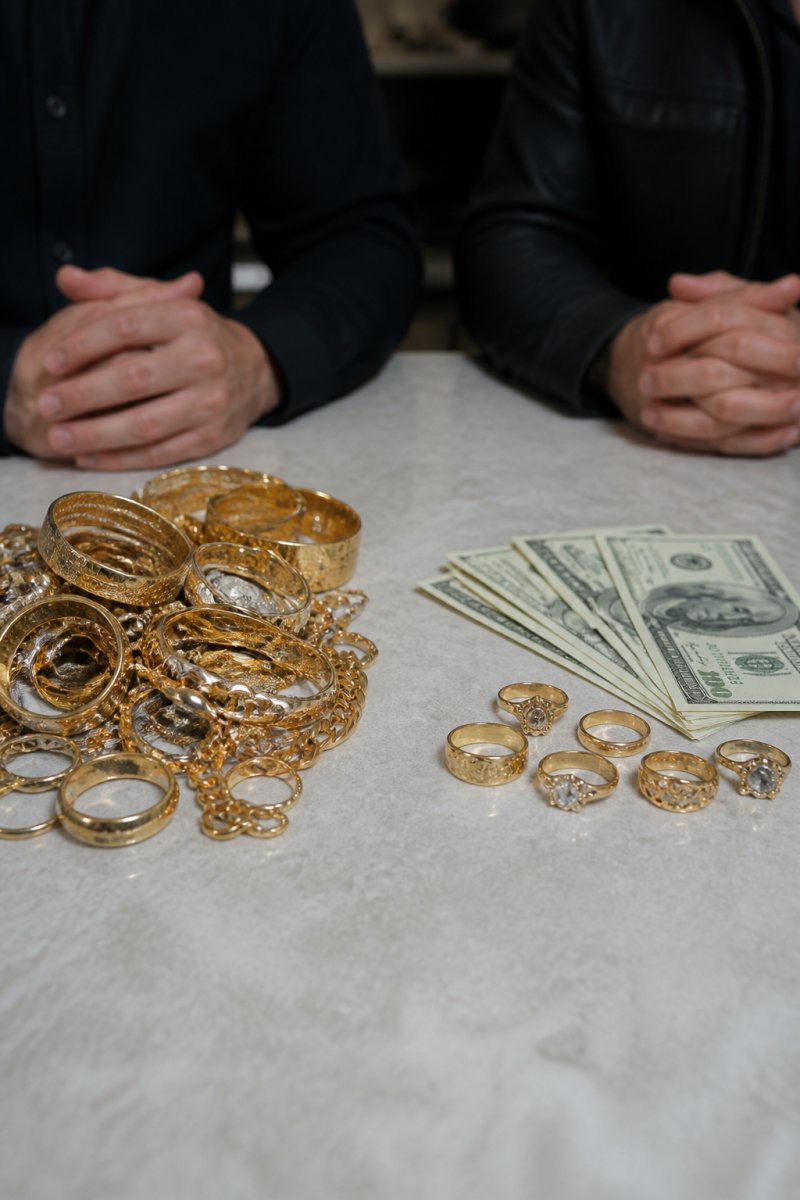
 comparison
Selling Gold Jewelry vs Pawn Shop: Which Pays More
Table of Contents
- Selling Gold Jewelry vs Pawn Shop: Key Differences
- How to Calculate Gold Jewelry Value
- Selling Broken Gold Jewelry: Special Considerations
- The Gold Buying Process Explained
- Pros and Cons: Direct Sales vs Pawn Shops
- Security, Privacy, and Safety Considerations
- Which Option Should You Choose?
- Frequently Asked Questions
Last Updated: October 4, 2026
Selling Gold Jewelry vs Pawn Shop: Key Differences
When you need cash from unwanted gold, you face a choice between selling gold jewelry vs pawn shop options, each with distinct advantages. The difference in what you receive can be substantial. At Pirates Finds Gold, we help people understand exactly why selling gold jewelry directly to a specialized buyer typically nets more cash than pawning it.
The core distinction is simple: a pawn shop lends you money against your items as collateral. A gold buyer purchases your items outright. These are fundamentally different transactions with different payouts.
What You Get When You Sell
When you sell gold jewelry directly to a buyer, you receive payment based on the current market value of the gold content. The buyer evaluates the karat weight, tests the purity, and offers you a price tied to the live spot price.
Direct sales eliminate the middleman markup. The buyer's margin comes from the difference between what they pay you and what they receive when they refine or resell the gold. For a reputable buyer pricing against the live spot market, this margin is typically transparent and competitive.
What You Get When You Pawn
A pawn shop gives you a loan. You leave your gold as collateral and receive a percentage of its estimated value, typically 40-60% of melt value. You're expected to repay the loan plus interest within a set period (usually 30-90 days). If you don't repay, the shop keeps the gold and sells it.
The pawn model protects the shop's risk. They're betting you'll reclaim your items. If you don't, they absorb the cost of holding the inventory and then selling it. That risk is why pawn payouts are so much lower than direct sales.
How to Calculate Gold Jewelry Value
Understanding how gold is valued removes the guesswork from any transaction. Whether you're selling or pawning, the same fundamental calculation applies.
Understanding Karat Weight and Purity
Gold purity is measured in karats. Pure gold is 24 karat. Most jewelry is lower: 18 karat (75% gold), 14 karat (58.3% gold), or 10 karat (41.7% gold).
The karat directly determines how much gold content you actually have. A 14-karat ring weighing 5 grams contains roughly 2.9 grams of pure gold. The remaining weight is alloy (silver, copper, or other metals) that has no value to a gold buyer.
To calculate your gold content, multiply the weight by the karat percentage. A 10-gram 18-karat bracelet contains 7.5 grams of pure gold.
Spot Price and Melt Value
The spot price is the live market rate for one troy ounce of pure gold. It fluctuates constantly based on global demand and economic conditions.
One troy ounce equals 31.1 grams.
Example: You have 5 grams of pure gold. That's 0.16 troy ounces. If spot price is $2,000 per troy ounce, your melt value is $320.
A direct gold buyer will offer you a percentage of melt value. A pawn shop typically offers 40-60% of melt value.
Why Pawn Shops Offer Lower Payouts
Pawn shops operate on a loan model. They're not buying your gold; they're lending against it. Their lower offer reflects the risk they take.
If you reclaim your items, the shop profits from interest. If you don't, the shop must liquidate the gold themselves. That liquidation process, testing, refining, selling, costs money and time. The low payout is their insurance against that risk.
Additionally, pawn shops often serve customers in financial distress. The lower payout is baked into their business model.
Selling Broken Gold Jewelry: Special Considerations
Broken jewelry doesn't reduce the value of the gold itself.
However, broken items require more work to process. A gold buyer must test the broken pieces separately to confirm purity across all fragments. This takes time.
The real advantage of selling broken gold directly: you avoid the pawn shop's inherent discount. Even with a small processing deduction, you'll receive more than a pawn shop's 40-60% offer.
Dental gold, crowns, bridges, fillings, is also pure gold. It's typically 16-22 karat. Dental gold commands the same spot-price-based valuation as jewelry.
The Gold Buying Process Explained
Understanding how a professional gold buyer evaluates your items builds confidence in the transaction.
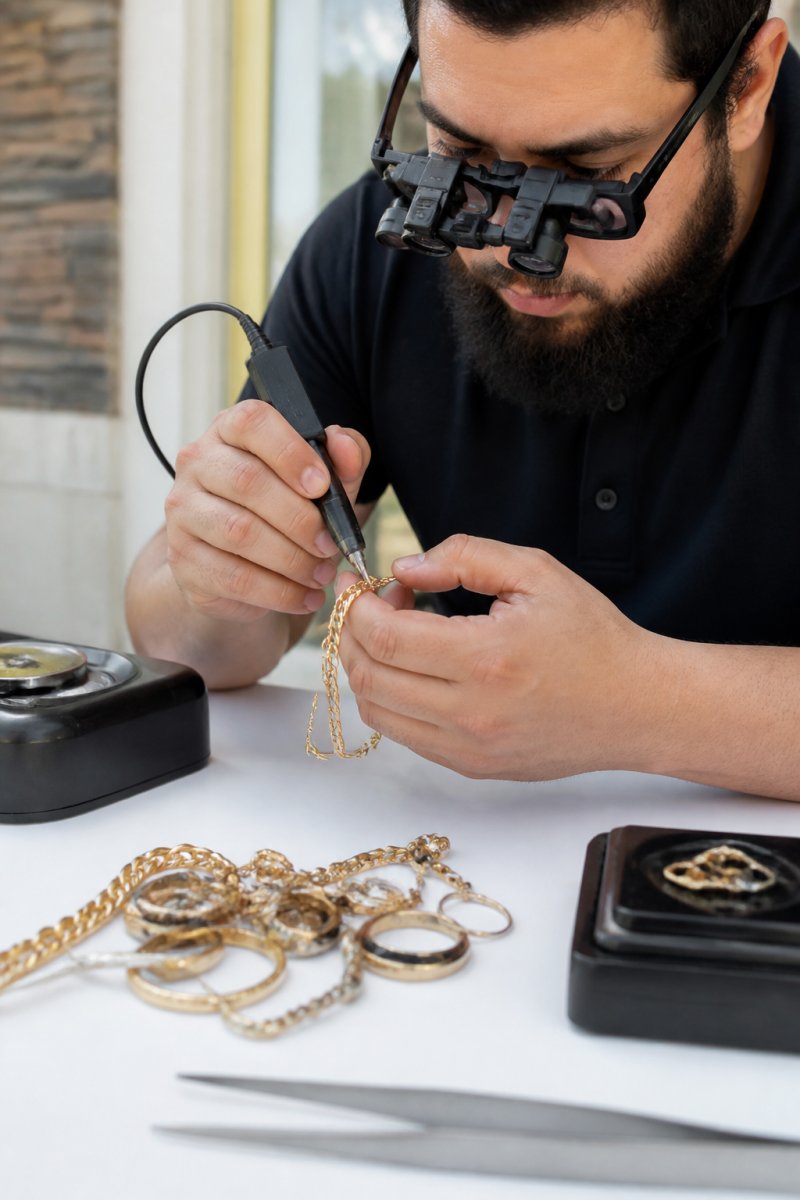
Testing and Authentication
A reputable gold buyer uses certified testing equipment to verify karat weight and purity. Common methods include acid testing, electronic testing, and X-ray fluorescence (XRF). Each method is non-destructive and takes minutes.
Acid testing involves applying a small amount of acid to the gold's surface. The reaction indicates purity. Electronic testing uses conductivity to estimate karat weight.
You should watch the testing process. A transparent buyer welcomes your observation. If a buyer refuses to test in front of you or pressures you to accept an offer without testing, walk away.
Weight Verification
After testing confirms purity, the buyer weighs your items on a calibrated scale. The weight is measured in grams. The buyer converts grams to troy ounces (the standard for precious metals pricing) and calculates the pure gold content.
Ask to see the scale reading. Reputable buyers display the weight clearly and explain the conversion. Some buyers round down slightly, this is normal practice, but the rounding should be transparent.
Transparent Pricing Against Market Rates
Example: Spot price is $2,000/oz. You have 0.2 troy ounces of pure gold. The buyer offers 90% of melt value. Your offer is 0.2 × $2,000 × 0.90 = $360.
This calculation is transparent and verifiable. You can check the spot price yourself on any financial website. If the buyer's math doesn't match, ask them to recalculate.
A pawn shop typically doesn't show you this calculation. They offer a flat amount without explaining the methodology. That opacity is a red flag.
Pros and Cons: Direct Sales vs Pawn Shops
| Aspect | Selling Directly | Pawning |
|---|---|---|
| Payout | 85-95% of melt value | 40-60% of melt value |
| Speed | Same-day payment | Same-day or next day |
| Obligation | None, item is sold | Must repay loan or lose item |
| Interest | No interest charged | Interest accrues daily |
| Transparency | Pricing shown openly | Offer often unexplained |
| Privacy | Transaction is private | Pawn record created |
| Reclaim Option | Item is gone | Can reclaim within loan period |
Advantages of Selling Gold Directly
You receive significantly more cash. For someone with 50 grams of gold jewelry, that difference is real money.
The transaction is final and obligation-free. You don't worry about repayment deadlines or accumulating interest. The sale is clean.
Direct sales are private. No pawn record is created. For people concerned about privacy, especially those managing estates or selling inherited items, this matters.
You can shop around. Multiple gold buyers in any area will give you competing offers. You choose the best one.
Disadvantages of Selling Gold Directly
Once you sell, the items are gone. If you change your mind, you can't reclaim them. A pawn shop lets you reclaim your items if you repay the loan, useful if you're uncertain about selling.
Finding a reputable buyer requires research. Not all gold buyers are trustworthy. You need to verify their testing methods, check reviews, and confirm they price fairly.
Online buyers require shipping. Shipping valuable items carries risk, loss, theft, or damage. Local buyers eliminate this risk but require you to meet in person.
Advantages of Pawn Shops
You retain the option to reclaim your items. If you pawn jewelry and change your mind, you can repay the loan and get your items back. This flexibility appeals to people uncertain about selling.
Pawn shops are ubiquitous and easy to find. Most neighborhoods have one. The process is quick and straightforward.
No shipping or travel required for online transactions. You walk in, get an offer, and leave with cash.
Disadvantages of Pawn Shops
Payouts are substantially lower. You're trading 30-50% of your gold's value for the flexibility to reclaim items. Most people don't reclaim pawned jewelry, they sell it outright.
Interest compounds quickly. If you extend the loan, interest adds up fast.
Pawn records are created. Your items are logged, and a record exists. For privacy-conscious sellers, this is a disadvantage.
Offers are often unexplained. Pawn shops rarely show you the testing results or the calculation behind their offer.
Security, Privacy, and Safety Considerations
Selling gold involves cash transactions and valuable items. Safety matters.
Meeting a stranger to exchange gold for cash carries risk. A reputable buyer meets you at a safe location, near a bank, a police station, or a public place with witnesses. Pirates Finds Gold meets clients directly near a bank or police station near you, ensuring both parties feel protected.
Never invite a buyer into your home unless you've thoroughly vetted them. Check reviews, verify their business legitimacy, and ask for references.
For online sales, shipping introduces risk. Items can be lost, stolen, or damaged in transit. Insurance helps but doesn't eliminate the risk. Local transactions eliminate shipping risk entirely.
Privacy is a valid concern. Pawn shops create records.
If you're selling inherited gold or managing an estate, discretion is important. Direct sales to a reputable buyer keep the transaction private.
Which Option Should You Choose?
Choose direct sales if you want maximum cash. The 85-95% offer is substantially better than a pawn shop's 40-60%.
Choose a pawn shop if you need flexibility. If you're uncertain about selling or might want to reclaim items, pawning preserves that option. Accept that you'll receive less cash for that flexibility.
Choose a mobile buyer like Pirates Finds Gold if you value convenience and privacy.
For most people selling gold jewelry, broken gold, or dental gold, a direct sale to a reputable buyer beats pawning.
Frequently Asked Questions
Is it better to pawn or sell my gold?
Selling gold directly typically yields more cash than pawning. When you sell, you receive a percentage of the current spot price based on weight and purity. Pawning means the shop loans you money against your gold as collateral, offering only 40-60% of melt value, plus you must repay the loan with interest. Choose selling if you don't need the item back; choose pawning only if you want to reclaim it later.
How do I know if I'm getting fair market value when selling gold jewelry?
Fair market value depends on the current spot price of gold, your item's karat weight, and its total weight in troy ounces. Reputable buyers use certified testing equipment to verify purity and transparent pricing tied to live market rates. Ask the buyer to show you their testing process and explain how they calculated your offer based on current spot price. Avoid buyers who won't disclose their methodology or offer significantly below market rates.
What's the difference between scrap gold value and jewelry value?
Scrap gold value is based purely on the metal content, weight and purity, multiplied by the current spot price. Jewelry value may include a premium for craftsmanship, brand, or design, but most buyers focus on melt value for broken or unwanted pieces. High-end designer jewelry or vintage pieces might be worth more to a specialist jeweler than to a scrap buyer, but for damaged or outdated items, you're typically paid for the gold content alone.
Can you actually sell broken gold jewelry?
Yes. Broken gold jewelry is valuable for its metal content regardless of condition. Buyers test the purity, weigh the item, and pay based on the spot price and karat weight. Broken clasps, missing stones, or bent pieces don't reduce the gold's value. In fact, broken jewelry is often easier to process because there's no question about whether to preserve its original form, it goes straight to refining.
Why do pawn shops offer lower prices than gold buyers?
Pawn shops operate on a loan model, not a purchase model. They offer 40-60% of melt value because they assume risk: the item might not sell, storage costs money, and they need margin to stay profitable. Gold buyers who purchase outright can offer closer to market rates because they're buying for resale or refining, not holding as collateral. The lower pawn shop offer reflects their business model, not your item's actual worth.
Selling unwanted gold should be straightforward. You deserve a fair price based on current market value, transparent testing, and professional service. At Pirates Finds Gold, we handle all forms of gold, jewelry, coins, bullion, dental gold, with certified equipment and pricing tied to the live spot market. Get a free quote today and see exactly what your gold is worth. No obligation. No pressure. Just honest appraisals and same-day payment.