 how-to
Private Gold Appraisal Services: A 2026 Guide
Table of Contents
- What Are Private Gold Appraisal Services?
- Why You Need a Professional Appraisal
- How to Sell Gold Jewelry Safely
- The Gold Appraisal Process Explained
- Mobile Gold Buying Services: Convenience and Privacy
- What to Expect in Your Appraisal Report
- Red Flags in Appraisal Reports and How to Spot Them
- Accreditation and Credentials That Matter
- Frequently Asked Questions
Last Updated: September 21, 2026
What Are Private Gold Appraisal Services?
Private gold appraisal services are independent evaluations of gold jewelry, coins, bullion, and other precious metal items conducted by certified professionals. These services provide transparent, unbiased assessments of your gold's weight, purity, and market value without the pressure tactics of retail or pawn shop settings.
A private gold appraiser's reputation depends on fair dealing, not profit margins. They use certified testing equipment to verify karat weight and authenticity, then price items against the live spot market rather than arbitrary markups.
A professional appraiser documents findings in a detailed report for insurance, estate planning, or sales negotiations. Piratesfindsgold comes directly to your location with testing equipment to provide no-obligation quotes on the spot.
Why You Need a Professional Appraisal
A professional appraisal solves this problem by giving you verified information before you commit to anything. You'll know exactly what your gold is worth based on current market conditions, not guesswork or outdated pricing.
Professional appraisals serve critical purposes for estate management and insurance. An appraisal documents inherited gold's value for tax purposes and helps settle estates fairly. For homeowners, an appraisal report supports insurance claims if items are lost or damaged.
Professional testing protects you from selling items undervalued or accepting payment for items that don't meet claimed karat standards.
How to Sell Gold Jewelry Safely
Gather and organize items by type, jewelry, coins, dental gold, or bullion, to streamline the appraisal process.
Check the current spot price for gold on the morning of your appointment to establish a baseline and prevent accepting below-market offers.
Prioritize transparency and convenience. Legitimate appraisers test items in front of you using certified equipment. Mobile services like Piratesfindsgold eliminate the need to visit unfamiliar locations or hand over items to strangers in insecure settings.
Meet in safe, public locations or have the appraiser come to your home or office. Never conduct sales in isolated areas or with buyers who pressure immediate decisions.
- Verify the buyer's credentials and references
- Request written documentation of all items evaluated
- Get the offer in writing before agreeing to anything
- Confirm the payment method and timing upfront
- Keep copies of all appraisal documents for your records
The Gold Appraisal Process Explained
The gold appraisal process begins with visual inspection and documentation. The appraiser examines each item, notes its condition, and records identifying marks like hallmarks or maker stamps. This documentation becomes part of your official appraisal report.
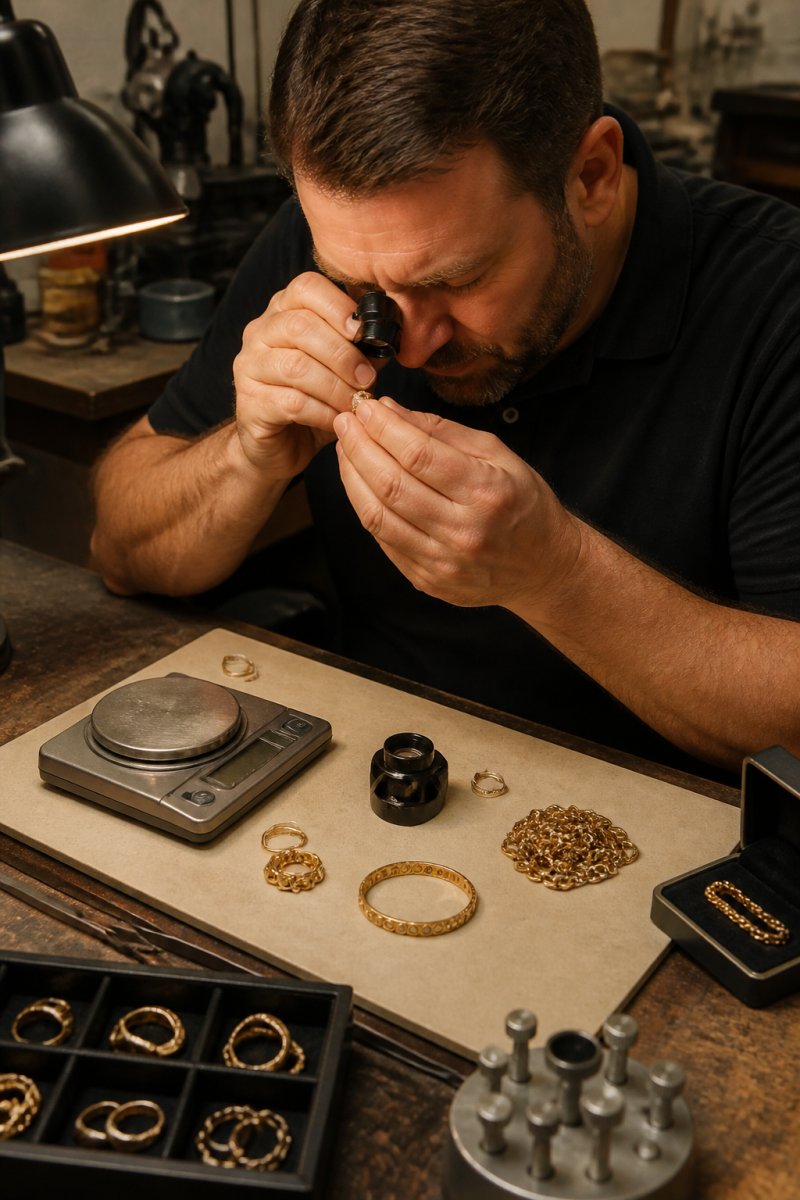
Testing determines purity and weight using certified equipment, acid testing, X-ray fluorescence, or weight analysis, without damaging items.
Gemological Analysis and Testing
Gemological analysis identifies gold composition. Karat weight ranges from 10K to 24K, with most jewelry between 10K and 18K.
Appraisers document karat weight, total weight, gemstones, and condition in reports, creating an official record that protects you.
Fair Market Value vs. Insurance Replacement Value
Fair market value represents what your gold would sell for on the open market today, the number that matters when selling.
Insurance replacement value accounts for craftsmanship, design, and gemstones, higher than fair market value and used for insurance claims, not sales.
An appraiser documents both values in their report. Understanding the difference prevents confusion when you're comparing offers or filing insurance claims.
Mobile Gold Buying Services: Convenience and Privacy
Mobile gold buying services eliminate travel. The appraiser comes to your home, office, or location of choice, especially convenient for busy professionals, elderly homeowners, or estate liquidation.
Mobile appraisers conduct business discreetly, avoiding public exposure and protecting privacy for sensitive estate matters.
Piratesfindsgold operates throughout the greater San Diego area, coming directly to your home or office for maximum privacy. We meet so it’s safe for both parties and convenient for you!! Same-day payment via cash, Zelle, or preferred method means you walk away with payment immediately after the appraisal.
Mobile services also reduce the temptation to make rushed decisions. You're in a comfortable, familiar setting rather than a high-pressure retail environment. You can take time to review the offer and ask questions without feeling rushed.
What to Expect in Your Appraisal Report
A professional appraisal report is a detailed document that serves multiple purposes depending on your situation. Understanding what should be in the report and how to use it protects you whether you're selling, insuring, or managing an estate.
Core elements of a legitimate appraisal report:
- Item-by-item description: Each piece listed separately with metal type, weight, karat content, condition, and any identifying marks (hallmarks, maker stamps, serial numbers)
- Testing methodology: Explanation of how karat content was determined (acid test, X-ray fluorescence, weight analysis) and what equipment was used
- Spot price reference: The date of appraisal and the gold spot price used for calculations on that specific date
- Appraiser credentials: Name, professional certifications, contact information, and signature
- Valuation breakdown: How the final price was calculated, including weight × purity × spot price, plus any adjustments for condition or rarity
- Date and expiration: When the appraisal was conducted and how long the valuation is considered current (typically 30-90 days, depending on market volatility)
Appraisals for different purposes require different language and focus:
For selling: A fair market value appraisal documents what your gold would sell for on the open market today. This is the valuation that matters when negotiating with buyers. The report should clearly state "fair market value" and reference current spot prices. This appraisal is typically valid for 30-60 days, as gold prices fluctuate daily.
For insurance: An insurance replacement value appraisal estimates what it would cost to replace the item new, accounting for craftsmanship, design, gemstones, and current market conditions. This value is usually higher than fair market value. Insurance companies require detailed descriptions and professional credentials. Request that the appraiser note "insurance replacement value" explicitly in the report. Keep this document with your homeowner's or renter's insurance policy.
For estate planning and tax purposes: Estate appraisals must comply with IRS standards for valuation. The report should include the date of death (or date of appraisal if the estate is being settled later), the appraiser's qualifications, and a statement of the valuation method used. The IRS recognizes fair market value as the price at which property would change hands between a willing buyer and willing seller on the valuation date. This type of appraisal may be required for estate tax returns (Form 706) or to establish a stepped-up basis for inherited items.
How to use your appraisal report after the transaction:
Red Flags in Appraisal Reports and How to Spot Them
Legitimate appraisal reports contain specific details and transparent methodology. Red flags appear when reports are vague, incomplete, or seem designed to justify low valuations.
- Reports lacking item-by-item breakdown
- Missing or unclear testing methodology
- Outdated or unexplained spot prices
- Unsigned or undated documents
- Appraisers refusing to explain their calculations
- Valuations significantly lower than multiple other quotes
Accreditation and Credentials That Matter
Professional credentials indicate that an appraiser has met rigorous standards for knowledge, ethics, and continuing education. However, not all credentials carry equal weight, and knowing which ones matter is essential to avoiding unqualified buyers.
Red flags in credentials:
- Appraisers who claim credentials but cannot provide membership numbers or allow you to verify them
- "Certified" claims without naming the certifying organization
- Credentials from unaccredited or obscure institutions
- Appraisers who refuse to discuss their qualifications or continuing education
- No professional liability insurance (ask directly, legitimate appraisers carry it)
Frequently Asked Questions
How do I know if a private gold appraisal service is giving me fair market value?
A legitimate appraiser should base their offer on the live gold spot market price, test your gold with certified equipment, and provide transparent documentation of the karat weight and purity. Ask them to explain their testing process and how they arrived at their valuation. Independent appraisers who are not tied to a single buying location tend to offer more objective assessments. Request a detailed appraisal report that breaks down the weight, purity, and market rate used, this protects you and ensures accountability.
What's the difference between fair market value and insurance replacement value in a gold appraisal?
Fair market value is what your gold would sell for in an open market today, which is typically lower than insurance replacement value. Insurance replacement value reflects what it would cost to replace the item new, including craftsmanship and design. For selling gold, you'll receive fair market value, which is based on current spot market prices for precious metals. Understanding this distinction helps you set realistic expectations and avoid disappointment when selling inherited jewelry or gold coins.
Can a mobile gold buying service really test gold accurately on-site?
Yes, professional mobile appraisers use certified laboratory-grade testing equipment to measure karat weight and purity on-site. This includes acid testing, electronic scales, and gemological analysis tools. The advantage of mobile appraisal is convenience and transparency, you see the testing happen in real time. Ensure the appraiser can document their findings in writing and explain their methodology. Certified equipment and trained professionals make on-site testing just as reliable as laboratory appraisals.
What should I do after receiving a private gold appraisal if I decide not to sell?
Store your appraisal report in a safe place, it documents the condition, weight, and value of your gold items. If you own gold jewelry, keep it clean and properly stored to maintain its condition. Have your gold re-appraised every 3-5 years if you plan to sell later, since market values change. Update your homeowner's or renter's insurance with the appraisal details to ensure adequate coverage. This documentation is especially valuable for estate planning or if you decide to sell down the road.