 how-to
Value of Dental Gold for Sale: A Complete Guide
Table of Contents
- Understanding the Value of Dental Gold for Sale
- Factors That Determine Dental Gold Value
- Dental Gold Purity and Composition: What You Need to Know
- How to Identify Gold in Dental Work
- Calculating Your Dental Gold Value: Using a Dental Gold Value Calculator
- How to Sell Dental Gold: A Practical Workflow
- Assay Methods and Purity Testing Explained
- Estimated Value vs. Actual Payout: What to Expect
- Frequently Asked Questions
Last Updated: October 9, 2026
Understanding the Value of Dental Gold for Sale
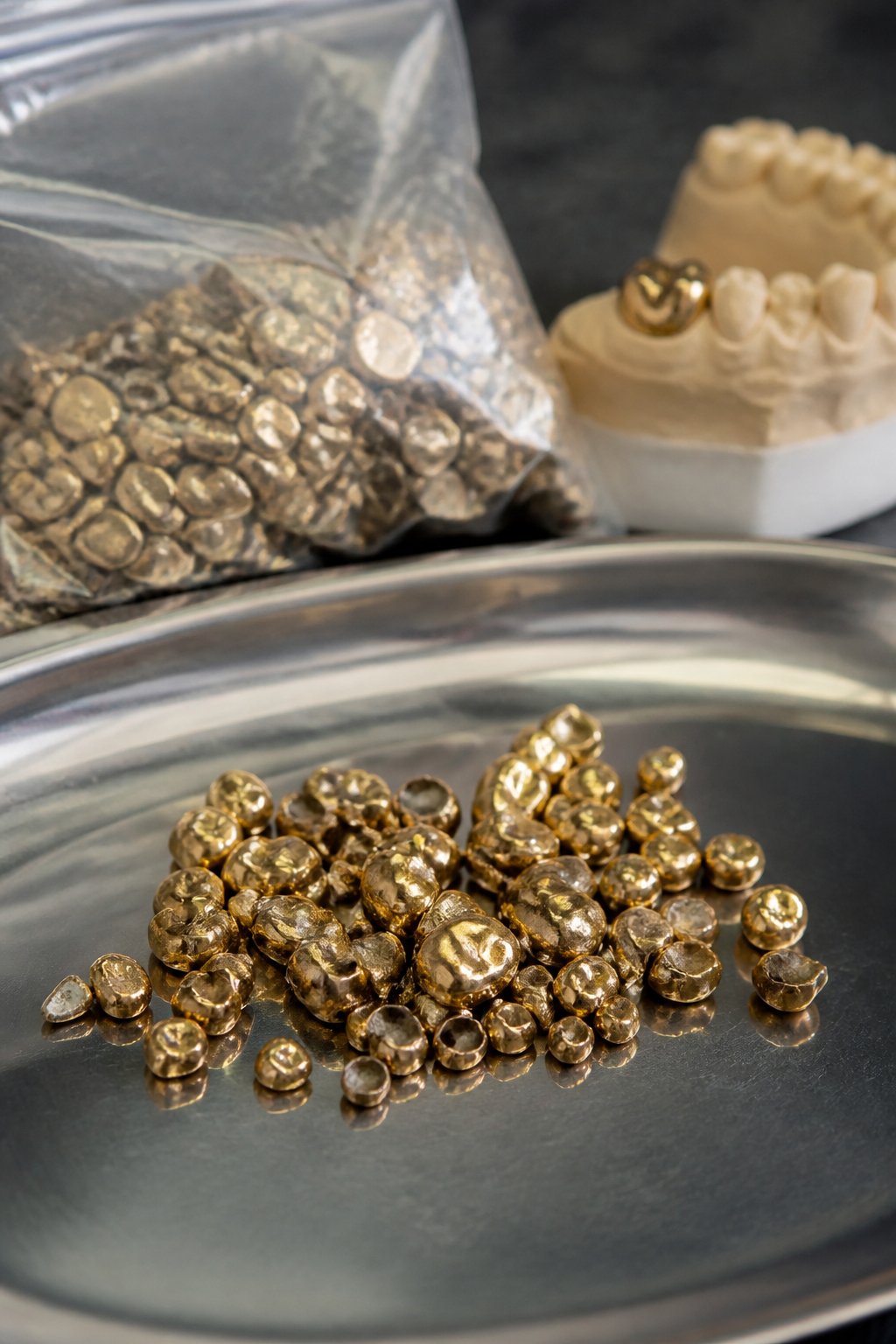
The value of dental gold for sale depends on three main factors: the purity of the gold, the weight of the piece, and the current market price. Dental gold includes crowns, bridges, inlays, and other restorations that contain real gold mixed with other metals. At Pirates Finds Gold, we evaluate each piece carefully to determine what it's actually worth.
Most people don't realize their old dental work has real cash value. A single crown can contain anywhere from a fraction of a gram to several grams of gold. When you multiply that across multiple pieces, the total adds up quickly. The key is understanding how purity, weight, and market conditions all work together to set a fair price.
Factors That Determine Dental Gold Value
Several specific elements affect how much your dental gold is worth. The most important are purity, weight, and alloy composition. Let's break down each one.
Gold Purity and Karat Ratings
Gold purity is measured in karats. The higher the karat, the more pure gold the piece contains. Dental gold typically ranges from 10 karat to 22 karat, though some specialty pieces go higher.
Here's what the numbers mean:
- 24 karat = 100% pure gold (rare in dental work)
- 22 karat = 91.7% gold content
- 18 karat = 75% gold content
- 14 karat = 58.3% gold content
- 10 karat = 41.7% gold content
Dental crowns and bridges are usually 14 to 18 karat gold. This blend makes them durable enough to withstand chewing forces while keeping costs reasonable. Lower karat pieces contain more non-gold metals, which lowers the overall value but also makes them more practical for dental use.
Weight and Composition
Weight matters enormously. A heavier crown is worth more because it contains more gold. Dental pieces are typically weighed in grams. A single crown might weigh 1 to 3 grams, while a bridge with multiple units can weigh 5 grams or more.
The composition also affects value. Dental gold isn't pure gold, it's an alloy. Along with gold, dental crowns contain metals like:
- Copper
- Silver
- Palladium
- Platinum
- Base metals like nickel or cobalt
These other metals are necessary for strength and durability. However, when you sell dental gold, only the gold content determines your payout. The refiner removes the other metals during processing.
Dental Gold Purity and Composition: What You Need to Know
Understanding what's actually in your dental gold helps you set realistic expectations for value. Dental restorations are engineered for function, not maximum gold content. A dentist chooses the alloy based on strength, biocompatibility, and cost, not gold percentage.
This is where many sellers get disappointed. They assume a gold crown is mostly gold. In reality, a 14 karat crown is less than 60% gold. The rest is other metals that give it the hardness needed for a tooth restoration.
Different dental labs and dentists use different alloy formulas. Some use higher karat gold to reduce the amount of base metals. Others use lower karat alloys for cost savings. This variation is normal and expected.
How to Identify Gold in Dental Work
Identifying whether a piece actually contains gold is your first step. Not all crowns and bridges are gold, some are porcelain, ceramic, or composite materials. Only gold pieces have resale value.
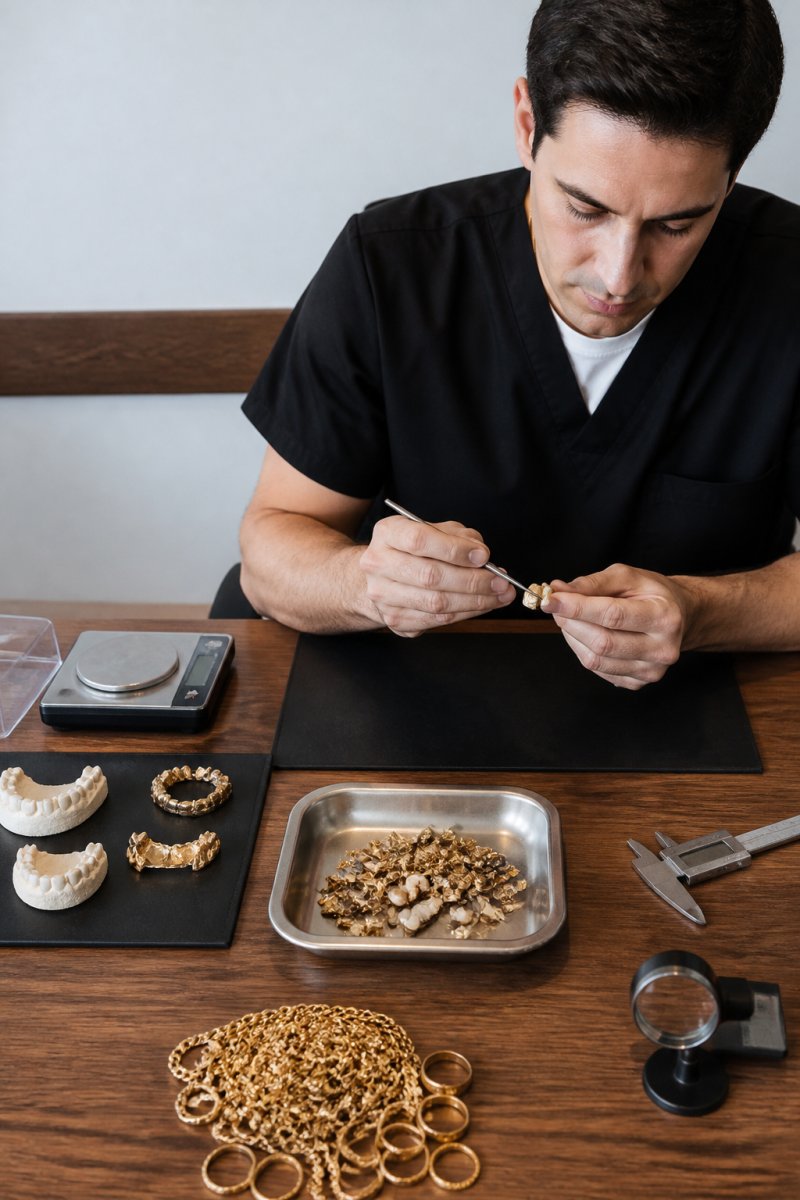
Look for these visual clues:
- Color: Gold pieces have a warm, yellowish or reddish tone. Ceramic and porcelain crowns are white or off-white.
- Weight: Gold is heavy for its size. Pick up the piece, does it feel substantial? Non-gold materials feel lighter.
- Shine: Gold has a metallic sheen. Ceramic and porcelain have a duller, more matte finish.
- Markings: Many gold dental pieces have karat stamps (14K, 18K, etc.) on the inside surface.
If you're unsure whether a piece is gold, a magnet test provides a quick answer. Gold is not magnetic.
The most reliable method is professional testing. A certified buyer uses X-ray fluorescence (XRF) or other assay methods to determine exact karat rating and gold content. This takes minutes and gives you precise information.
Calculating Your Dental Gold Value: Using a Dental Gold Value Calculator
Calculating dental gold value requires three pieces of information: weight, karat rating, and current gold spot price. The formula is straightforward once you have those numbers.
Step-by-Step Valuation Process
Step 1: Weigh your dental gold. Use a precision scale that measures in grams. Most kitchen scales aren't accurate enough.
Step 2: Determine the karat rating. If your piece has a karat stamp, note it. If not, professional testing is necessary.
Step 3: Check the current spot price. The gold spot price changes daily based on market conditions.
Step 4: Convert weight to troy ounces. Divide your weight in grams by 31.1. This gives you the troy ounce equivalent.
Step 5: Calculate gold content. Multiply the troy ounce weight by the karat percentage.
Step 6: Multiply by spot price. Take your pure gold troy ounces and multiply by today's spot price.
Remember: this is the theoretical value.
Current Spot Price and Market Fluctuations
The gold spot price is the current market rate for one troy ounce of pure gold. This price moves constantly based on global supply and demand. Economic conditions, inflation, interest rates, and geopolitical events all influence the price.
When you sell dental gold, the buyer typically bases their offer on the current spot price at the time of evaluation. This is fair because the buyer's own payout depends on what they can sell the refined gold for.
This is why timing matters. Sellers sometimes watch the spot price for days or weeks waiting for it to rise. For most people, the difference between selling today and waiting isn't worth the delay. The spot price typically fluctuates within a small percentage range over short periods.
How to Sell Dental Gold: A Practical Workflow
Selling dental gold is simpler than many people think. The process takes a few steps and can be completed in a single day. Here's how it works from start to finish.
Preparing Your Dental Gold
Start by gathering all the pieces you want to sell. Look through old jewelry boxes, drawers, and storage areas. Many people forget they have dental gold until they search intentionally.
Once you've collected your pieces:
- Clean them gently with warm water and mild soap. Don't use harsh chemicals or abrasive scrubbing, you want to preserve the piece for testing.
- Separate gold pieces from non-gold items. This makes the evaluation faster.
- Keep any documentation you have. If you know the karat rating or have receipts from dental work, bring those along.
- Don't worry about condition. Broken, bent, or damaged pieces have the same gold value as perfect ones. The refiner melts everything down anyway.
Getting Your Gold Tested and Appraised
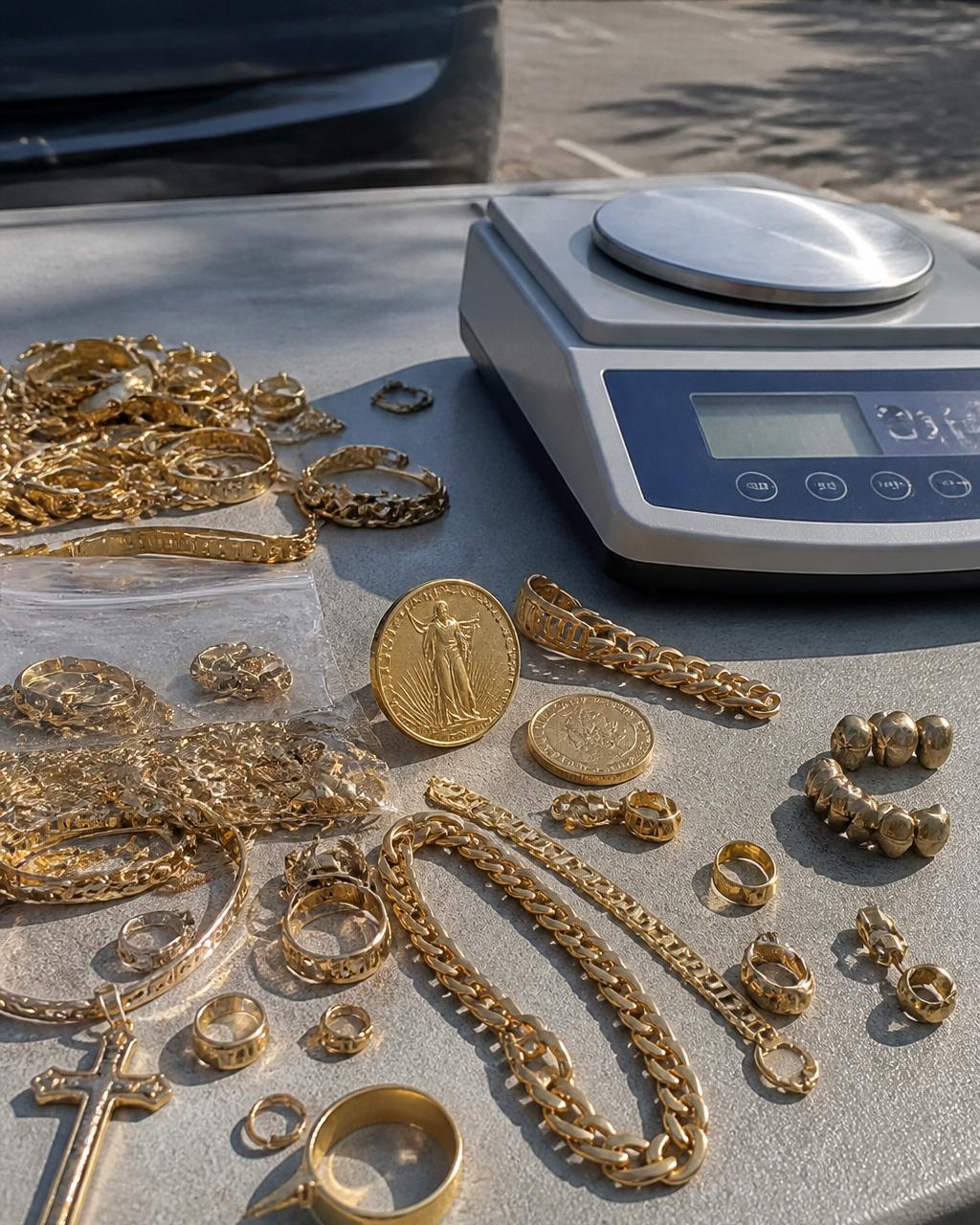
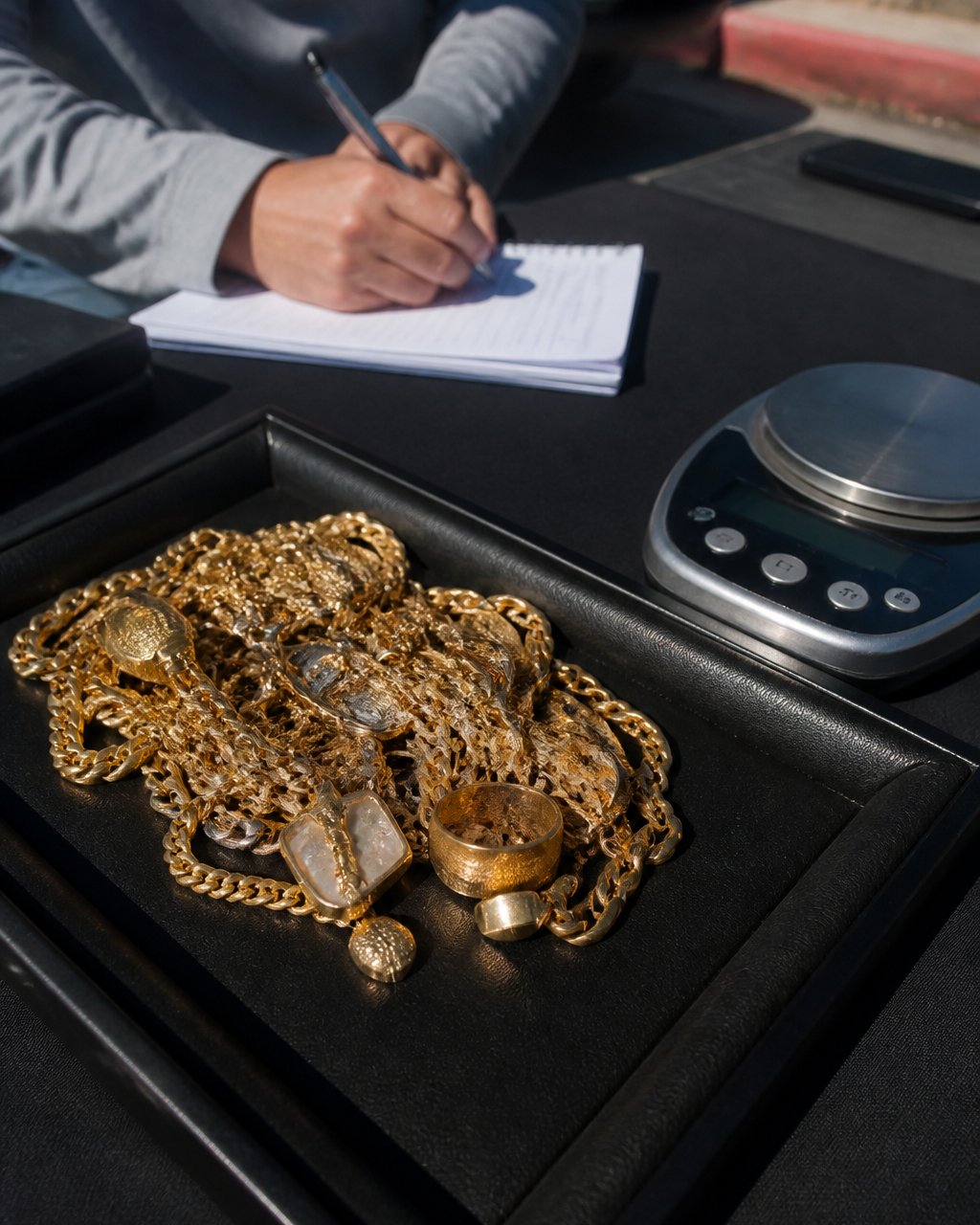
Professional testing is essential. This is where you learn the exact karat rating and weight of your pieces. A buyer like Pirates Finds Gold uses certified equipment to test your gold on the spot. The process takes minutes.
During testing, the buyer:
- Weighs each piece on a precision scale
- Uses X-ray fluorescence or similar technology to determine karat rating
- Documents the results clearly
- Explains what they found and why
This transparency matters. You should understand exactly what the buyer is telling you about your gold. If anything is unclear, ask questions. A legitimate buyer welcomes questions and explains their process.
Comparing Offers and Finalizing the Sale
Once you know what you have, you can compare offers from different buyers. Get at least two appraisals so you understand the market range. Offers will vary based on the buyer's overhead, refining costs, and profit margins.
When comparing offers, look beyond just the price:
- Payment method: Cash, check, or electronic transfer? What's fastest for you?
- Timing: Same-day payment or does it take days?
- No-pressure policy: Can you walk away without obligation?
- Transparency: Did the buyer explain their calculations clearly?
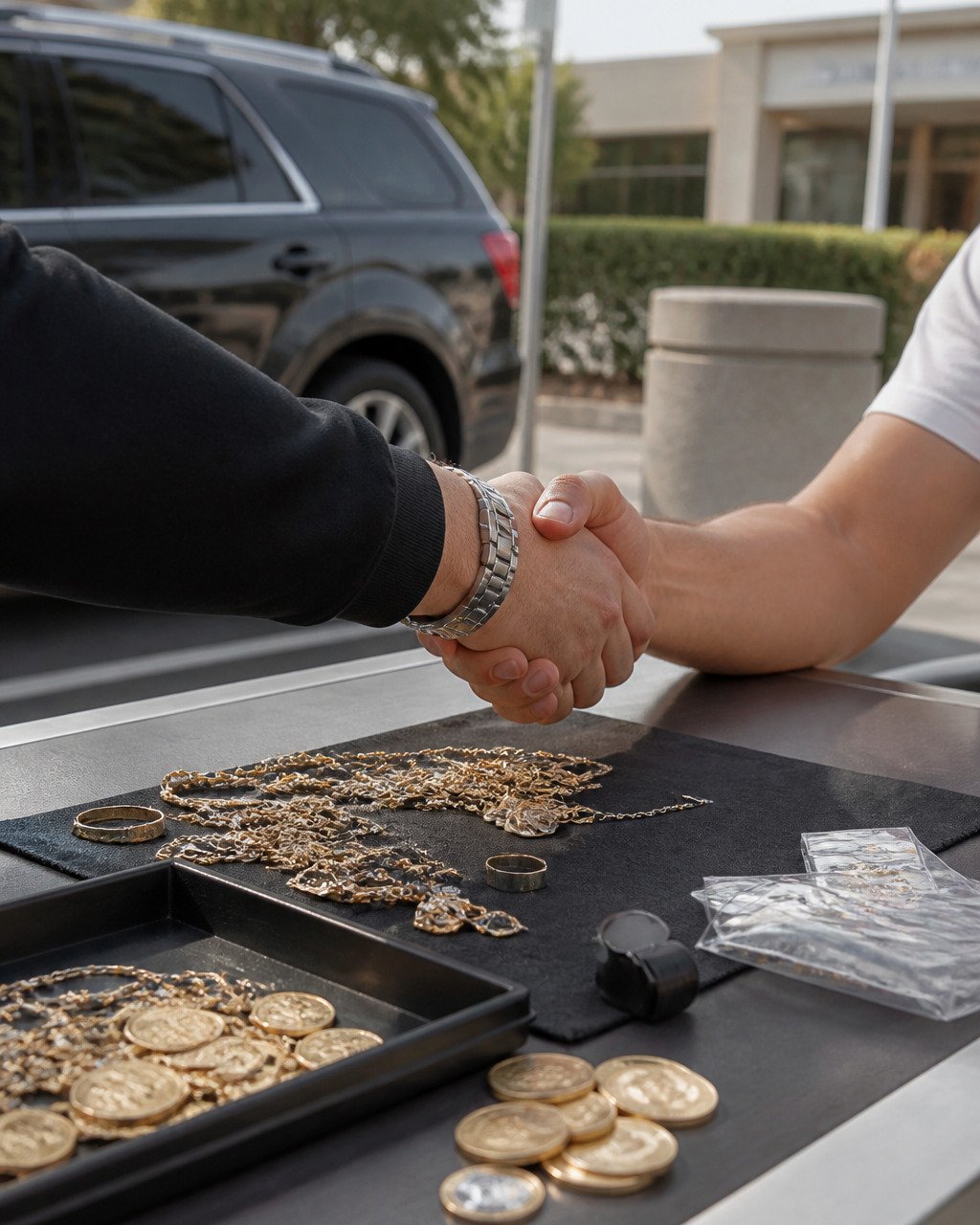
At Pirates Finds Gold, we provide same-day payment via cash, Zelle, or your preferred method. Our appraisals are free and come with no obligation. If you decide not to sell, there's no pressure. We test and evaluate your gold honestly so you know exactly what you're working with. We come directly near a bank or police station for safety and convenience.
Assay Methods and Purity Testing Explained
Understanding how your gold is tested builds confidence in the valuation. Different testing methods exist, and each has strengths.
X-ray fluorescence (XRF) is the most common method for dental gold. A small handheld device emits X-rays that penetrate the surface of the gold.
Fire assay is the most precise method but requires destroying a small sample of the gold.
Spectrometry uses light wavelengths to analyze the metal composition. Like XRF, it's non-destructive and provides quick results. Different spectrometry types (atomic absorption, inductively coupled plasma) offer varying levels of precision.
For dental gold, XRF testing is standard. It's accurate enough for the refining process and doesn't damage your pieces. Most professional buyers use certified XRF equipment that's calibrated regularly to ensure accuracy.
Estimated Value vs. Actual Payout: What to Expect
Here's the reality many sellers don't understand: the estimated value and the actual payout are different numbers. The difference comes down to refining costs.
Refining fees typically range from 10% to 30% of the gold value, depending on the refiner and the complexity of the material.
A reputable buyer is transparent about this. They'll tell you:
- The estimated value based on gold content
- The refining fee they'll deduct
- Your net payout after fees
This honesty matters. It shows the buyer isn't trying to hide anything. You know exactly what you're getting before you agree to sell.
At Pirates Finds Gold, we base our offers on current spot price. We explain the math so you understand where your final payment comes from.
Selling dental gold doesn't have to be complicated or stressful. When you know the weight, karat rating, and current market price, you can calculate the fair value yourself and spot offers that don't measure up.
Pirates Finds Gold makes this process simple.
Frequently Asked Questions
How much is 1 gram of dental gold worth?
The value of 1 gram of dental gold depends on the current spot price of gold and the purity of your specific dental piece. Most dental gold ranges from 14-22 karat, meaning it contains 58-92% pure gold. To calculate your dental gold value accurately, multiply the weight in grams by the current spot price per gram, then adjust for purity percentage. For example, a 2-gram 18-karat crown at a $65 per gram spot price would be worth approximately $234 before refining fees. Contact a local buyer for a precise appraisal based on real-time pricing.
Can I sell dental crowns and bridges, or just jewelry?
Yes, dental crowns, bridges, and other dental gold work are absolutely worth selling. In fact, dental gold often contains higher purity levels than costume jewelry, making it valuable to precious-metal refiners. Crowns are typically 14-22 karat gold, and bridges may contain even higher purity. Broken, chipped, or discolored dental pieces are just as valuable as intact ones, the buyer is interested in the gold content, not the condition. Bring all your dental scrap to your appraiser for testing.
How do I know I'm getting a fair price for my dental gold?
A fair dental gold valuation starts with certified testing to confirm purity and weight. Reputable buyers use X-ray fluorescence (XRF) or assay methods to verify gold content without damage. Your price should reflect the current live gold spot market, adjusted downward only for legitimate refining fees, typically 10-15% of the gross value. Ask your buyer to explain their testing method, show you the weight and purity results, and provide a written quote before you commit. Compare offers from multiple buyers to ensure transparency.
What happens to dental gold after I sell it?
After you sell your dental gold, the buyer sends it to a precious-metal refiner who melts it down and separates it from other alloy metals like copper, silver, or palladium. The refiner confirms the exact gold content through assay, then either sells the pure gold to market buyers or keeps it in inventory. The refining process is standard across the industry and ensures the gold is recirculated back into jewelry manufacturing, dentistry, electronics, or investment markets. This is why refining fees are deducted from your payout, they cover the cost of processing and testing.