 how-to
How to Appraise Gold Coins at Home: A Step-by-Step Guide
Table of Contents
- What a Gold Coin Appraisal Tells You
- How to Identify Gold Coins: Country, Denomination, and Year
- Understanding Gold Content and Purity
- How to Calculate Gold Coin Melt Value
- Gold Coin Grading and Condition Assessment
- Evaluating Rarity, Demand, and Collector Value
- Questions to Ask a Professional Coin Appraiser
- Spotting Counterfeits and Altered Coins at Home
- Frequently Asked Questions
Last Updated: October 20, 2026
What a Gold Coin Appraisal Tells You
When you appraise gold coins, you determine their actual value by evaluating multiple factors: gold content, purity, weight, condition, rarity, and current market demand.
At Pirates Finds Gold, we use certified testing equipment to measure gold content and purity on the spot. This gives you transparency about what your coins are actually worth, not guesswork or lowball offers.
An appraisal answers specific questions: Is this coin solid gold or plated? What's the melt value based on today's spot price? Does this coin have collector value beyond its gold content? Are there authenticity concerns?
Many people assume all old gold coins are valuable. The reality is more nuanced. A coin's age alone doesn't determine its worth. A common date coin in poor condition might be worth only its gold content.
How to Identify Gold Coins: Country, Denomination, and Year
Identifying your gold coins is the first step in any appraisal. You need to know the country of origin, the denomination, and the year it was minted. This information directly affects value.
Start by examining the coin's surface carefully. Look for text, symbols, and inscriptions. Most coins display the country name, though abbreviations are common. U.S. coins say "United States of America." British coins show "Britannia" or the monarch's profile. European coins typically display the country name in the local language.
The denomination tells you the face value and, often, the gold content. U.S. gold coins come in standard sizes: $1, $2.50, $5, $10, and $20 pieces. Each denomination has a specific weight and purity. A $20 gold piece, for example, contains approximately one troy ounce of gold.
Reading the Mint Mark and Date
The mint mark is a small letter indicating where the coin was produced. On U.S. coins, it appears near the date. Common marks include "S" for San Francisco, "D" for Denver, "O" for New Orleans, and "CC" for Carson City. Coins from certain mints are rarer and command higher prices.
The date is equally important. Certain years produced fewer coins or coins with specific characteristics that affect value. For example, some years had production halts, making those coins scarcer. The date appears on the obverse (front) of most coins.
Record both the mint mark and date carefully. These details matter when researching comparable sales or consulting with a professional appraiser.
Determining Country of Origin
Different countries produced gold coins with distinct designs and specifications. U.S. coins feature American symbols like eagles and Liberty. British coins show the reigning monarch. French coins display the French coat of arms. German coins often feature eagles or regional symbols.
Knowing the country helps you understand the coin's historical context and authenticity. It also determines which grading standards and price guides apply. U.S. coins follow American Numismatic Association standards. European coins may use different grading systems.
If you're unsure about origin, look for language clues. Text on the coin is usually in the country's official language. Latin phrases are common on older European coins.
Understanding Gold Content and Purity
Gold purity is measured in karats or fineness. Karat measures the proportion of pure gold in an alloy (24 karat is pure gold). Fineness expresses purity as a decimal: .999 is 99.9% pure.900 is 90% pure.
Most gold coins are not pure gold. They're alloyed with other metals for durability. U.S. gold coins minted before 1933 are typically 90% gold and 10% copper. Modern U.S. bullion coins are 91.67% gold (22 karat).
The purity directly affects melt value. Higher purity means more gold content per coin. A coin marked ".900" contains 90% of its weight in pure gold. A coin marked ".999" contains nearly all pure gold.
Many coins have the fineness stamped on the surface.
How to Calculate Gold Coin Melt Value
Melt value is what your coin is worth based purely on its gold content at the current spot price. It's the floor value, the minimum you should expect to receive.
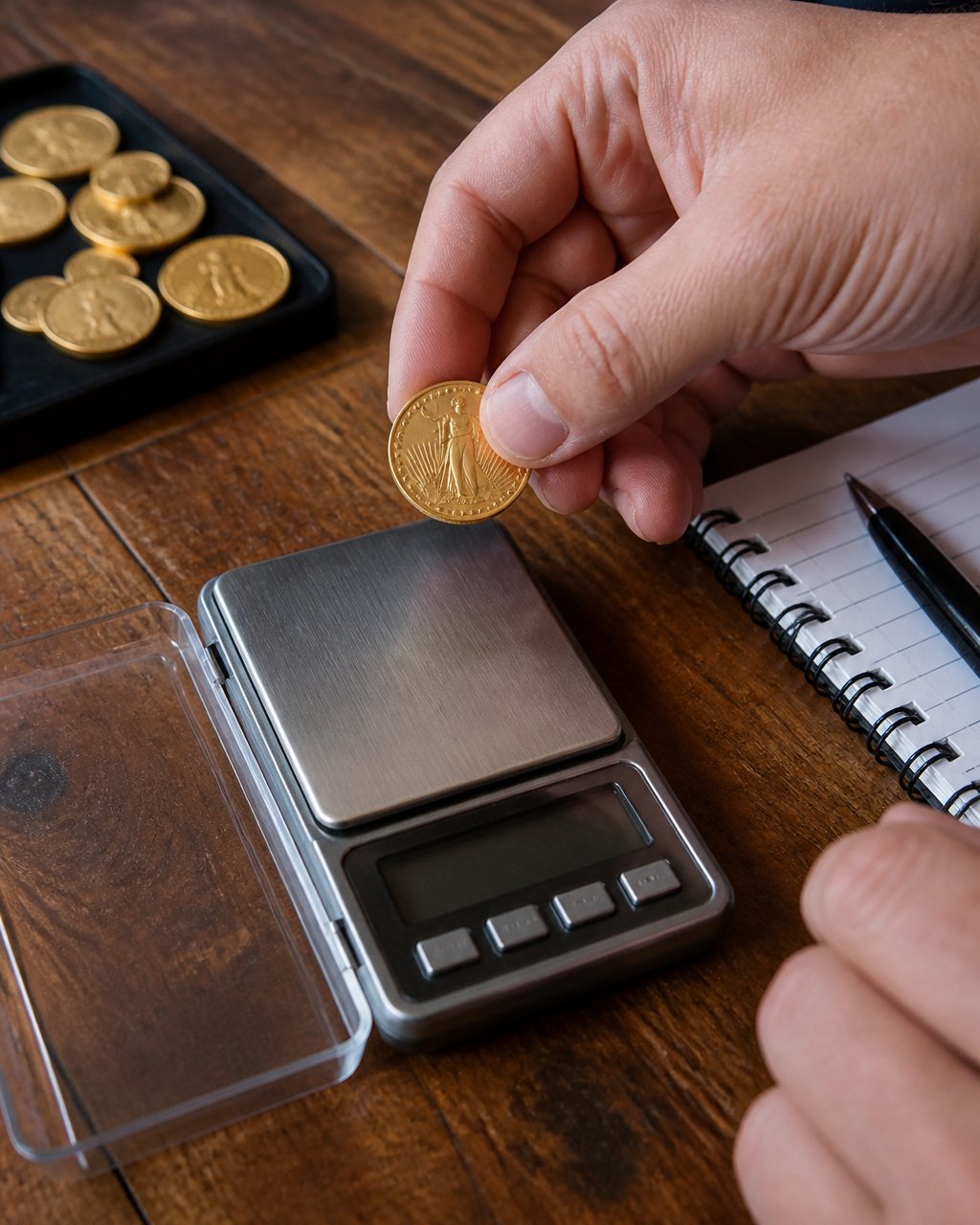
To calculate melt value, you need three pieces of information: the coin's weight in troy ounces, the gold purity (fineness), and today's spot price per troy ounce.
The formula is simple: Melt Value = Coin Weight × Purity × Current Spot Price
Example: A U.S. $20 gold piece weighs approximately 0.9675 troy ounces and is 90% pure gold.
If today's spot price is $2,050 per troy ounce: Melt Value = 0.9675 × 0.90 × $2,050 = approximately $1,786
This calculation gives you the baseline value. Rare coins or coins in exceptional condition may be worth significantly more due to collector demand.
Weighing Your Coins Safely
Accurate weight is essential for melt-value calculations. Use a digital scale designed for precious metals. These scales measure in troy ounces or grams with high precision.
Place the coin gently on the scale platform. Avoid dropping coins or applying pressure. Let the scale stabilize and record the weight. Weigh each coin separately if you have multiple pieces.
If you don't own a precision scale, many coin dealers and jewelry shops will weigh coins for you. Some charge a small fee. At Pirates Finds Gold, we provide professional weighing with certified equipment as part of our free appraisal service.
Using Current Spot Price in Your Calculation
The spot price of gold fluctuates throughout the trading day. Check the current price from a reliable source before calculating melt value. Financial websites, precious metals dealers, and commodity exchanges all publish live spot prices.
The spot price is quoted per troy ounce. Make sure your coin's weight is also in troy ounces before multiplying. If your scale shows grams, convert: one troy ounce equals 31.1035 grams.
Spot price changes constantly. A calculation accurate at 9 a.m. may differ by afternoon. For the most current value, check the price immediately before selling or getting an appraisal.
Gold Coin Grading and Condition Assessment
Coin grading measures condition on a scale from 1 (poor) to 70 (perfect). Higher grades command premium prices. A coin in exceptional condition can be worth 5 to 10 times more than the same coin in poor condition.
Professional graders evaluate wear, luster, strike quality, and eye appeal. Wear patterns show where the coin has been handled or circulated. Luster is the original shine remaining on the surface. Strike quality refers to how clearly the design was impressed during minting.
Most gold coins fall into these general categories:
- Circulated: Shows obvious wear, loss of detail
- About Uncirculated: Minimal wear, most detail visible
- Uncirculated: No wear, original luster intact
- Proof: Special minting process, mirror-like fields
Learning to grade coins yourself takes practice. Professional grading services exist for valuable coins, though they charge fees. For a quick home assessment, compare your coin to reference photos online.
Recognizing Damage and Cleaning Issues
Damage significantly reduces value. Look for scratches, dents, corrosion, or discoloration. Even minor scratches can lower a coin's grade considerably.
Cleaning is a major red flag. Cleaned coins are worth far less than uncleaned examples, even if they look shinier. Collectors and dealers can usually detect cleaning through microscopic examination. Avoid cleaning coins yourself, it almost always reduces value.
Common damage issues include:
- Surface scratches from careless handling
- Rim damage from dropping or impact
- Corrosion or discoloration from moisture exposure
- Verdigris (green patina) from chemical exposure
- Cleaning marks from improper restoration attempts
If your coins show damage, don't panic. Damaged coins still have melt value. Condition simply affects the premium above melt value.
Evaluating Rarity, Demand, and Collector Value
Beyond melt value, coins have collector value based on rarity and demand. Rare coins in good condition command premiums. Common coins rarely sell above melt value.
Rarity depends on mintage (how many coins were produced) and survival rate (how many still exist). A coin minted in small numbers that rarely comes to market is rare. A coin produced in huge quantities is common, even if you rarely see it.
Demand fluctuates based on collector trends and market conditions. Certain series are hot right now. Others are overlooked. Demand changes year to year.
Research comparable sales to gauge collector value. Auction results, dealer listings, and price guides show what similar coins actually sold for recently. Recent sales are more relevant than old data.
Factors that boost collector value:
- Low mintage or rare date
- Exceptional condition
- Historical significance
- Popular design or series
- Strong current collector demand
Questions to Ask a Professional Coin Appraiser
If you decide to get a professional appraisal, ask the right questions. A good appraiser answers clearly and honestly.
Ask about their credentials. Are they members of professional organizations? Do they have insurance?
Request a detailed written appraisal. It should list each coin separately with weight, purity, condition grade, and valuation.
Ask how they determined value. Did they reference recent sales? Price guides? Their own market knowledge? Transparent appraisers explain their methodology.
Inquire about their testing methods. Do they use certified equipment? Can they verify purity and weight accurately?
Get a clear answer on fees. Some appraisers charge hourly rates. Others charge per coin.
Ask whether the appraisal is binding. Is it an estimate or a firm offer?
At Pirates Finds Gold, we provide free appraisals with no obligation to sell.
Spotting Counterfeits and Altered Coins at Home
Counterfeit gold coins exist. Some are obvious fakes. Others are sophisticated. Learning to spot red flags protects you from overpaying.
Start with weight and dimensions. Authentic coins have consistent specifications.
Examine the strike quality. Authentic coins show consistent, sharp impressions. Counterfeits often have blurry details, uneven strikes, or distorted designs.
Check the sound. Drop the coin gently on a hard surface. Authentic gold coins produce a specific ring.
Look for inconsistencies in design elements. Authentic coins follow strict design standards.
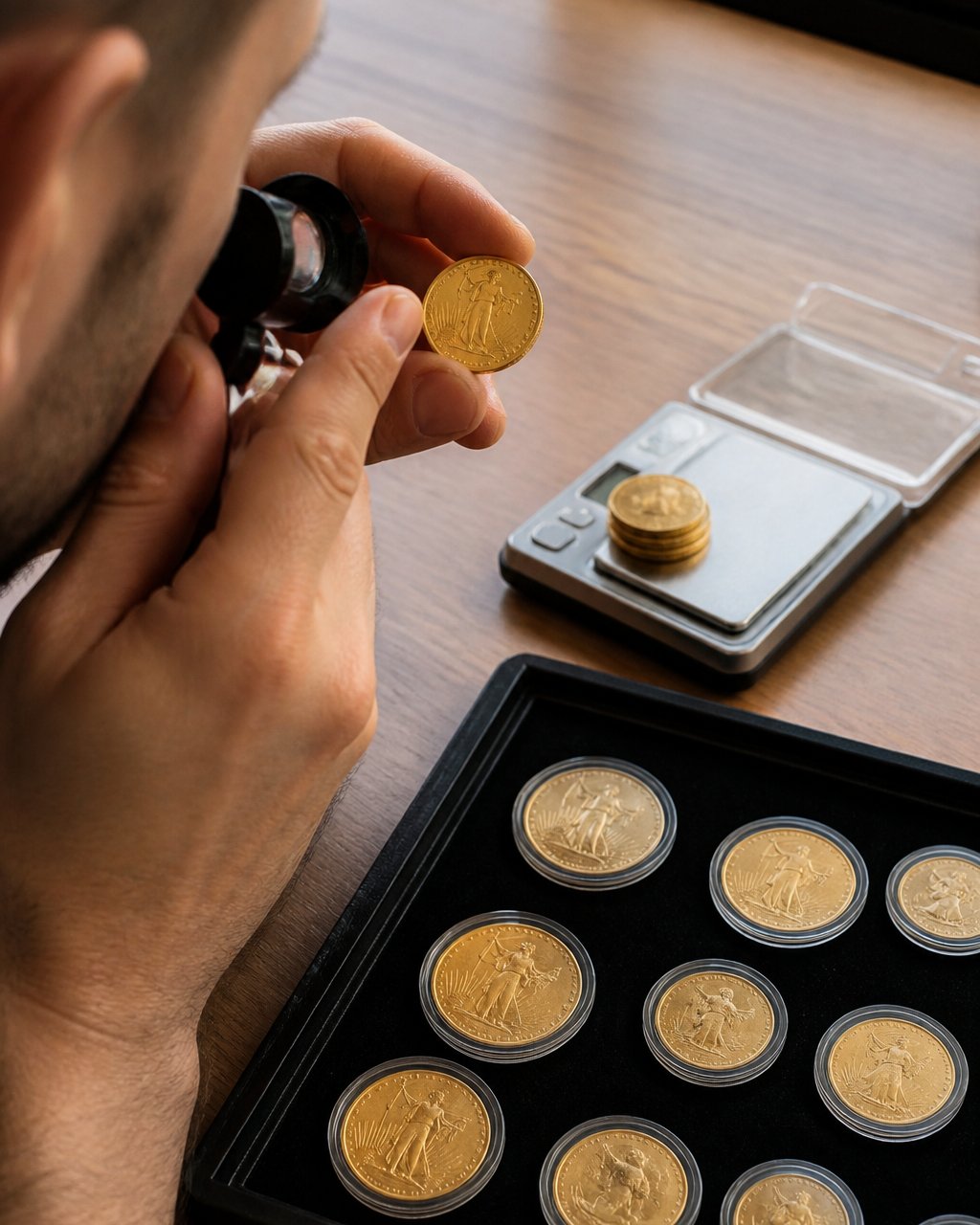
Examine the surface under magnification. Authentic coins show natural wear patterns if circulated.
Altered coins are legitimate coins that have been modified. Common alterations include:
- Removed or added mint marks
- Changed dates
- Filled or smoothed surfaces
- Added artificial patina
Altered coins are worth far less than authentic originals.
If you suspect counterfeits or alterations, don't rely on your assessment alone. Consult a professional appraiser or dealer.
Getting an accurate appraisal of your gold coins protects your interests whether you're selling, insuring, or collecting.
Frequently Asked Questions
How do I estimate a gold coin's value at home?
Start by identifying the coin's weight, purity (karat), and denomination. Multiply the weight in troy ounces by the current gold spot price, then adjust for condition and rarity. Check recent auction results and dealer listings for comparable coins. Remember that melt value is just one component; collector value depends on rarity, demand, and condition. For an accurate appraisal, compare your findings against multiple sources before deciding whether to sell.
What is the difference between melt value and collector value when appraising gold coins?
Melt value is what your coin is worth as raw gold, calculated from its weight and purity against the spot price. Collector value reflects demand from numismatists, rarity, historical significance, and condition, often worth far more than melt value. A rare, well-preserved coin might command 10 times its melt value. When you appraise gold coins at home, estimate both to understand your coin's full potential worth.
Can I tell if a gold coin is counterfeit without professional testing?
Yes, you can perform basic checks at home. Genuine gold coins feel heavy for their size, have sharp, clear details, and consistent coloring. Counterfeits often show blurry lettering, uneven weight distribution, or unusual surface texture. Weigh your coin and compare it to published specifications for that denomination. Listen to the sound when dropped gently on a hard surface; authentic coins produce a distinct ring. However, sophisticated fakes require professional authentication with certified equipment.
What should I avoid doing before getting a gold coin appraised?
Never clean your gold coins with harsh chemicals, abrasive materials, or polishing compounds, this removes the protective patina and damages value significantly. Avoid dropping or mishandling coins, which causes dents and scratches. Don't attempt to remove tarnish or discoloration yourself. Store coins in acid-free holders, not in your bare hands. These mistakes can reduce collector value dramatically, even if melt value remains the same. Handle coins minimally and let a professional appraiser assess them in their current condition.