 how-to
Sell Gold Coins for Cash: A Local Guide
Table of Contents
- Why Selling Gold Coins Locally Makes Sense
- Understanding Gold Coin Appraisal and Valuation
- How Much Are Gold Coins Worth?
- How to Compare Gold Coin Offers and Understand Your Payout
- Sell Gold Coins for Cash: Step-by-Step Process
- Avoiding Scams and Pressure Tactics
- What Types of Gold and Coins Are Accepted
- Frequently Asked Questions
Last Updated: October 12, 2026
Why Selling Gold Coins Locally Makes Sense
If you have gold coins sitting in a drawer or inherited from family, the question is how to sell gold coins cash and get the fairest deal without hassle. Selling gold coins for cash locally beats mail-in services: immediate payment, testing you can verify in real time, and no shipping risks or long waits.
Many people assume they need a shop or must mail valuables across the country. A mobile buyer who comes to you eliminates travel time and lets you walk away with cash the same day.
Understanding Gold Coin Appraisal and Valuation
Bullion value is the price of the gold itself, based on weight and purity.
Numismatic value is the extra collectors pay for rarity, age, condition, or historical significance.
An appraiser assesses both: weighing the coin, testing purity, and examining condition and rarity.
Many sellers don't realize their coins might have collector value. A casual inspection isn't enough.
How Much Are Gold Coins Worth?
The worth of gold coins depends on current gold prices, weight, purity, and collector demand.
Spot price, the current market rate for gold per ounce, is your starting point, and you can check it online anytime.
That's just the base. Condition matters: a coin with light wear and sharp details commands more than one heavily circulated.
The only way to know what your specific coins are worth is a professional evaluation.
Bullion Value vs. Numismatic Value
Bullion value is the metal content alone, what a refiner would pay if the coin were melted. It applies to most common-date, damaged, or collector-interest-free coins.
Numismatic value reflects rarity and collector desirability. A scarce or historically significant coin might be worth far more than its bullion value, a 1933 gold coin, for example, exceeds its gold content many times over.
Many sellers overlook numismatic value, assuming old coins are worth only their weight in gold, a costly mistake.
What Affects Your Coin's Price
Several factors influence what a buyer will offer:
- Purity (karat): Higher karat gold (22K, 24K) is worth more per ounce than lower karat (10K, 14K).
- Weight: Heavier coins contain more metal; a half-ounce coin is worth roughly half a one-ounce coin at similar purity.
- Condition: Minimal wear commands premiums; scratched, dented, or heavily circulated coins sell closer to bullion value.
A qualified appraiser weighs all these factors and offers fairly based on current market conditions.
How to Compare Gold Coin Offers and Understand Your Payout
Most local listings say they "pay the best" and leave it there, a claim you can't verify unless you understand how an offer is built. Here's the math to sanity-check any quote in about two minutes.
The Four Numbers Behind Every Offer
Every legitimate offer comes down to four inputs:
- Spot price, the current market price for one troy ounce of gold, quoted in U.S. dollars. It moves during trading hours and anchors everything else.
- Weight, measured in troy ounces or grams. A troy ounce is about 31.1 grams, heavier than the everyday ounce (28.35 grams), a common source of confusion.
- Purity (fineness), expressed as a decimal (0.9999 for modern bullion) or karats (24K = 99.9%, 22K ≈ 91.7%, 18K = 75%, 14K ≈ 58.3%, 10K ≈ 41.7%).
- Dealer margin, the spread the buyer keeps for testing, overhead, and profit. This is where offers differ most.
The Basic Bullion Formula
For a coin with no collector premium:
Melt value = weight (troy oz) × purity × spot price
A one-ounce, 0.9999-fine bullion coin at a hypothetical spot price of $2,000 would have a melt value of roughly $2,000. A pre-1933 U.S. gold eagle is calculated the same way, using its actual fine-gold content rather than total weight.
From melt value, the buyer subtracts their margin, which varies by buyer, coin type, and quantity. If a quote is far below melt with no explanation, ask why.
When Collector Value Changes the Math
For coins with numismatic value, the offer is a separate valuation based on:
- Rarity, mintage numbers, surviving populations, and key dates.
- Condition (grade), from About Good through Mint State, usually on the 1-70 scale used by third-party grading services.
- Eye appeal, original surfaces, natural toning, and absence of cleaning or damage.
A well-graded key date can trade for multiples of melt value; a common-date coin in the same condition usually trades near melt. That's why two similar-looking coins can produce very different offers, and why an itemized offer matters.
How to Compare Two Offers Side by Side
Use this simple worksheet approach:
| What to record | Offer A | Offer B |
|---|---|---|
| Spot price used | ||
| Weight tested (troy oz) | ||
| Purity confirmed | ||
| Melt value calculated | ||
| Premium applied (if any) | ||
| Final offer | ||
| Payment method and timing |
If a buyer won't tell you the spot price used or the weight and purity tested, you can't compare their offer to anyone else's, reason enough to keep looking.
Red Flags in an Offer
- No itemization. A lump sum with no breakdown hides whether collector coins were valued at melt.
- Verbal only. If it isn't written down, it isn't an offer you can hold them to.
- Pressure to decide now. Spot price doesn't require you to sign in five minutes.
What a Fair Payout Actually Looks Like
A fair payout isn't the highest number on the page, it's the number you can verify. If the buyer shows the spot price, weight, purity, and the reason for any premium or discount, and the final number matches that math, it's a legitimate offer. If any piece is missing, the offer isn't comparable, no matter how large the total.
Sell Gold Coins for Cash: Step-by-Step Process
Most guides tell you to "find a reputable buyer" and stop there. This walkthrough covers what actually happens at each stage, what to bring, ask, and keep, so you can complete a sale in one sitting.
Step 1: Sort and Document Before Anyone Arrives
Separate your coins into three rough piles:
- Bullion and common-date coins, modern American Gold Eagles, Canadian Maple Leafs, Krugerrands, and heavily circulated pre-1933 U.S. coins.
- Possible collector coins, anything with a visible mint mark (like a "CC" or "D" on a Morgan dollar, or an "S" on a Saint-Gaudens double eagle), low-mintage years, or an unusual look.
- Unknowns, coins you can't identify, foreign pieces, or anything damaged that leaves you unsure.
For each pile, write down the date, visible mint mark, denomination, and rough quantity. This list becomes your reference during the appraisal so nothing gets mixed up or missed.
Step 2: Gather Documentation (If You Have It)
You don't need paperwork to sell gold coins, but bring any of the following if you have it:
- Original purchase receipts or invoices
- Certificates of authenticity or grading-slab paperwork (PCGS, NGC, ANACS)
- Estate or inheritance records listing the coins
Documentation rarely changes metal value, but it can help a buyer identify a variety, confirm a key date's authenticity, or recognize a coin that would otherwise be treated as common.
Step 3: Choose Where to Meet
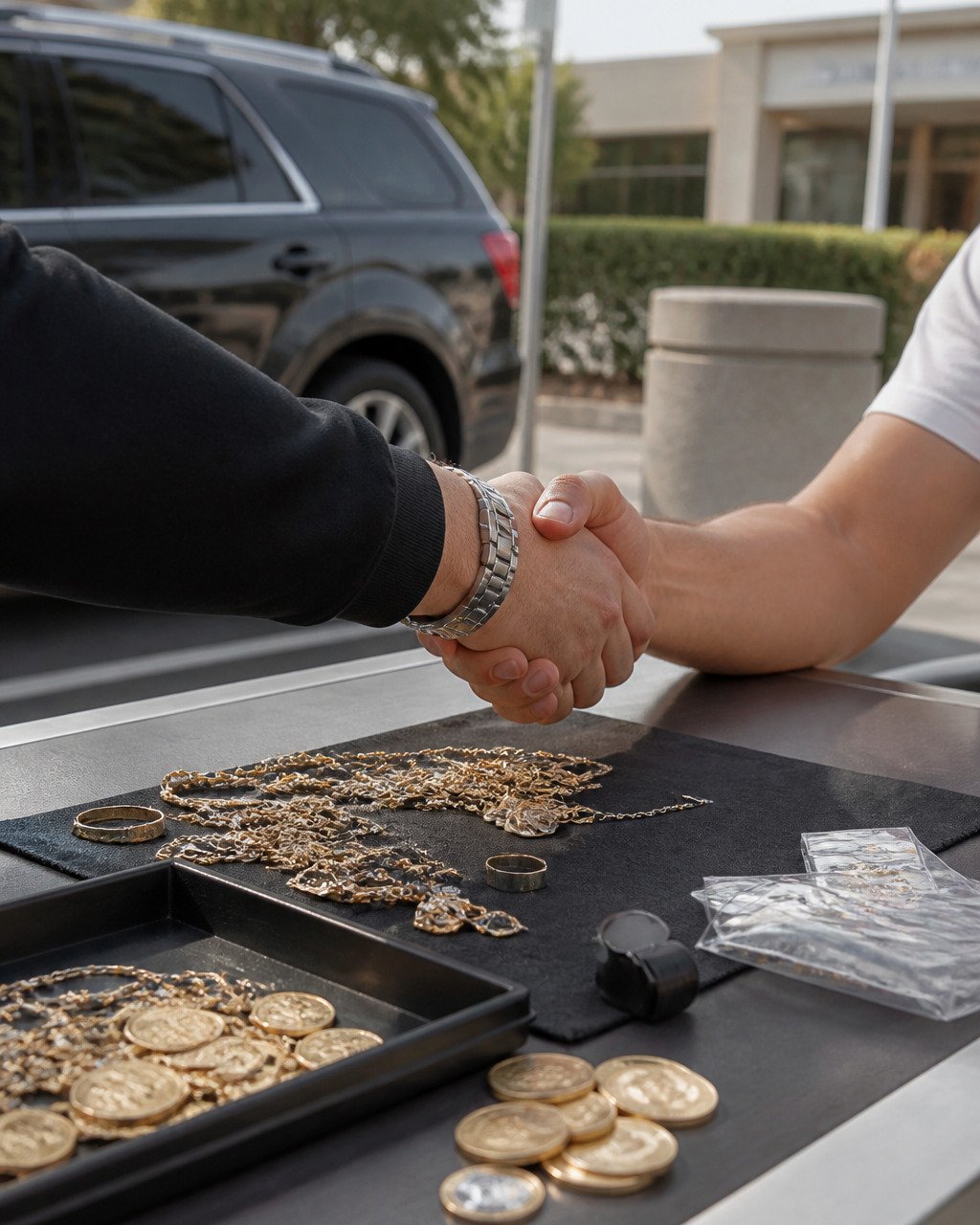
If a buyer is coming to you, have a second person present and clear a table in a well-lit room. If you're meeting the buyer, choose a public, busy location, many sellers prefer a spot near a bank or police station because foot traffic and cameras add safety for both sides. Daylight hours are standard.
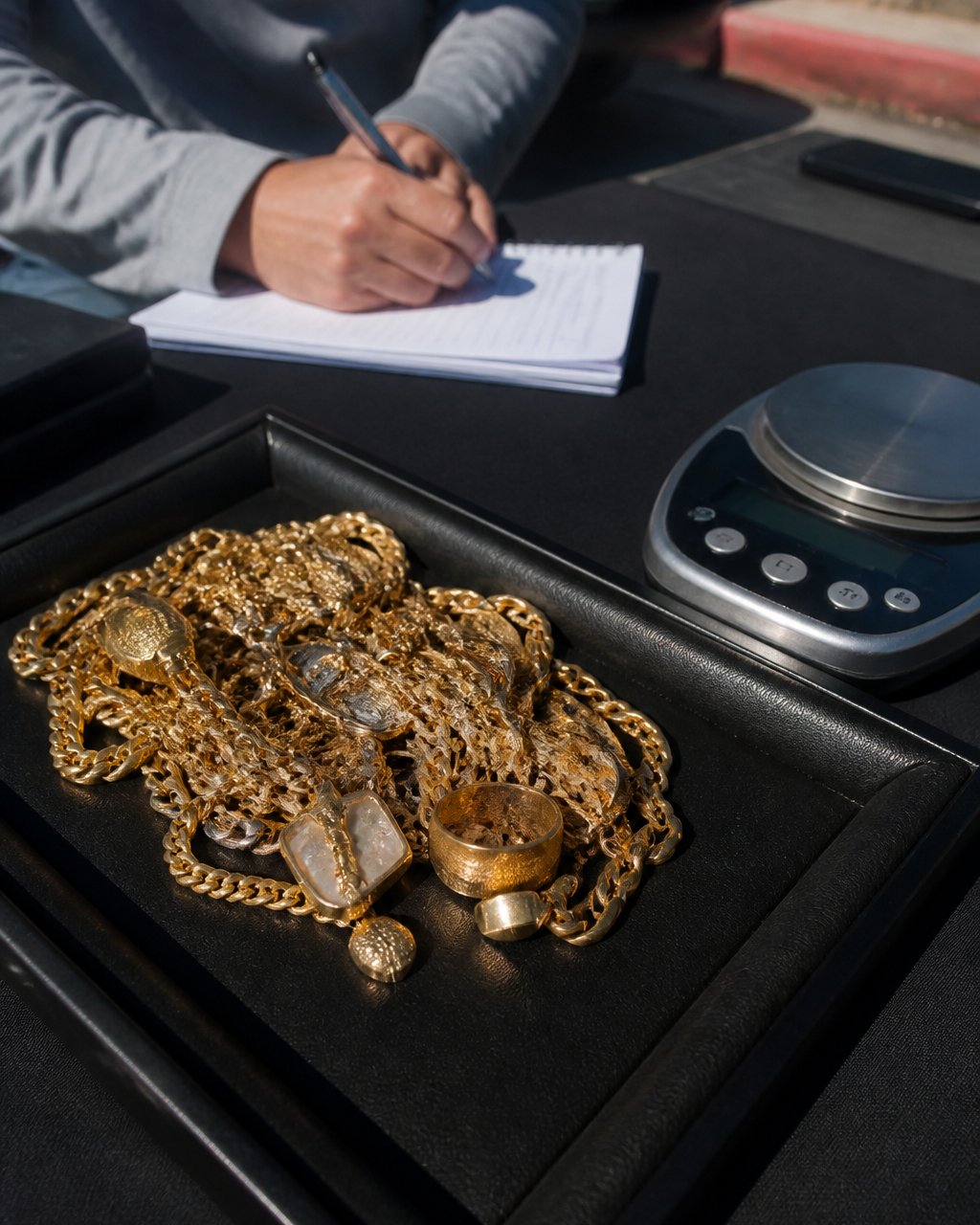
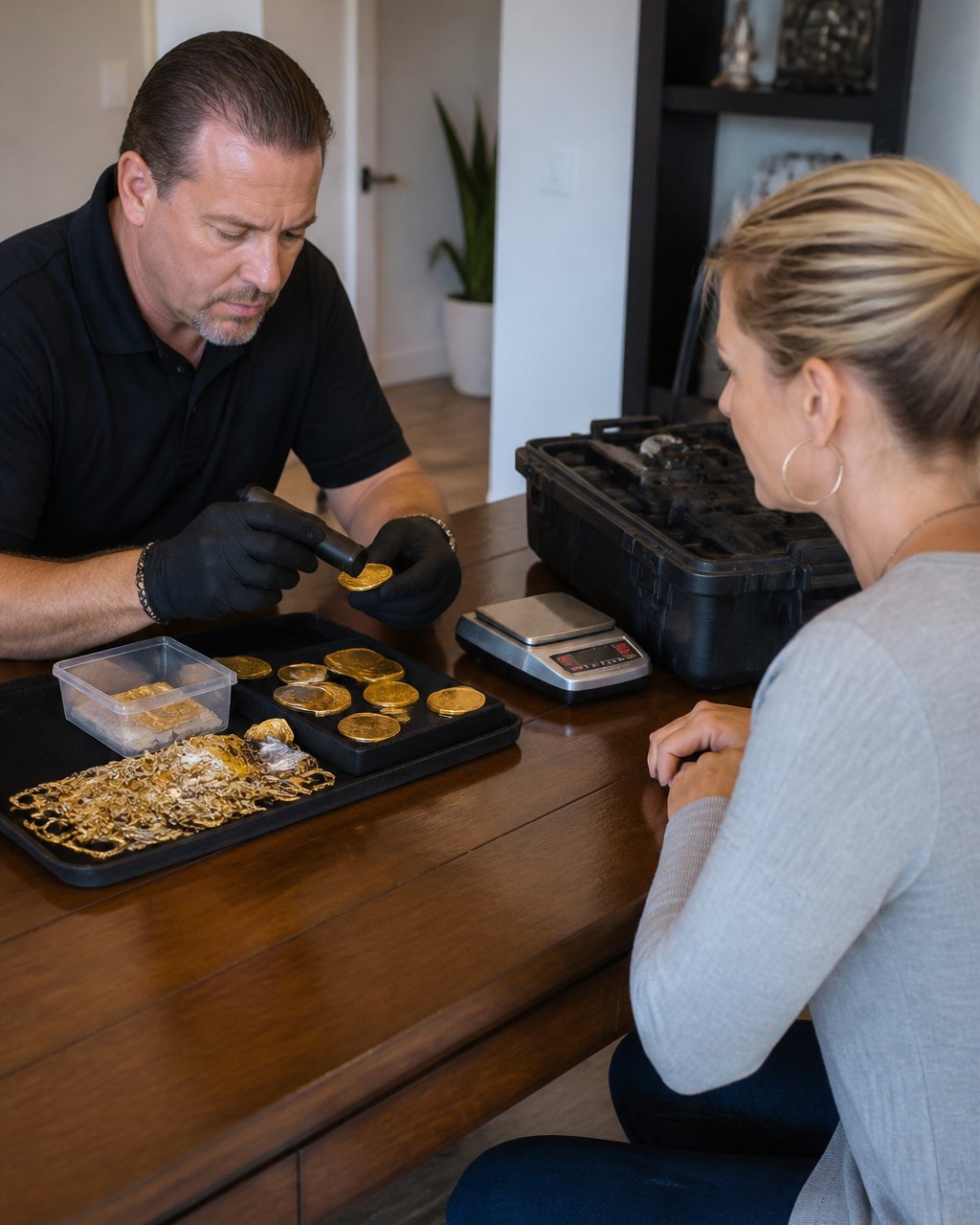
Step 4: What Happens During the Appraisal
A professional appraisal of a typical collection takes about 15 to 30 minutes. Expect this sequence:
- Visual inspection. The buyer examines each coin under magnification (usually a 10x loupe) for date, mint mark, and signs of cleaning, damage, or counterfeiting.
- Weight check. Each coin goes on a calibrated scale and is compared to its expected weight. A noticeably light U.S. gold eagle may be worn, holed, or fake.
- Purity or composition test. Depending on equipment, this may be an electronic tester, a specific-gravity test, or, for higher-value pieces, an X-ray fluorescence (XRF) analyzer. Acid testing is less common for coins because it can leave a mark.
- Grading and variety check. The buyer compares condition and any mint-mark or die varieties against reference guides to decide whether a coin qualifies for collector premium above melt.
- Offer preparation. The buyer totals each coin's bullion value (weight × purity × current spot price) and adds any numismatic premium for qualifying coins.
Ask to watch. A transparent buyer will narrate what they're doing and let you look through the loupe or at the scale readout.
Step 5: Review the Written Offer
Ask for the offer in writing, itemized by coin or lot. A useful offer shows:
- The weight tested for each coin or group
- The purity or karat confirmed
- The per-coin or per-gram value assigned
You're not obligated to accept on the spot. Compare the itemized numbers to your notes and ask about anything that looks off. If a coin you flagged as a possible key date is valued at melt, ask why, the answer tells you whether the buyer missed it or your read was wrong.
Step 6: Payment and Receipt
Payment should match the written offer exactly. Common methods:
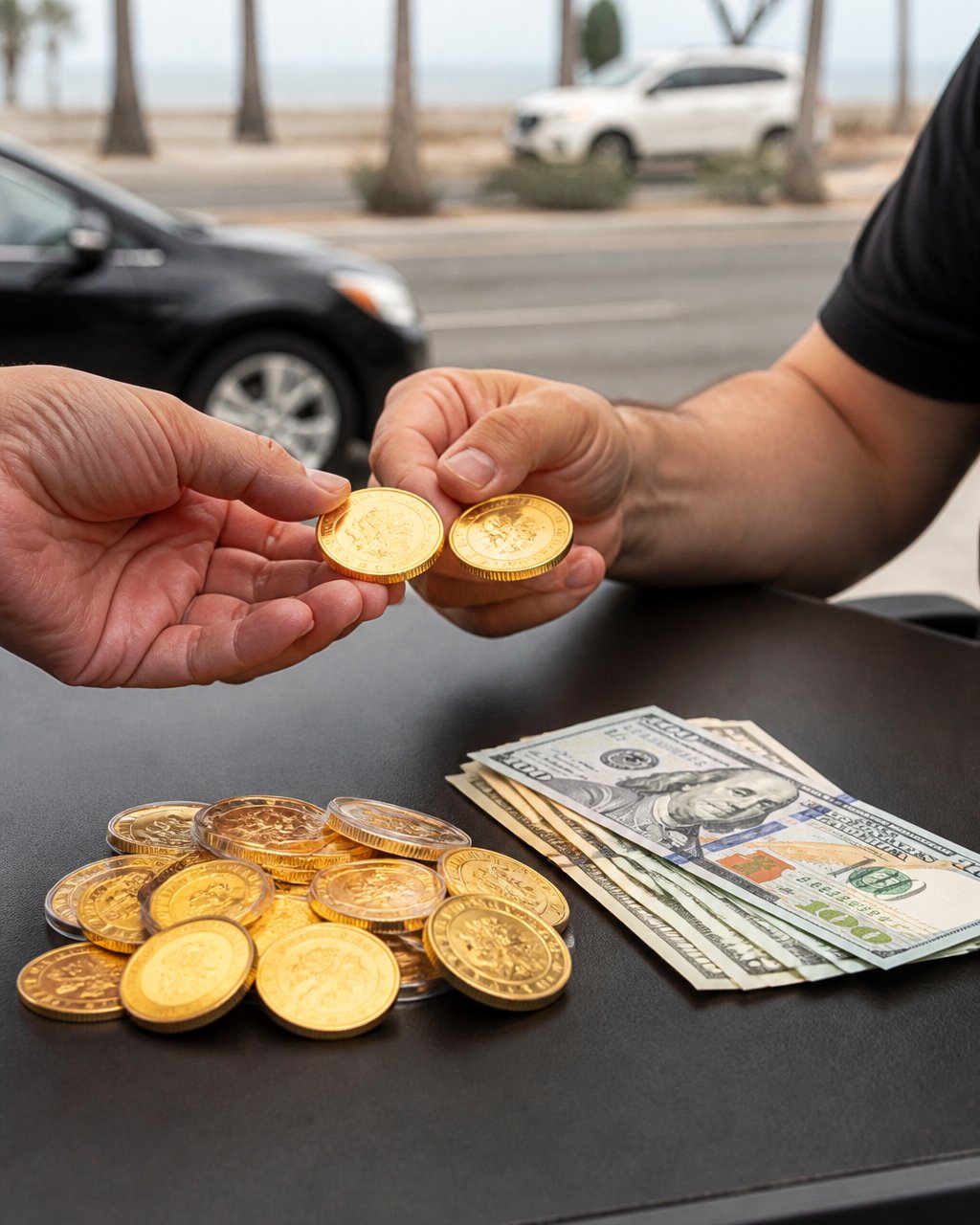
- Cash, typical for smaller transactions; count it before handing over coins.
- Bank wire or cashier's check, common for larger amounts; confirm funds have cleared or the check is genuine before releasing coins.
- Payment apps, confirm the transfer has completed in your account, not just "sent."
Before you leave, get a receipt with the date, a description of what you sold (coin type, quantity, identifying details), the amount paid, and the buyer's business name and contact information. Keep it for your records and any future tax questions.
Avoiding Scams and Pressure Tactics
Not all gold buyers operate with equal honesty. Knowing the warning signs protects you.
Avoid buyers who pressure you to decide immediately, a legitimate appraiser gives you time to think. Be wary of anyone who won't explain their testing or valuation; transparency is standard, so if they refuse to show how they tested your coins or won't itemize, walk away.
What Types of Gold and Coins Are Accepted
Reputable buyers accept all forms of gold:
- Gold coins: U.S., foreign, rare, common, and bullion coins
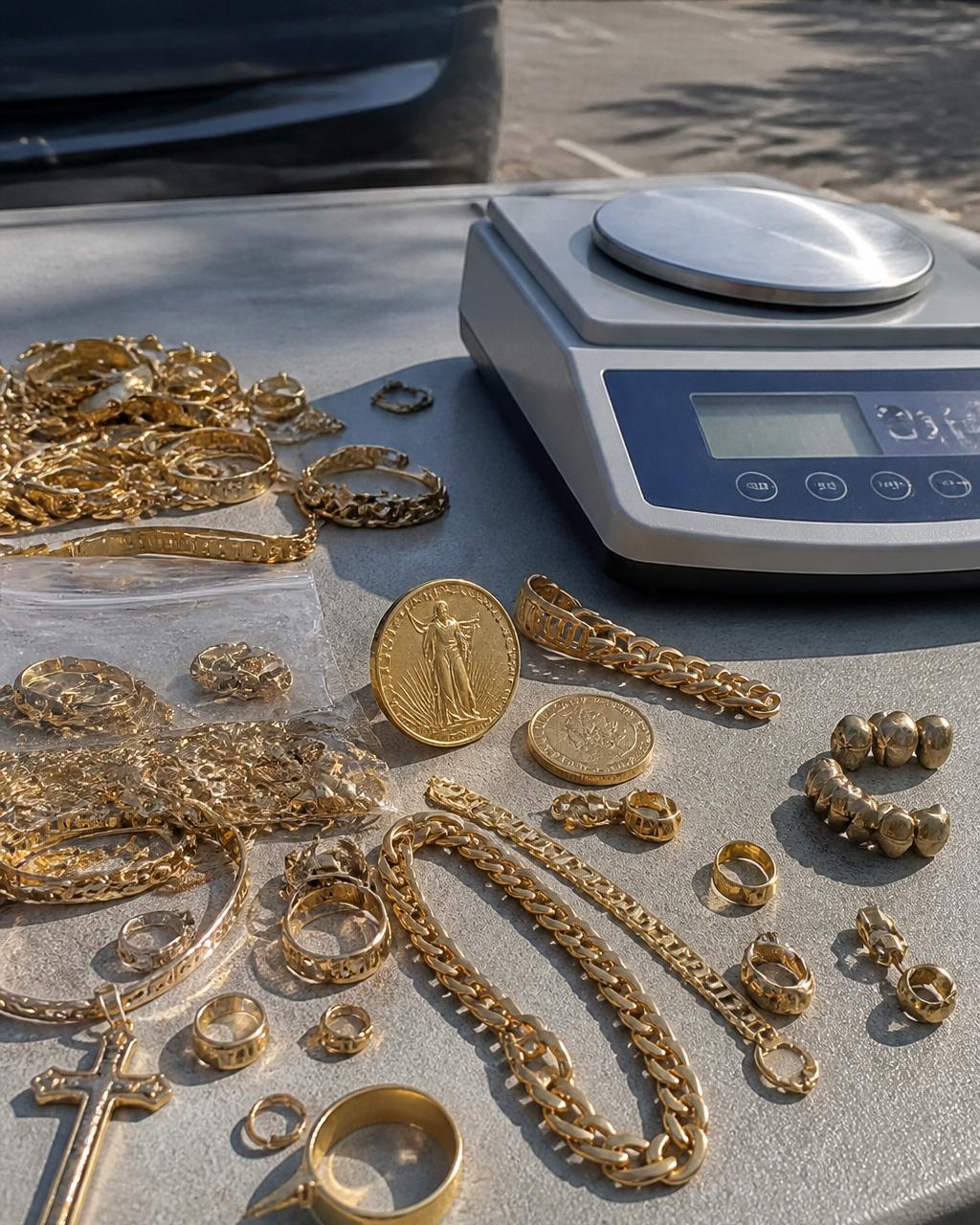
- Gold jewelry: Broken pieces, worn items, dental gold, rings, necklaces, bracelets
- Gold bars: Bullion bars and ingots, any size or weight
Condition doesn't matter, broken jewelry, bent coins, or damaged items are accepted, and the appraiser pays based on tested metal content. The key is that the item contains gold.
When you sell gold coins cash, it doesn't have to be complicated or risky. The process becomes straightforward when you work with a professional who tests transparently, explains their valuation, and pays fairly.
Frequently Asked Questions
What is the best way to sell my gold coins?
The best way to sell gold coins depends on your priorities. A local, mobile service eliminates travel time and offers on-the-spot testing with certified equipment. This method provides transparency, immediate payment, and the convenience of meeting in a safe location near a bank or police station. You avoid shipping delays, insurance costs, and the uncertainty of mail-in services. For maximum confidence, choose a buyer who prices against the live gold spot market and provides a no-obligation quote before you decide.
How can I tell whether my gold coin has collectible value?
Collectible (numismatic) value depends on rarity, mint mark, condition, and historical significance, not just gold content. Common circulated coins are typically worth their bullion value. Rare dates, low mintage years, or coins in exceptional condition command premiums. A professional appraiser can distinguish between bullion and numismatic value by examining the coin's year, mint location, condition grade, and provenance. If you're unsure, ask the buyer to explain why they're valuing your coin at a specific price and what factors they're considering beyond metal weight.
Should I get more than one appraisal before selling gold coins?
Getting a second appraisal is smart if you're selling a significant collection or rare coins. Different buyers may value numismatic coins differently based on their collector network and expertise. However, bullion pricing is straightforward: weight, purity, and spot price are consistent across reputable buyers. A second appraisal takes minimal time if you're using a mobile service and removes doubt about whether you're receiving fair market value. Always request written offers so you can compare them side by side.
What should I ask a gold coin buyer before accepting an offer?
Ask the buyer how they determined your coin's value, what testing method they used, and whether they're pricing it as bullion or numismatic. Request their offer in writing. Confirm payment method and timing, especially if you need same-day cash. Ask about their credentials and how long they've been in business. Verify they test with certified equipment and explain any deductions. A trustworthy buyer welcomes these questions and answers them clearly without pressure. Never accept an offer on the spot if you feel rushed or uncomfortable.