 how-to
How Gold Buyers Verify Purity: A Step-by-Step Guide
Table of Contents
- Why Gold Buyers Verify Purity Before Making an Offer
- Understanding Gold Purity: Karats, Fineness, and Hallmarks
- Non-Destructive Gold Purity Testing Methods
- The Gold Acid Test: How It Works and What to Expect
- XRF Gold Testing: The Professional Standard
- How Purity Results Affect Your Gold Offer
- What to Ask Your Gold Buyer About Their Testing Process
- Frequently Asked Questions
Last Updated: October 15, 2026
Why Gold Buyers Verify Purity Before Making an Offer
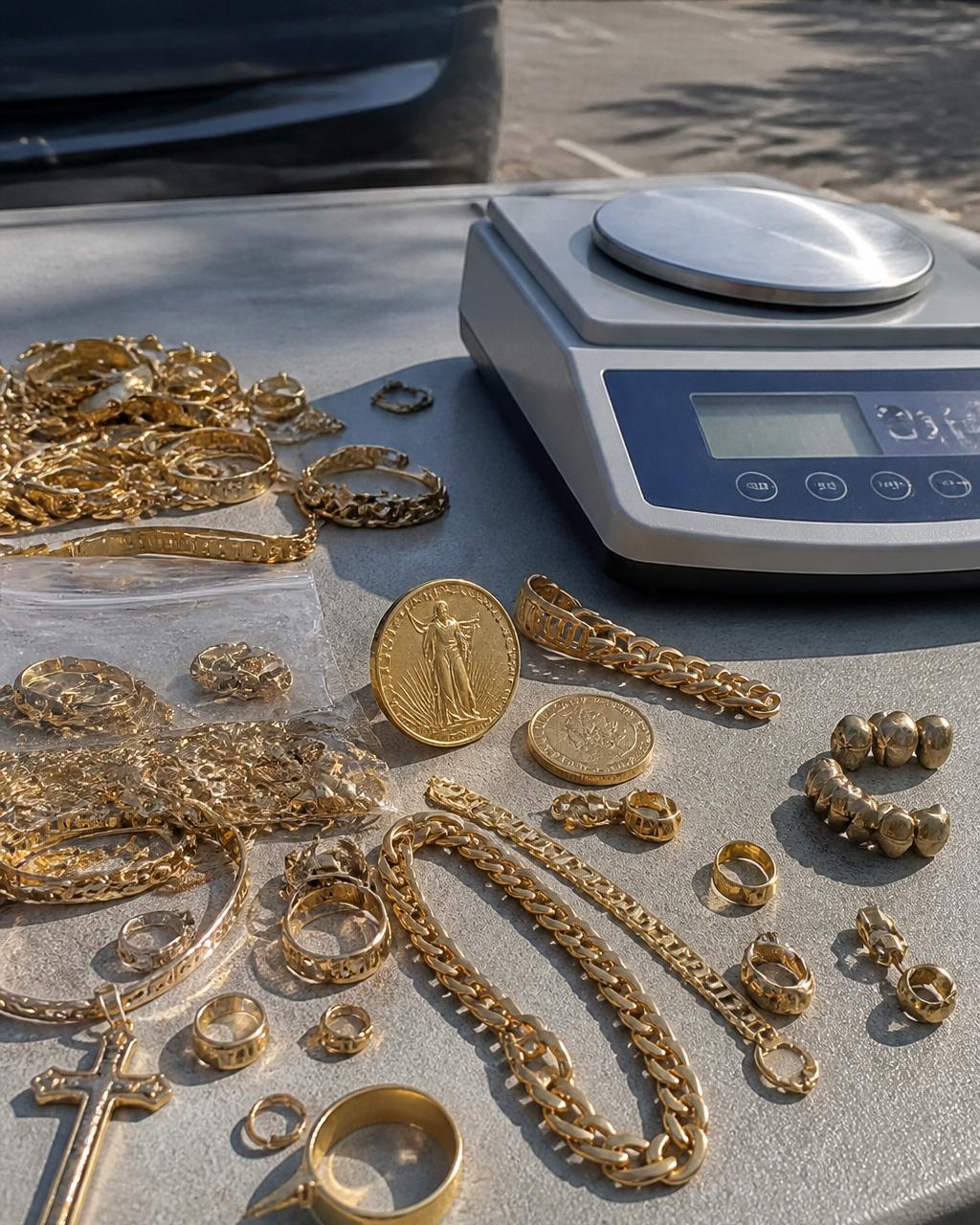
When you bring jewelry, coins, or dental gold to a gold buyer, the first step is verifying what you actually have. Gold purity testing determines the exact percentage of pure gold in your item, which directly affects how much cash you'll receive.
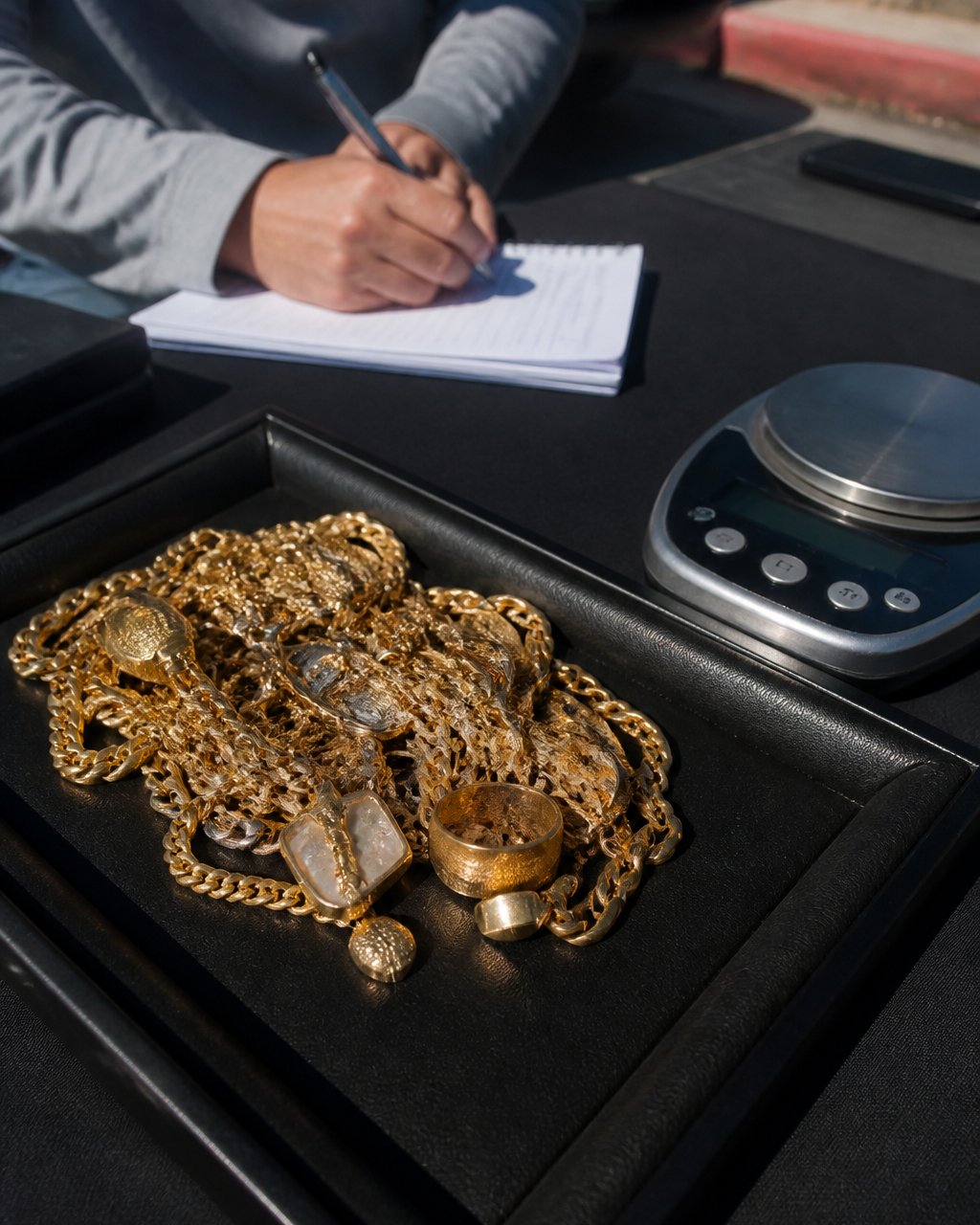
At Pirates Finds Gold, we test your gold with certified equipment before making any offer. Purity and weight are the only factors that determine value.
Testing methods range from simple visual checks to advanced laboratory analysis, each with strengths and limitations. Understanding how gold buyers verify purity helps you know what to expect and answers a critical question: How do I know I'm getting a fair price?
Understanding Gold Purity: Karats, Fineness, and Hallmarks
Gold purity is measured in two systems: karats and fineness. Both describe how much pure gold is in your item, but they use different scales.
Karat is the older system, still most common in the United States. Pure gold is 24 karat, and each karat represents 1/24th of the total weight. Common karat markings include:
- 24K (pure gold, 99.9%)
- 22K (91.7% pure)
- 18K (75% pure)
- 14K (58.3% pure)
- 10K (41.7% pure)
Fineness is the metric system used internationally. It expresses purity as parts per thousand. So 999 fineness means 99.9% pure gold. A marking of 750 means 75% pure (equivalent to 18 karat).
What Karat Stamps Tell You
Most gold jewelry sold in the United States carries a karat stamp: inside the band on rings, near the clasp or on a tag for bracelets and necklaces, and on the post or back of earrings.
The stamp is your first clue about purity, but stamps are only as reliable as the manufacturer. A piece can be stamped incorrectly, intentionally or by mistake, which is why gold buyers never rely on stamps alone and always verify with testing.
Point out any stamps you see when you bring items to a buyer, but don't assume they're accurate. We've seen items stamped 14K that tested lower, and pieces marked lower that tested higher.
Reading Hallmarks and Maker's Marks
Hallmarks are official stamps indicating purity, distinct from casual maker's marks. In the United States they're less standardized than in Europe but follow similar principles.
A hallmark typically includes:
- The karat or fineness number
- The maker's mark or initials
- Sometimes a date mark or assay office symbol
European gold often carries more detailed hallmarks because standards are stricter there. If you've inherited gold from abroad, the hallmark tells you where it was tested and certified.
Maker's marks show the jeweler's initials or logo and don't indicate purity. Gold buyers look for both hallmarks and maker's marks during visual inspection, but these are starting points, not final answers.
Non-Destructive Gold Purity Testing Methods
Non-destructive testing leaves your gold undamaged and is quick, affordable, and safe for valuable or sentimental pieces. Most buyers use at least one such method first.
Visual Inspection and Weight Assessment
The simplest test is visual inspection. A trained eye can spot obvious fakes and plated items. We look for:
- Color consistency (pure gold looks uniform; plating shows wear at edges)
- Surface condition (plating wears through on high-contact areas)
- Weight relative to size (tungsten-core fakes feel heavier than solid gold)
- Discoloration or corrosion (certain alloys tarnish differently)
Weight assessment goes hand-in-hand with visual inspection. A precision scale plus dimensions gives a rough density estimate; pure gold is about 19.3 grams per cubic centimeter, so a piece weighing far less than expected for its size likely isn't solid gold.
This method is fast and free, but it's not conclusive. A professional plating job can fool the eye. Weight alone doesn't prove purity. That's why buyers move to other tests.
Magnet Testing for Alloy Detection
Pure gold is non-magnetic. If a strong magnet sticks to your item, it contains iron or nickel, ruling out pure or high-karat gold.
Many gold alloys are also non-magnetic, so a negative test doesn't prove high purity, but a positive one proves the gold isn't pure. We use this as a quick screening tool: if your jewelry jumps toward the magnet, it's lower karat or fake.
The test takes seconds: we hold a strong neodymium magnet near the item and note any attraction before moving to other tests.
Sound and Ping Testing for Coins
Gold coins have a distinctive ring when struck lightly. This "ping test" works because pure gold has specific acoustic properties: genuine gold coins produce a clear, bell-like tone, while counterfeits or tungsten-cored coins produce dull thuds.
We tap the coin gently against a hard surface or with a small tool. The sound reveals density and composition, but interpreting it takes experience, and a coin with internal air pockets might sound wrong even if it's solid gold.
The ping test is most useful for coins; irregular jewelry shapes produce inconsistent sounds, so many buyers skip it for jewelry and move straight to acid or XRF testing.
The Gold Acid Test: How It Works and What to Expect
Acid testing is one of the oldest and most reliable methods for verifying gold purity. It requires scratching the surface, but it's fast, inexpensive, and highly accurate.
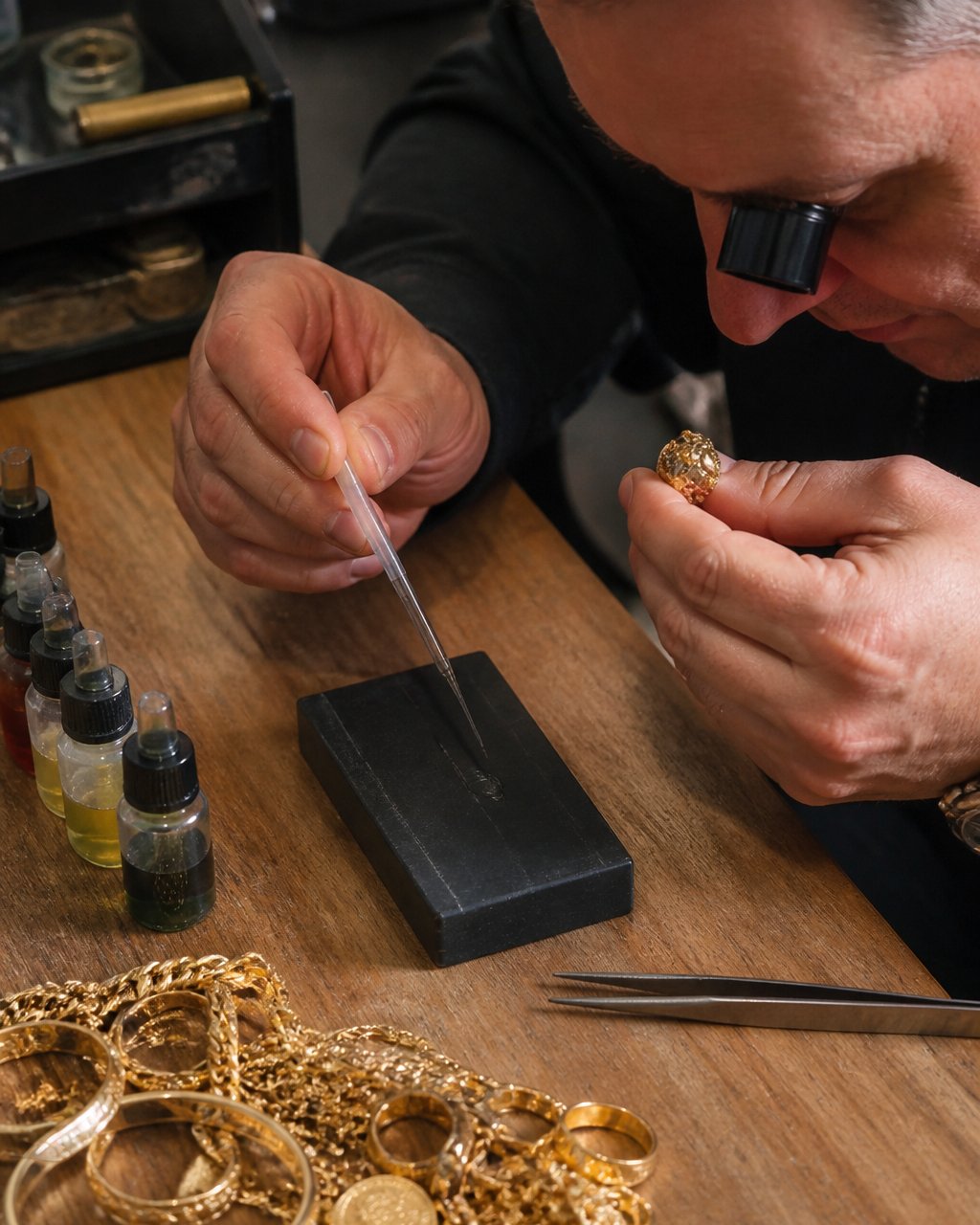
The Touchstone Method
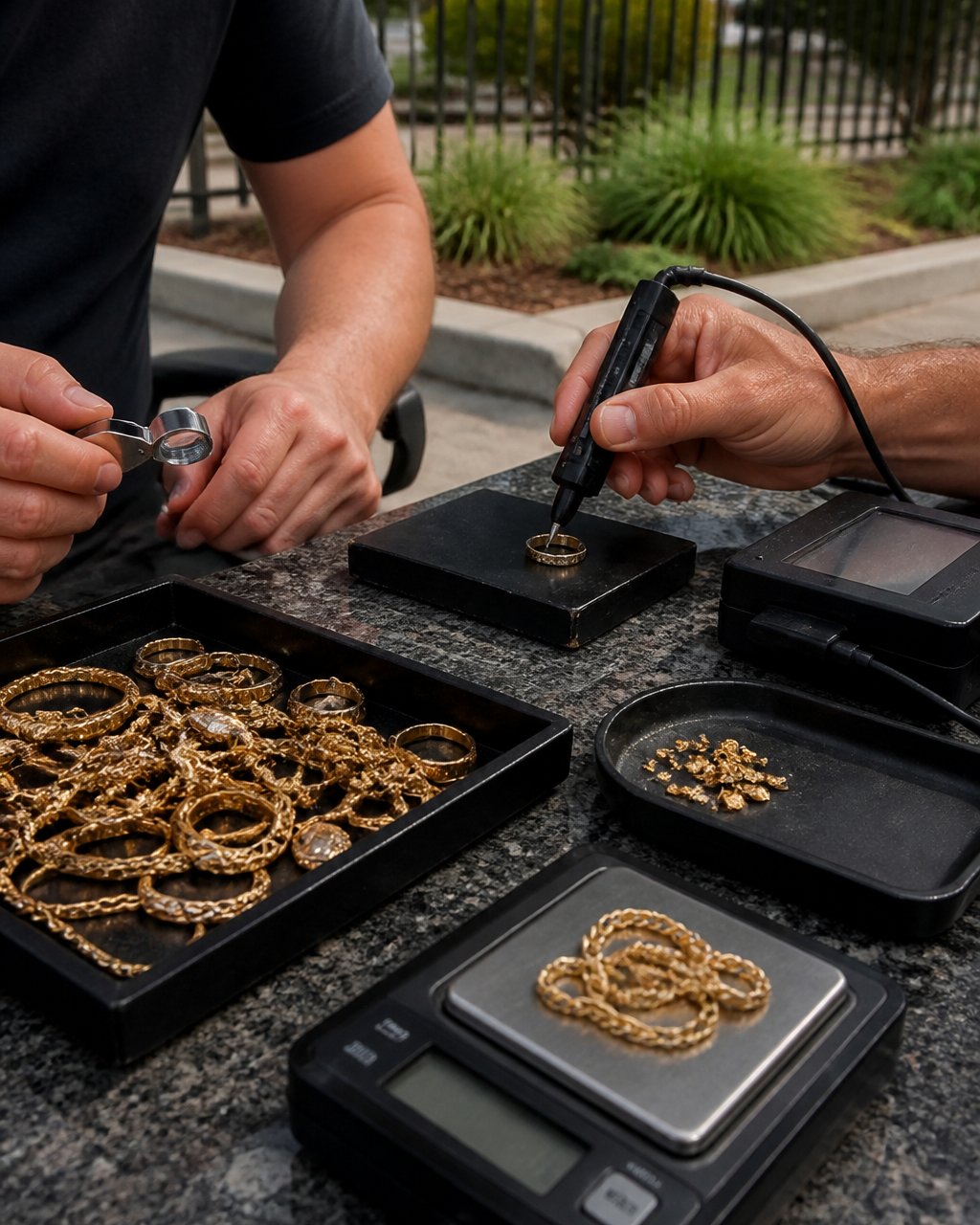
The acid test uses a touchstone, a smooth dark stone, and a series of acids. The process:
- We rub your gold item across the touchstone, leaving a visible streak
- We apply a specific acid to the streak (different acids for different karat levels)
- The streak either dissolves or remains, telling us the purity
Different acids test for different karats: one that dissolves 10K gold won't dissolve 14K gold. Testing with multiple acids narrows down the exact purity.
The touchstone method is fast and affordable, but it requires a tiny scratch on your item. For jewelry you're selling, that's acceptable; for pieces you want to keep, you might prefer a non-destructive method.
What Sellers Should Know During Acid Testing
During an acid test:
We'll ask permission to test a hidden area, such as the inside of a ring or the back of a pendant. We make a small scratch and apply acid; the streak changing color or disappearing is normal.
The test takes under a minute, and we clean the area afterward. The scratch is tiny and nearly invisible.
If your item is plated, the acid eats through the plating and tests the base metal underneath, revealing the piece isn't solid gold, which is crucial for pricing.
Some sellers worry about damage, but the scratch is microscopic. On scrap gold you're selling for cash it doesn't matter; on jewelry you want to keep, we recommend XRF testing instead.
XRF Gold Testing: The Professional Standard
X-ray fluorescence (XRF) is the gold standard for non-destructive testing, used by professional appraisers and high-end buyers. It's precise, fast, and leaves no mark on your gold.
How X-Ray Fluorescence Works
XRF uses low-energy X-rays to excite atoms in your gold. The atoms emit fluorescent radiation that reveals their composition, and a sensor displays the purity percentage on a screen.
The X-rays don't damage the gold or create any visible change, and you can test the same spot multiple times. Accuracy is typically within 0.5% of actual purity.
The equipment is expensive, so not every small buyer has it, but larger buyers and appraisers rely on XRF because it handles jewelry, coins, dental gold, and even plated items.
Accuracy and Limitations of XRF Testing
XRF is highly accurate for solid gold, measuring surface composition within a few millimeters of depth, which gives the true purity of a solid gold ring.
But XRF has limitations: on plated items it only reads the plating layer, not the base metal underneath.
XRF also struggles with very thick plating or multi-layer items, so we use acid testing to confirm what lies beneath.
The cost of XRF equipment means fewer buyers have it. If you want XRF testing specifically, ask before you visit. At Pirates Finds Gold, we use certified testing equipment to ensure accuracy and fairness in every appraisal.
How Purity Results Affect Your Gold Offer
Once we know your gold's purity, we calculate the cash value, which is where testing directly impacts what you get paid.
From Test Results to Cash Value
The formula is straightforward:
Weight (in grams) × Purity (as a decimal) × Current Gold Price per Gram = Your Gold's Value
For example, a 10-gram ring tested at 14 karat (58.3% pure) with a spot price around $65 per gram (prices fluctuate daily):
- 10 grams × 0.583 purity × $65 per gram = approximately $379
But that's the raw material value. Gold buyers don't pay spot price; we buy at a discount for refining costs and business margin, typically offering 70-85% depending on market conditions and item type.
The exact percentage depends on several factors: scrap gold (broken jewelry, dental gold) commands one rate, coins and bullion another, and jewelry in good condition might fetch a premium.
The point: higher purity means higher value. A 24K ring is worth more per gram than a 10K ring of the same weight. Testing ensures you're paid for what you actually have.
Testing Different Item Types: Jewelry, Coins, and Dental Gold
Different items require different testing approaches.
Jewelry is easiest. Most is solid gold, testable with acid or XRF, and broken or damaged pieces are fine since condition doesn't affect purity testing.
Coins require care. Rare or collectible coins have numismatic value beyond their gold content, so before testing we assess whether a coin is worth more as a collectible.
Dental gold (crowns, bridges, fillings) is solid gold, often high karat, and tested like jewelry. It's sometimes worth more per gram because it's usually 16K or higher purity.
All three types are welcome in any condition, broken, melted, bent, or tarnished. Purity and weight are all that count.
What to Ask Your Gold Buyer About Their Testing Process
Before you bring your gold in, ask these questions:
Do you use certified testing equipment? Legitimate buyers use calibrated, verified equipment. Ask what testing they offer (acid, XRF, fire assay) and how often they calibrate.
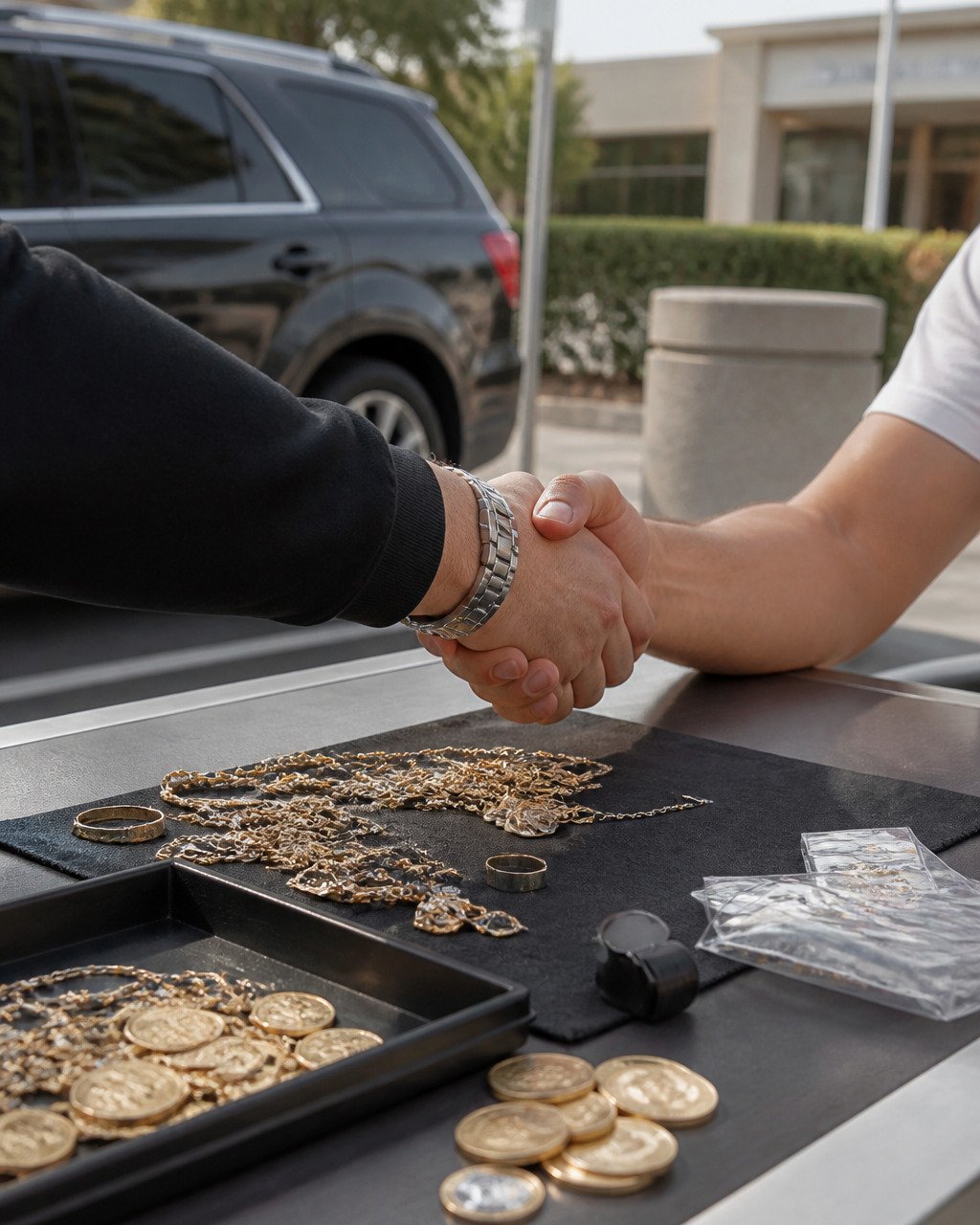
Will you test in front of me? Reputable buyers test where you can see it. You should watch your items being tested and see the results.
Can you explain the results? A good buyer shows you the purity reading, explains what it means, and shows how the offer was calculated.
Can I get a second opinion? Legitimate buyers aren't threatened by this. Taking an item to another buyer for verification is your right, and we encourage transparency.
Selling gold doesn't have to be stressful. Understanding how gold buyers verify purity gives you confidence in the process.
Frequently Asked Questions
How do gold buyers test gold purity without damaging it?
Professional gold buyers use non-destructive methods first, including visual inspection, magnet testing, and X-ray fluorescence (XRF) analysis. These techniques verify purity without harming your items. Only if necessary do they use acid testing on a small, inconspicuous area. Certified buyers like Pirates Finds Gold prioritize protecting your gold while ensuring accurate purity verification.
What does a gold hallmark mean, and how does it affect my offer?
A gold hallmark is an official stamp indicating the item's purity level, such as 14K, 18K, or 24K. Hallmarks serve as the first verification point for gold purity. Buyers verify hallmarks during inspection and then confirm them with testing equipment. A legitimate hallmark supports your item's stated purity and helps justify the offer you receive.
Can gold buyers test dental gold and coins the same way as jewelry?
Testing methods vary slightly by item type. Dental gold (crowns, bridges) and coins require careful handling to avoid damage, so non-destructive testing like XRF is preferred. Coins may undergo sound testing to detect counterfeits or tungsten cores. Jewelry testing is more straightforward. Professional buyers adjust their approach based on the item's construction and condition.
What should I ask a gold buyer about their purity test?
Ask which testing methods they use, whether testing is non-destructive, and how results translate to your offer. Request to see the test results and understand how purity affects the price per gram or ounce. Ask if they test against the live gold spot market for fair valuation. A transparent buyer will explain their entire process before testing begins.