 comparison
Sell Gold at Home vs Store: Which Is Right for You
Table of Contents
- Selling Gold at Home vs Store: Quick Comparison
- How Gold Buyers Test Jewelry and Verify Purity
- What You Need to Know About Gold Weight and Value
- Questions to Ask a Gold Buyer Before You Sell
- Selling Gold Safely: Home Visits vs In-Store Transactions
- Gold Buyer Offer Comparison: Getting Fair Quotes
- Which Option Should You Choose?
- Frequently Asked Questions
Last Updated: October 11, 2026
Selling Gold at Home vs Store: Quick Comparison
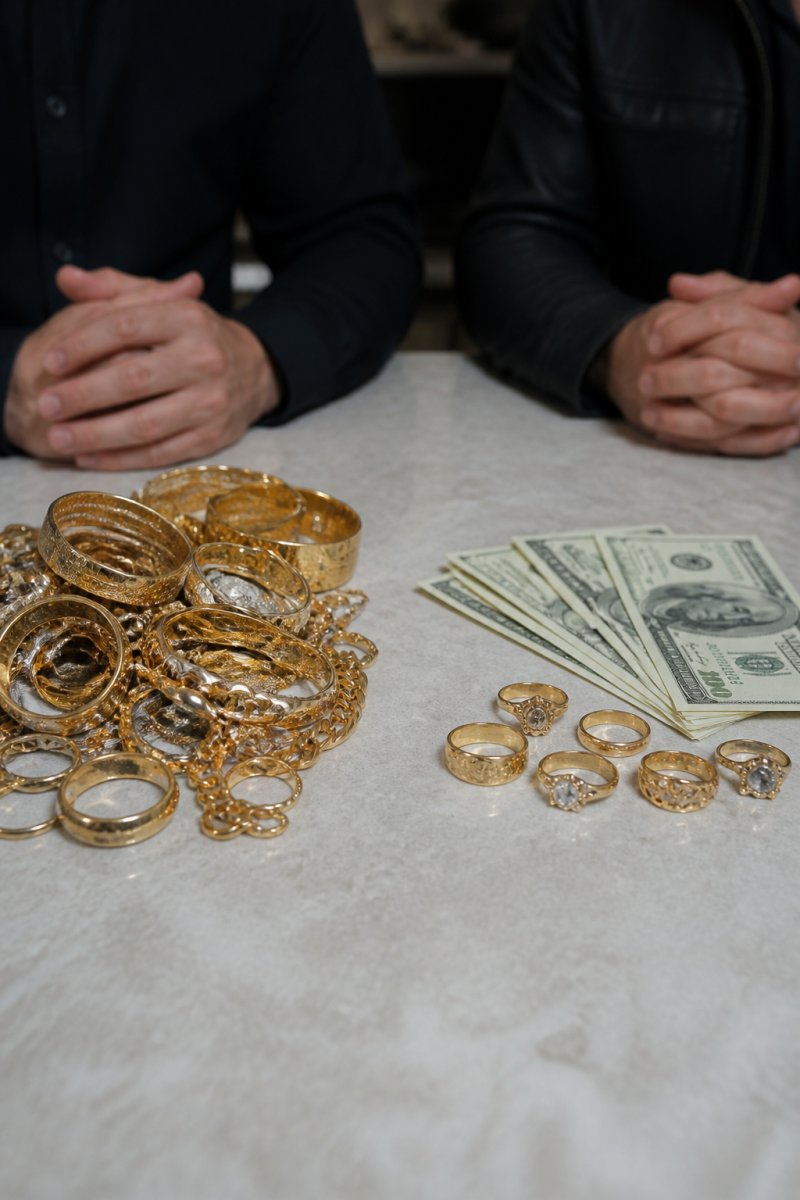
When you sell gold at home versus in a store, it comes down to convenience versus control. The choice depends on your priorities: speed, privacy, flexibility, and peace of mind.
Home sales mean no appointments, driving, or waiting, you see testing in real time and get cash same-day. In-store visits let you compare offers face-to-face and verify licensing on-site.
How Gold Buyers Test Jewelry and Verify Purity
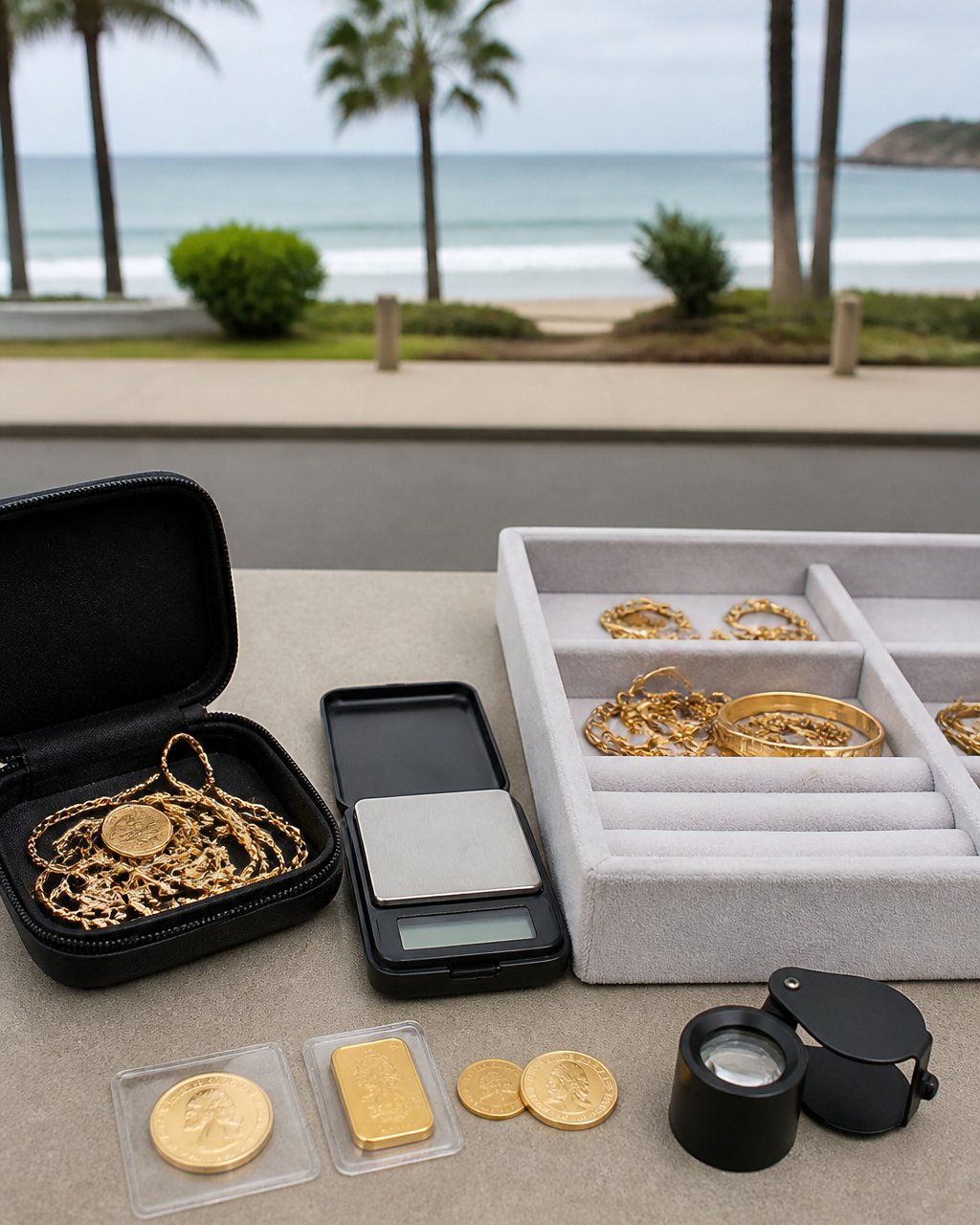
Buyers look for hallmarks (10K, 14K, 18K, 22K stamps) to identify karat weight. If none exist, they use magnet tests, acid tests, or electronic conductivity testers to confirm purity without damage.
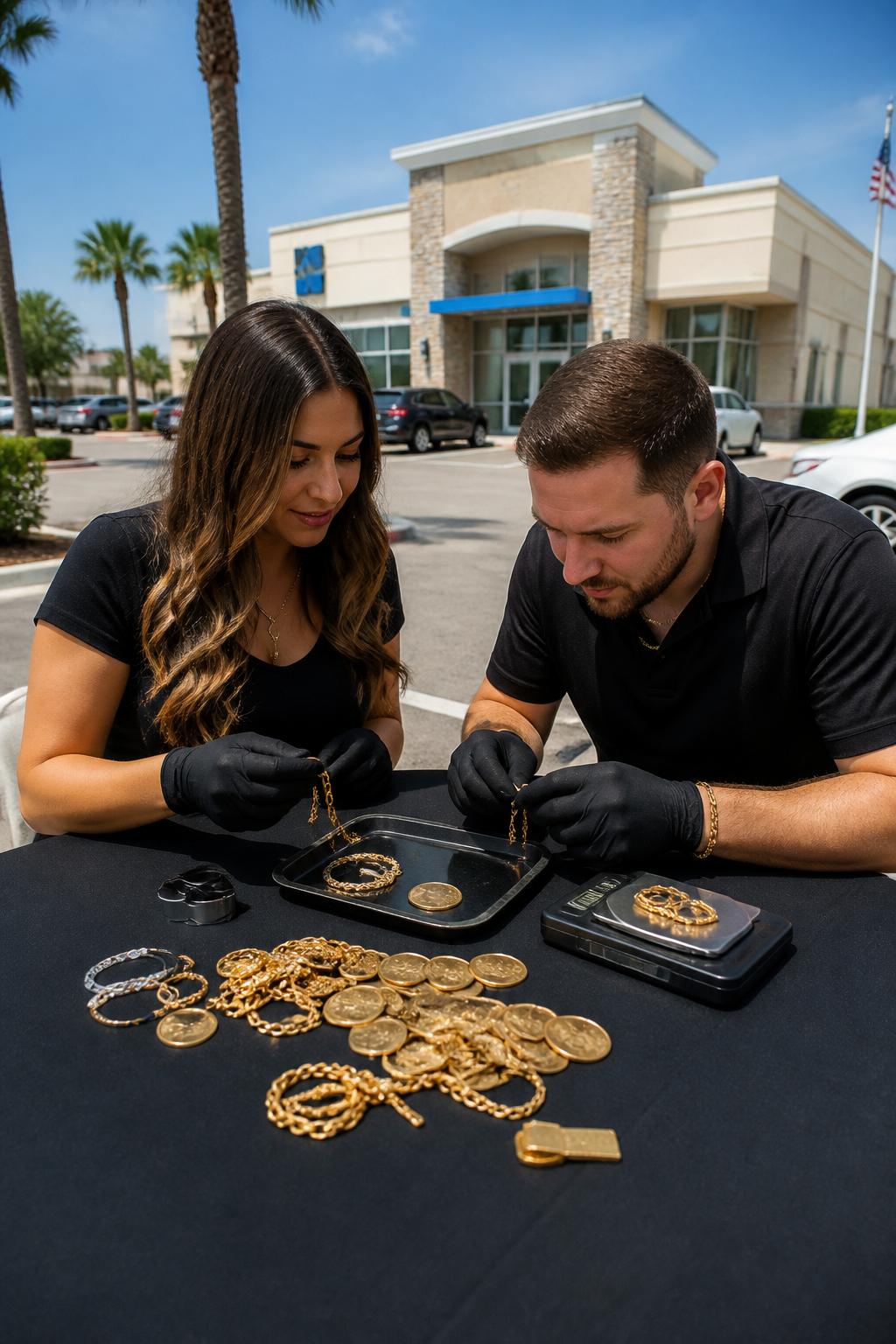
At home, a qualified buyer brings certified testing equipment. Pirates Finds Gold uses professional-grade tools identical to retail stores. You watch the entire process and see exactly how the buyer reaches their conclusion.
The key question to ask any buyer, whether at home or in a store: "Can you show me how you're testing this, and can I see the results?" A legitimate buyer will explain their method and show you the reading. If they won't, that's a red flag.
What You Need to Know About Gold Weight and Value
Gold value is calculated by weight and purity combined. Weight is measured in troy ounces (31.1 grams each, not standard ounces at 28.35 grams). A typical gold ring weighs 3-5 grams, or about 0.1 to 0.16 troy ounces.
Purity determines how much weight is actual gold. A 14K ring is 58.3% pure gold; the rest is alloy. Buyers pay for pure gold content only, not total weight.
The Spot Price and Buyer Margin
The "spot price" is the live market rate per troy ounce, updated throughout the trading day. A buyer who prices against today's spot price gives you the fairest starting point.
No buyer pays 100% of spot price. They apply a margin to cover costs and profit. Transparency about this margin varies by buyer.
A Realistic Payout Example
Here's how the math works in practice:
Scenario: You have a 5-gram 14K gold ring. Spot price is $2,000 per troy ounce.
- Pure gold content: 5 grams × 0.583 (58.3% purity) = 2.915 grams of pure gold
- Convert to troy ounces: 2.915 grams ÷ 31.1 = 0.0937 troy ounces
- Spot value: 0.0937 troy ounces × $2,000 = $187.40
- Buyer margin (example: 20%): $187.40 × 0.80 = $149.92
- Your payout (before any fees): $149.92
If you're selling to a home buyer like Pirates Finds Gold, same-day payment usually means no additional fees, you receive the calculated amount in cash immediately.
Comparing Offers Across Different Buyers
When comparing quotes, always ask:
- What is the exact weight they measured?
- What purity did they confirm?
- What spot price are they using (today's rate)?
- What percentage of spot price are they offering?
- Are there any fees deducted before payment?
The math reveals the truth: a buyer offering 80% of spot with no fees beats 75% of spot with hidden costs.
Broken jewelry, dental gold, coins, and bullion all follow the same calculation: weight times purity times current spot price, minus the buyer's margin and any applicable fees. Understanding this formula helps you evaluate whether an offer is fair and compare quotes from different sources with confidence.
Questions to Ask a Gold Buyer Before You Sell
Before you commit to selling, whether at home or in a store, ask these questions:
On testing and purity:
- "What testing method do you use, and can I watch?"
- "Will you show me the purity reading?"
- "What happens if I disagree with your assessment?"
On pricing:
- "What price are you using, today's spot price or a different rate?"
- "What percentage of spot price are you offering?" (This reveals their margin.)
- "Can you explain how you calculated this offer?"
On payment:
- "What payment methods do you accept?" (Cash, check, Zelle, bank transfer, options vary.)
- "When do I get paid, before or after you leave?" (Same-day payment is standard with Pirates Finds Gold.)
- "Is there a receipt, and does it itemize what you bought?"
On recourse:
- "What's your return policy if I change my mind?"
- "Do you have a physical location or license I can verify?"
- "What happens if I later dispute the weight or purity?"
These questions filter out buyers who aren't transparent. A professional buyer, whether meeting you at home or working from a store, will answer all of them clearly.
Selling Gold Safely: Home Visits vs In-Store Transactions
Safety is the first concern when selling gold at home. The good news: home sales can be just as safe as store visits when you take basic precautions.
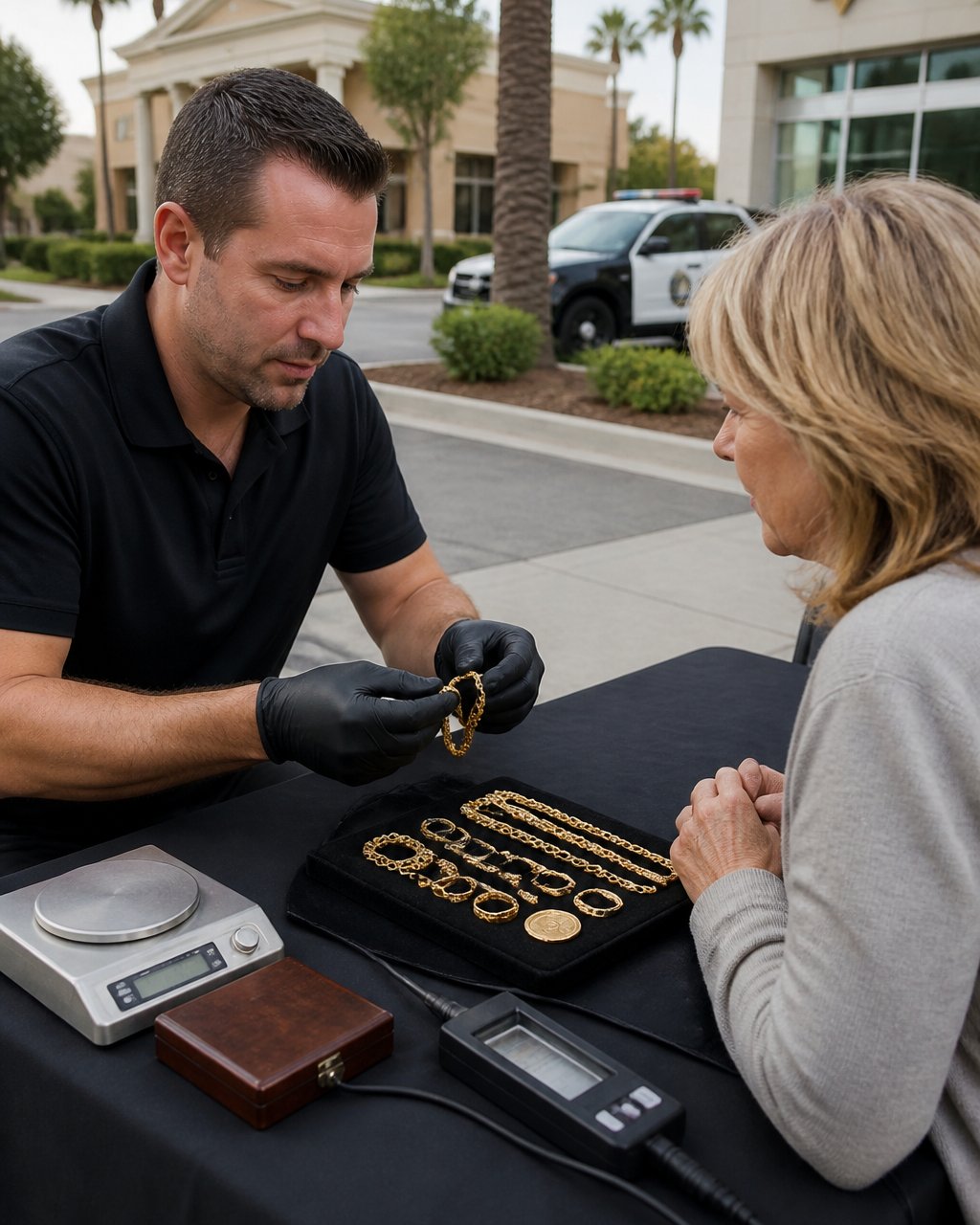
Home visits: Meet in a public space or your home during daylight.
In-store transactions: Visiting a physical location gives you the advantage of seeing a business address, checking hours, and verifying licensing. You can research the store online before you go.
Both methods work. The difference is psychological comfort. Some people feel safer at home with a professional buyer they've vetted. Others prefer the public, official feel of a retail location.
A red flag for either scenario: pressure to decide immediately, refusal to show testing, or unwillingness to meet at a location you choose. Legitimate buyers have nothing to hide.
Gold Buyer Offer Comparison: Getting Fair Quotes
The only way to know if an offer is fair is to get multiple offers. Don't sell to the first buyer you contact. Here's why: margins vary widely, and the total cost of selling, including hidden fees and risks, differs significantly by channel.
Costs and Fees by Channel
Home visits (same-day buyers):
- Buyer margin: typically 15-25% of spot price
- Testing/assay fee: usually $0 (included in margin)
- Shipping: not applicable
- Insurance: not applicable
- Return policy: varies; some buyers offer a brief reconsideration window (24-48 hours)
- Payment timing: same-day, cash or check
Local jewelry stores:
- Buyer margin: typically 20-30% of spot price
- Testing/assay fee: usually $0 (included in margin)
- Shipping: not applicable
- Insurance: not applicable
- Return policy: often 3-7 days if you change your mind
- Payment timing: same-day to 3 days; check or store credit common
Online mail-in services:
- Buyer margin: typically 10-20% of spot price (competitive because no retail overhead)
- Testing/assay fee: sometimes $0, sometimes $10-$25 deducted from payout
- Shipping: you pay for insured shipping to the buyer (typically $15-$40 depending on weight)
- Insurance: you must insure the package; buyer may offer insurance reimbursement if loss occurs
- Return policy: most offer 5-10 days to accept or decline the offer; if declined, you pay return shipping
- Payment timing: 5-10 days after receipt and testing; bank transfer or check
Pawn shops:
- Buyer margin: typically 25-40% of spot price (highest margins)
- Testing/assay fee: usually $0
- Shipping: not applicable
- Insurance: not applicable
- Return policy: often none; sale is final
- Payment timing: same-day, cash
Net Proceeds: What You Actually Receive
The quoted offer is not the same as the amount you take home. Here's a realistic comparison:
Scenario: You have 10 grams of 18K gold scrap. Spot price is $2,000 per troy ounce.
- Pure gold: 10 grams × 0.75 = 7.5 grams = 0.241 troy ounces
- Spot value: 0.241 × $2,000 = $482
Home buyer (20% margin, no fees):
- Offer: $482 × 0.80 = $385.60
- Your net: $385.60 (same-day cash)
Local jewelry store (25% margin, no fees):
- Offer: $482 × 0.75 = $361.50
- Your net: $361.50 (1-3 days)
Online mail-in (15% margin, $20 assay fee, $25 shipping):
- Offer: $482 × 0.85 = $409.70
- Minus assay fee: $409.70 − $20 = $389.70
- Minus shipping cost: $389.70 − $25 = $364.70
- Your net: $364.70 (5-10 days, plus return shipping risk if you decline)
In this example, the home buyer offers the best net proceeds and fastest payment, despite a higher margin, because there are no additional fees or shipping costs.
Getting Multiple Quotes
Call or meet with at least two or three buyers. Ask each one the same questions so you can compare apples to apples. Write down:
- The weight they measured
- The purity they confirmed
- The spot price they used (and the date/time)
- The percentage of spot price they're offering
- Any fees deducted (assay, processing, insurance)
- The total dollar amount they're offering
- Payment method and timing
- Their return or reconsideration policy
Then calculate your net proceeds for each option by subtracting all costs (fees, shipping, insurance) from the quoted offer. The buyer with the highest net proceeds and fastest payment is usually the best choice, unless you have a strong preference for a specific location or method.
Risk and Recourse by Channel
Beyond fees, consider what happens if something goes wrong:
- Home buyers: You have immediate recourse if you're unhappy; you can refuse payment on the spot. Once you accept cash, recourse is limited. Verify the buyer's identity and legitimacy before the meeting.
- Local stores: You can dispute a purity or weight claim in person and ask for a retest. Most stores are licensed and insured, making them easier to pursue if there's a problem.
- Online services: You must ship your gold and trust the buyer's testing. If you disagree with their assessment, you can request a retest or decline the offer, but you'll pay return shipping. Reputable online buyers are insured and bonded, offering some protection.
- Pawn shops: Sales are typically final with no return option. Margins are often higher because risk is lower for the buyer.
Choose the channel that balances fair pricing, low costs, and the level of recourse you're comfortable with.
Which Option Should You Choose?
Choose to sell gold at home if you value privacy, convenience, and same-day payment. You avoid the hassle of appointments and travel. You see the testing in real time. You walk away with cash immediately.
Choose an in-store visit if you want to compare multiple buyers in one trip, verify physical locations and licensing, or prefer the official atmosphere of a retail environment.
The best approach? Do both. Get a quote from a home buyer like Pirates Finds Gold, then visit a local jewelry store or two. Compare the offers side by side.
What matters most is that you feel confident in the buyer, understand how they calculated the offer, and know exactly what you're getting paid.
Frequently Asked Questions
Is it better to sell gold at home or at a store?
It depends on your priorities. Selling gold at home offers convenience and privacy, no travel required, and you control the environment. In-store sales let you walk out immediately and compare multiple buyers in one trip. Home visits work best if you have multiple items or value discretion; stores suit busy professionals who prefer a quick, straightforward transaction. Consider your comfort level with visitors, how much gold you're selling, and whether you need same-day payment.
How do at-home gold buyers evaluate jewelry?
Professional gold buyers use certified testing equipment to determine purity and weight. They typically perform visual inspection, use acid testing or electronic testing to verify karat, and weigh items on calibrated scales. A reputable buyer will explain each step and show you the results. Ask to see the testing process and request written documentation of the weight and purity they find. This transparency helps you verify the offer is based on accurate measurements.
What should I compare when choosing a gold buyer?
Compare the offer amount (based on current spot price), testing methods, payment options, and how quickly you receive funds. Ask about any deductions for refining or processing fees. Also evaluate the buyer's professionalism, whether they explain their pricing clearly, and if they pressure you into an immediate decision. A fair buyer will answer questions and give you time to think.
Is it safe to have a gold buyer come to your home?
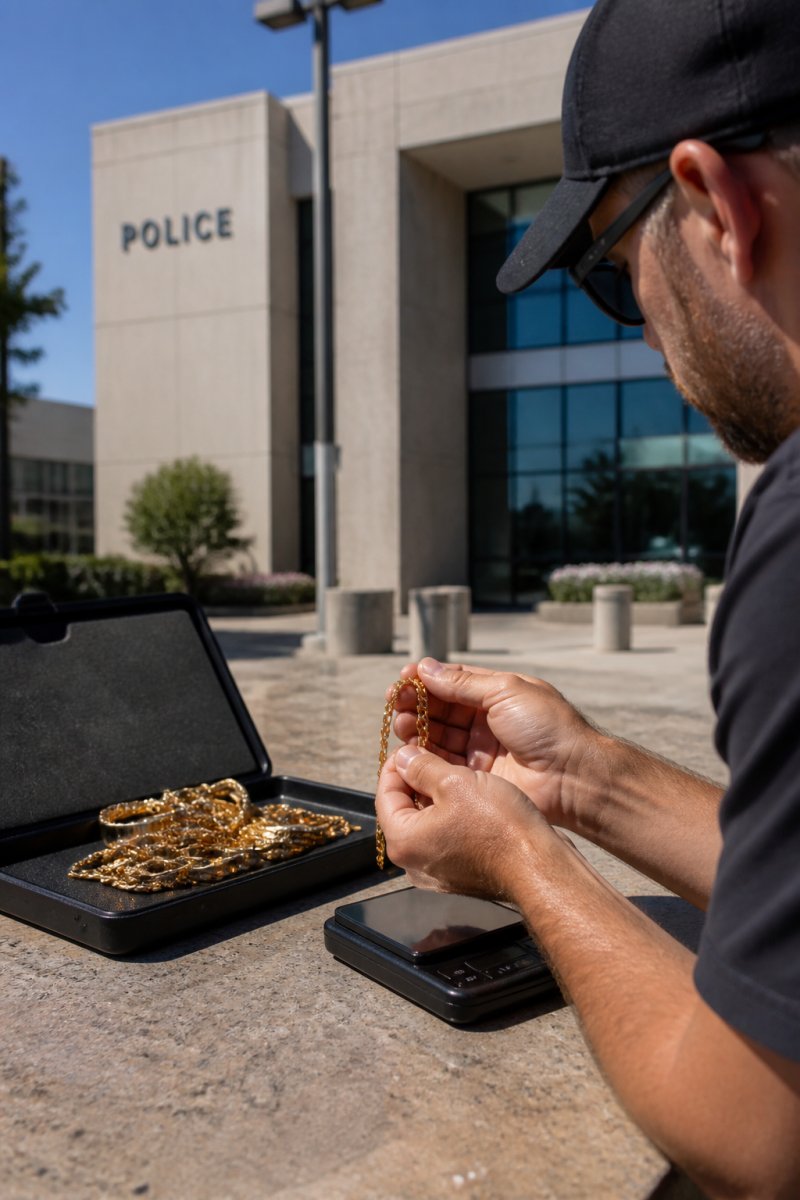
Yes, when you work with a reputable, established buyer. Choose a company with verifiable credentials and positive customer reviews. Meet during daylight hours, have someone else present if possible, and ask the buyer to meet in a public area like near a bank or police station if you prefer. Reputable buyers operate this way for mutual safety and transparency. Avoid buyers who pressure you, won't explain their process, or insist on immediate payment without giving you time to consider.
Should I get more than one offer before selling gold?
Yes, absolutely. Gold prices fluctuate, and different buyers calculate offers differently based on their testing methods and business costs. Compare not just the dollar amount but also what deductions each buyer applies and how they explain their pricing.
Ready to sell your gold with confidence? Pirates Finds Gold brings certified testing equipment directly to you, pricing against the live spot market to ensure you get a fair, transparent offer. We accept all types of gold, jewelry, coins, bullion, dental gold, in any condition. Get a free quote today and see why our customers trust us to handle their gold sales with professionalism and integrity. Learn more about fair gold pricing practices