 how-to
How to Determine Fair Market Value for Gold Jewelry
Last Updated: October 25, 2026
Quick Summary
Fair market value for gold jewelry is what a willing buyer would pay a willing seller when neither party is under pressure, determined by the weight of the gold, its purity in karats, and the current spot price of gold. It sits between melt value and retail price, reflecting what the gold is actually worth today.
- Gold purity is marked in karats: 24K is 99.9% pure, 18K is 75%, 14K is 58.3%, and 10K is 41.7%.
- Calculate value by converting weight to troy ounces, multiplying by purity percentage, then by the current spot price per troy ounce.
- Buyers apply a deduction from spot price to cover refining, testing, and overhead costs.
- Get quotes in writing that state the spot price, tested weight and karat, deduction percentage, and any fees.
- Non-gold components like gemstones, clasps, and solder reduce the payable gold weight in your offer.
Table of Contents
- Understanding Fair Market Value for Gold Jewelry
- How to Calculate Gold Jewelry Value
- Using a Gold Jewelry Value Calculator
- How to Test Gold Purity
- Gold Jewelry Appraisal vs. Resale Value
- What Affects Your Gold Jewelry Offer
- Getting Your Gold Jewelry Appraised and Paid
- Frequently Asked Questions
Understanding Fair Market Value for Gold Jewelry
Fair market value for gold jewelry is what a willing buyer would pay a willing seller when neither party is under pressure.
When you're selling gold jewelry, understanding fair market value protects you from lowball offers.
Fair market value sits between two extremes. For used jewelry, fair market value is the sweet spot: what the gold is actually worth today.
How to Calculate Gold Jewelry Value
Calculating value requires three core components working together. Miss one, and your estimate will be way off.
The Three Core Components
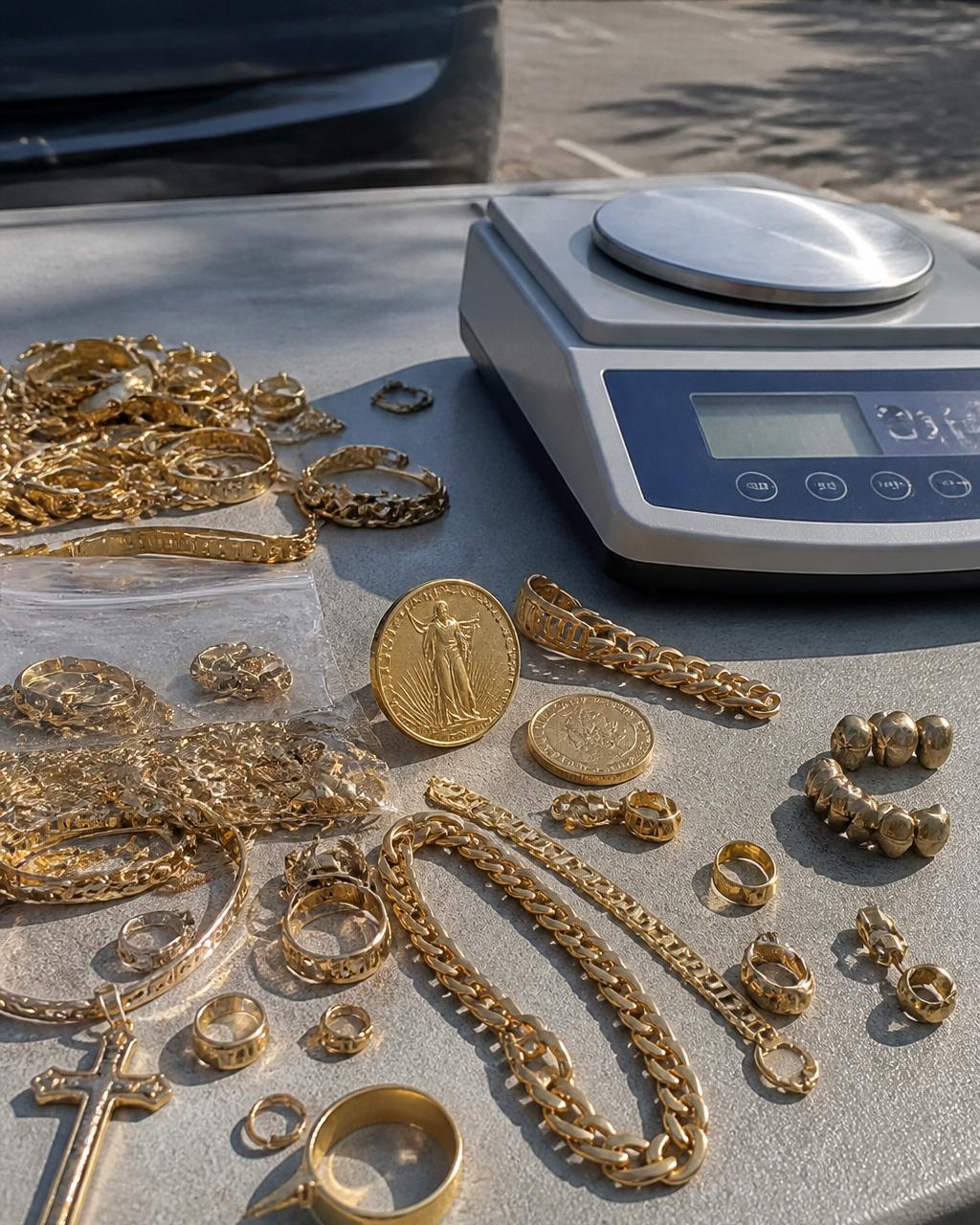
Weight matters most. Know how many grams or troy ounces of gold you have. A troy ounce equals 31.1 grams, the standard for precious metals.
Purity tells you how much of the item is actually gold. Gold purity is marked in karats. Here's the breakdown:
- 24K gold: 99.9% pure gold (almost never used for jewelry, too soft)
- 18K gold: 75% pure gold (common for fine jewelry)
- 14K gold: 58.3% pure gold (most common for rings and chains)
Look for a hallmark stamped inside or on the jewelry. It tells you the karat.
The spot price is what gold costs per troy ounce on the open market. It changes daily with global supply and demand.
A Worked Valuation Example
Let's say you have a 14K gold chain that weighs 12 grams. Here's how to estimate its value:
- Convert grams to troy ounces: 12 grams ÷ 31.1 = 0.386 troy ounces
- Calculate fine gold: 0.386 troy ounces × 0.583 (58.3% purity for 14K) = 0.225 troy ounces of pure gold
- Multiply by spot price: If gold is trading at $2,100 per troy ounce, your chain contains approximately 0.225 × $2,100 = $473 in gold value
That $473 is the intrinsic value, the raw gold content. Fair market value for jewelry accounts for refining costs and margin.
This is where the disconnect happens. Many sellers expect full intrinsic value, but buyers must cover refining, testing, and overhead. Fair market value reflects what's actually negotiable in the real market.
Gold purity is marked in karats, and each level contains a different percentage of pure gold.
| Karat | Pure Gold Content | Common Use |
|---|---|---|
| 24K | 99.9% | Almost never used for jewelry, too soft |
| 18K | 75% | Common for fine jewelry |
| 14K | 58.3% | Most common for rings and chains |
| 10K | 41.7% | Durable for everyday wear |
Using a Gold Jewelry Value Calculator
A gold jewelry value calculator automates the math: input weight, karat, and current spot price, and it estimates intrinsic value instantly. These tools help with quick estimates but have limits.
Calculators give you raw gold value only.
Use a calculator as a starting point. It tells you the minimum value (the gold itself). But fair market value for jewelry can be higher if the piece has collector appeal, historical significance, or intact gemstones.
How to Test Gold Purity
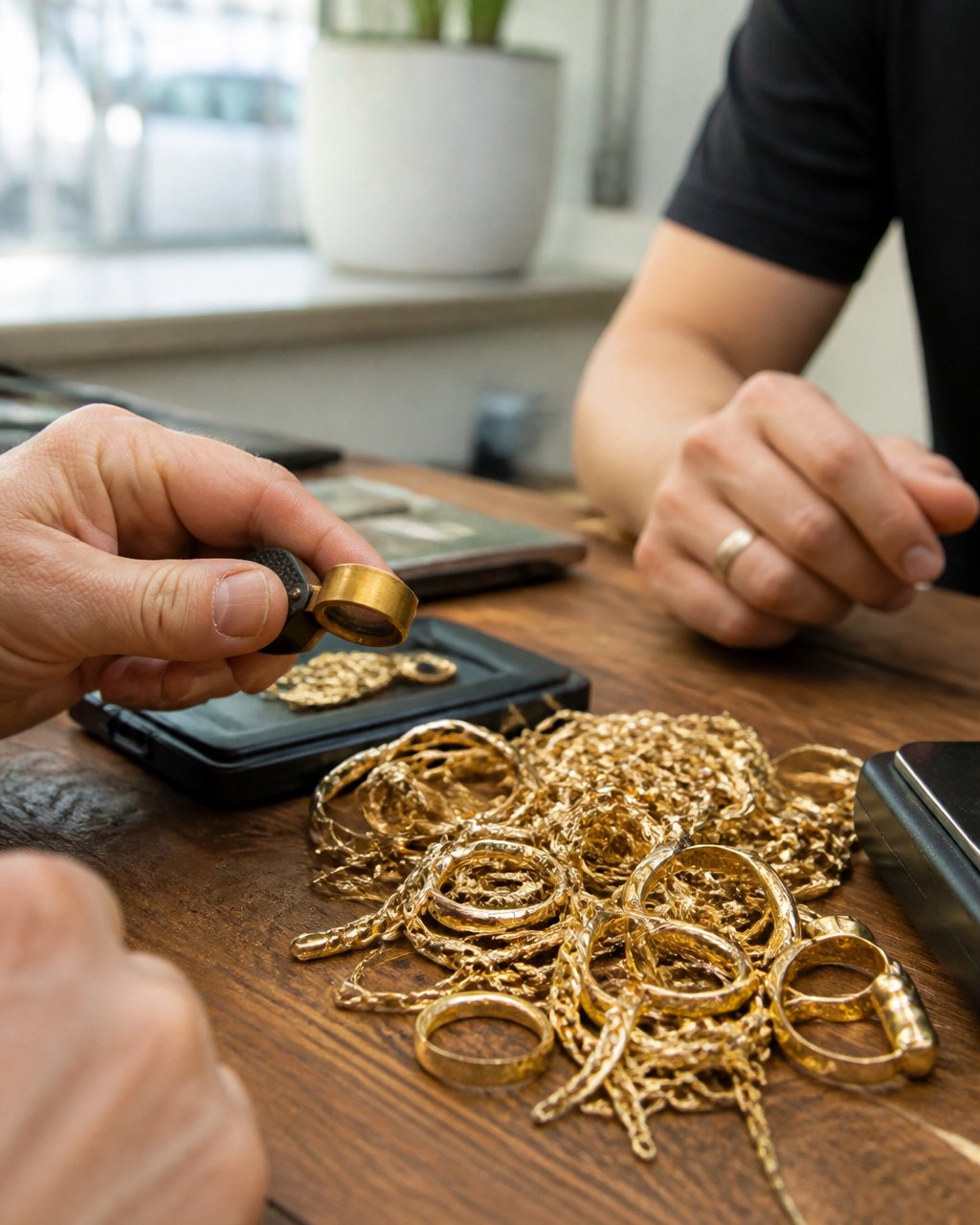
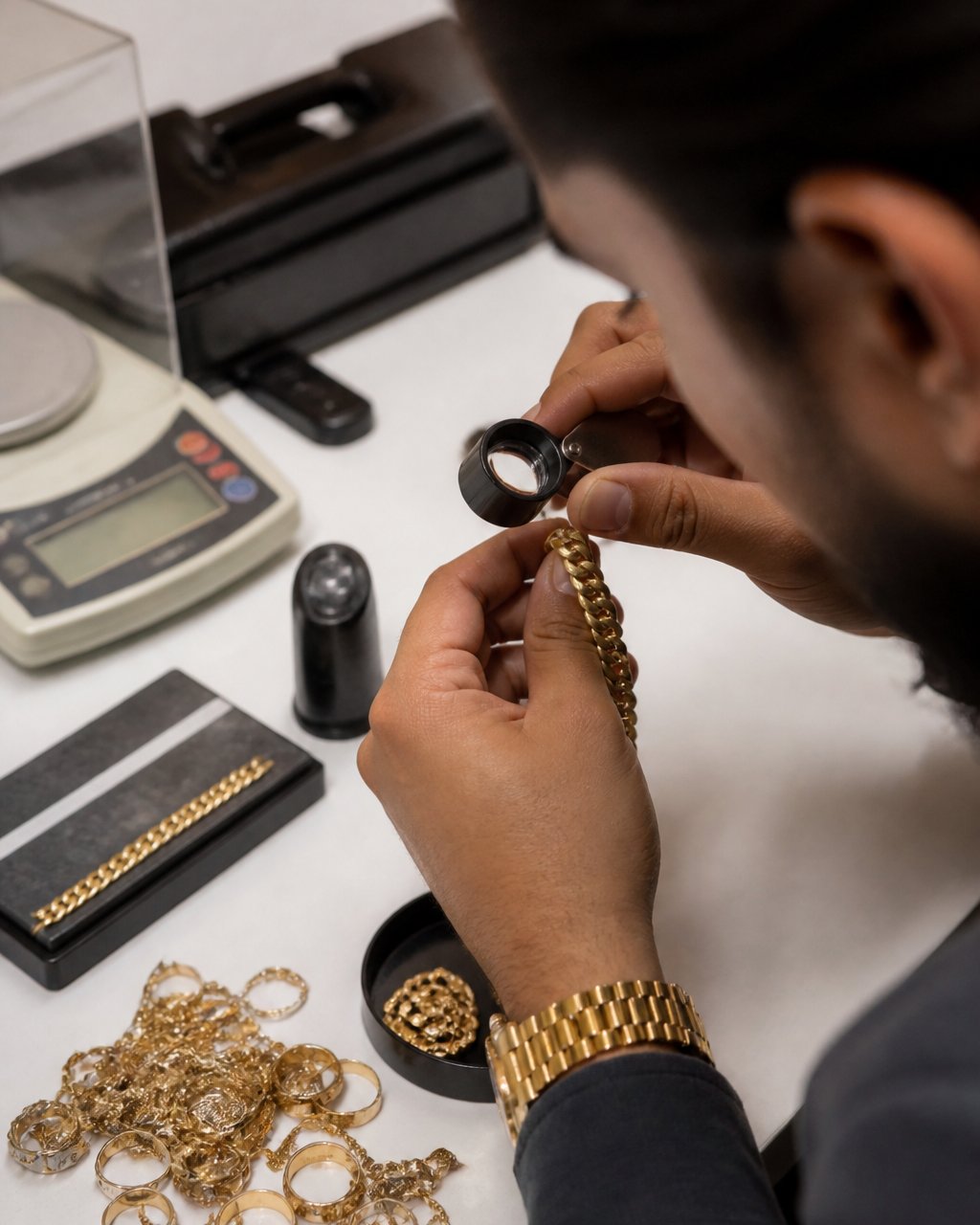
Testing purity is essential because hallmarks can be faked or worn off. Buyers use certified equipment to verify what they're purchasing. Learn the specific verification methods used by professional gold buyers.
Electronic testing measures electrical conductivity, which varies by karat. It's non-destructive and fast but less precise than acid testing for mixed alloys.
X-ray fluorescence (XRF) is the gold standard for accuracy. It identifies the exact composition without damaging the piece.
You don't need to test your jewelry yourself.
Gold Jewelry Appraisal vs. Resale Value
These two terms get confused constantly, and the confusion costs sellers money. An appraisal is a formal, written opinion of value prepared for a specific purpose. Resale value is what a real buyer will actually pay you today. They are not the same number, and an appraisal prepared for one purpose can mislead badly if used for another.
The Three Appraisal Purposes Sellers Encounter
Appraisers follow the Uniform Standards of Professional Appraisal Practice (USPAP), and a credible report states which value definition was used. The three you will see most often:
- Insurance replacement value. This estimates what it would cost to replace the item new at retail, including markup, tax, and sometimes design labor. It is the highest of the three and is what most jewelry-store "appraisals" you receive at purchase actually represent. It is not what a buyer will pay you.
- Fair market value. This is the price a willing buyer would pay a willing seller, neither under pressure, with both reasonably informed. For gold jewelry, this typically lands between melt value and retail replacement value, depending on design, brand, and condition.
- Liquidation or forced-sale value. This reflects what you would receive selling quickly to a dealer or refiner. It is the lowest of the three and is closest to the cash offer you will actually see.
A common and expensive mistake is walking into a buyer with an insurance replacement appraisal and expecting that number. A piece appraised at retail replacement can legitimately draw a cash offer at a fraction of it, because the buyer prices gold content and resale channel, not retail replacement cost.
What Documentation Supports Each Value
- For insurance replacement: a USPAP-compliant appraisal report identifying the item, describing stones and mountings, stating the value definition, listing the appraiser's credentials, and dated within the insurer's required window (often every two to three years).
- For fair market value: a written opinion that states the value definition, the effective date, the method used (comparable sales, melt-based, or both), and the assumptions about condition and non-gold components.
- For resale or liquidation: a written offer or quote from the buyer, showing weight tested, karat verified, spot price used, and the deduction applied. This is the document that actually matters when you sell.
Ask any appraiser which value definition they are using before you pay for the report. If the report does not state it, treat the number as a retail replacement figure until proven otherwise.
Why the Gap Between Appraisal and Resale Exists
Jewelry carries two kinds of value: intrinsic value (gold and gemstones) and market value driven by design, brand, age, and condition. An insurance appraiser may credit full retail replacement of a signed vintage piece, while a cash buyer underwrites only what they can resell or refine. Neither is wrong; they answer different questions.
When you are selling, focus on resale value and get it in writing. Understand how fair market value translates to actual cash offers for scrap gold. Understand how fair market value translates to actual cash offers for scrap gold
What Affects Your Gold Jewelry Offer
Several factors shift your offer beyond weight and purity. The useful way to understand them is to separate what changes the payable gold weight from what changes the percentage of spot value the buyer pays.
Non-Gold Components That Reduce Payable Weight
Buyers pay for fine gold content, not total scale weight. Anything that isn't gold comes out of the calculation:
- Gemstones and diamonds. A stone set in gold is weighed with the piece but is not gold. Buyers either remove it before weighing or deduct an estimated stone weight. Genuine stones may add value if verified, but costume stones and cubic zirconia add nothing and complicate the sale.
- Clasps, pins, and findings. Many clasps and earring backs are lower-karat or base metal. A 14K chain with a 10K clasp is not uniformly 14K, and a careful buyer tests components separately.
- Solder and repair metal. Repairs often introduce lower-karat solder. A heavily repaired piece may test below its stamped karat at the joint.
A transparent buyer will tell you the tested weight and karat they are paying on, not just the scale weight. Ask for that number.
The Deduction: From Spot Value to Offer
The spot price is the starting point, not the offer. Buyers apply a deduction for refining, assay, overhead, and margin, and that deduction is the single biggest variable between buyers.
Cash buyers and refiners typically pay a percentage of fine-gold spot value, depending on volume, karat, and how the buyer processes metal. Rather than quote a fixed percentage, ask each buyer to state the spot price and deduction in writing.
A Repeatable Method to Compare Offers
Use the same inputs for every quote so the comparison is apples to apples:
- Confirm the spot price and its timestamp. Offers priced off different spot prices are not comparable. Ask which price and when.
- Confirm tested weight and karat. Get the fine-gold content the buyer is paying on, not the scale weight.
- Ask for the deduction and payout percentage. Have the buyer state it explicitly.
- Check fees and payment terms. Ask whether there are any assay, refining, or processing fees, and whether payment is cash, transfer, or check, and when it clears.
- Check the quote's validity window. Spot moves; a quote without an expiration is not a firm offer.
- Ask about return policy. If you sell and change your mind, can you buy the piece back, and at what terms?
Run the same six questions past every buyer and the differences in payout percentage and fees become obvious.
Consumer Protections and Safe Selling Practices
- Weigh before you meet. Know your gram weight and karat stamps in advance so you can sanity-check any offer.
- Get the quote in writing. A verbal number is not a quote.
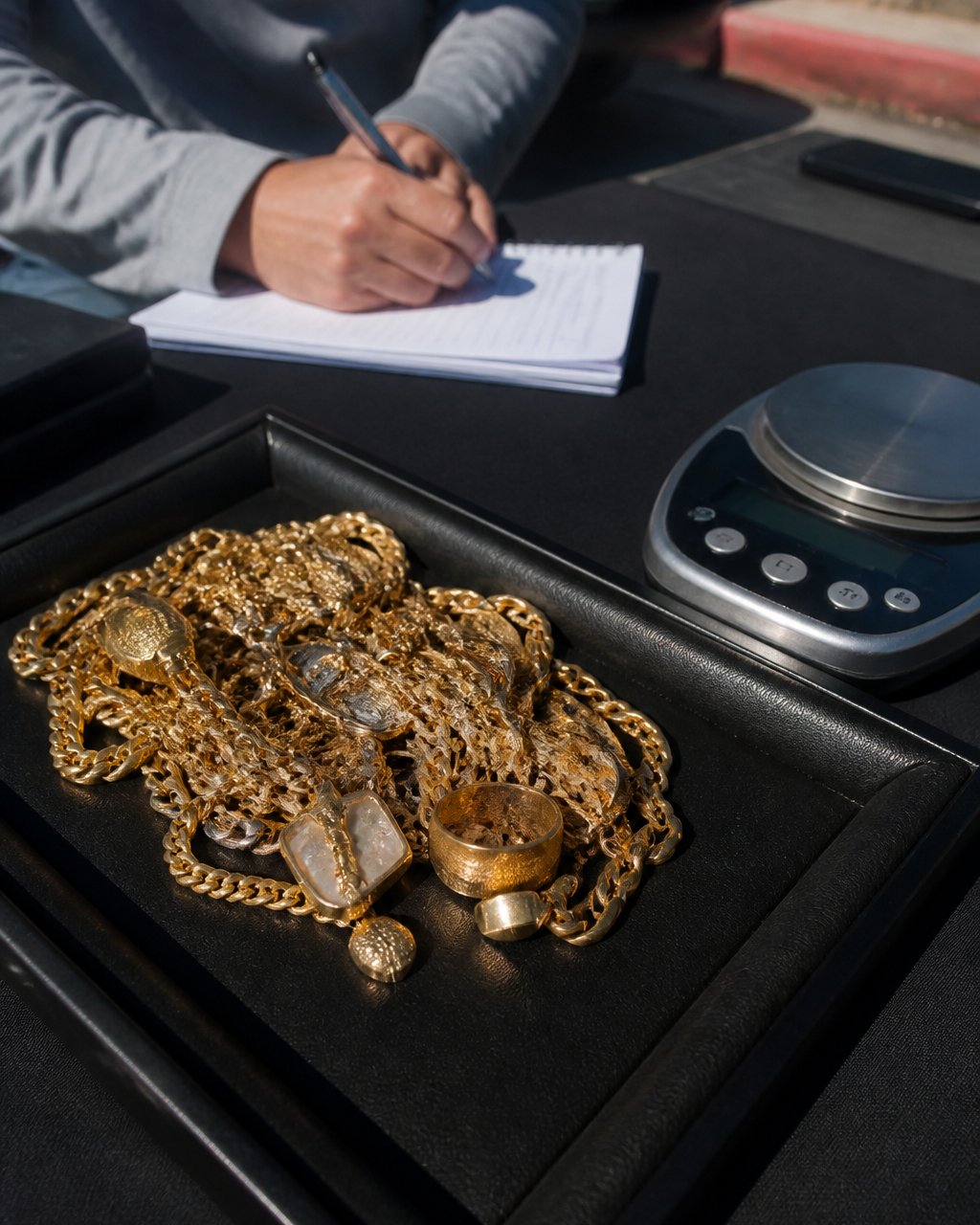
- Watch the testing. Reputable buyers test in front of you and explain results.
The key is comparing offers on identical terms. Get quotes from multiple buyers, ask the same six questions, and you will see the real range of fair market value for your pieces. Learn negotiation strategies to ensure you receive fair offers based on calculated value.
Getting Your Gold Jewelry Appraised and Paid
When you're ready to sell, the process is straightforward.
Look for buyers who use certified testing equipment and explain their methodology, showing test results and how they calculated the offer.
Timing matters. Spot prices change daily. If you get an offer, ask how long it's valid.
Payment options vary. Others use bank transfer or check. Explore professional appraisal services available to get jewelry valued before selling.
Before you sell, decide what you're comfortable with.
Frequently Asked Questions
How is the fair market value of gold jewelry calculated?
Fair market value for gold jewelry is calculated by multiplying three factors: the weight of pure gold in the item (determined by karat and total weight), the current spot price per troy ounce, and any adjustments for condition or design. This calculation ensures you know the intrinsic metal value independent of brand, design, or gemstones.
Does a jewelry appraisal equal the amount a buyer will pay?
No. A jewelry appraisal estimates fair market value but typically reflects retail or replacement value, not what a gold buyer will offer. Buyers purchase at wholesale rates, paying less to cover testing, refining, and operational costs. Always request an offer based on melt value and current spot price, not the appraisal figure. This distinction is crucial when selling inherited or estate jewelry.
What is the current price of gold per gram?
Gold prices fluctuate daily based on global markets. The spot price is quoted per troy ounce (about 31.1 grams), so divide the troy ounce price by 31.1 to get the per-gram rate. Spot gold trades in the range that determines your jewelry's intrinsic value. Check live market rates before any appraisal or sale to ensure your offer reflects current conditions. Prices change throughout the day, so timing matters when you sell.
Can I sell gold jewelry that is broken or damaged?
Yes. Broken, bent, or damaged gold jewelry is still valuable because buyers assess it by weight and purity, not condition. A broken chain, a ring with a missing stone, or bent bracelets all contain the same amount of gold as intact pieces. Damaged items may even be easier to sell since buyers expect to melt or refine them anyway. Condition affects only design-based premium; the metal value remains constant. Bring all damaged pieces, gold is gold regardless of its current state.
Selling gold jewelry doesn't have to be complicated. When you understand how fair market value is calculated and what factors influence an offer, you can negotiate confidently. Get a free quote from Pirates Finds Gold and see what your items are worth. We'll test everything on-site, explain the numbers, and pay you fairly, no obligation.