 listicle
Selling Gold From a Deceased Estate: Checklist
Table of Contents
- Immediate Steps After a Death: Securing the Estate
- Documents Needed to Sell Inherited Gold
- Identifying and Inventorying Gold Items
- How to Value Inherited Gold Jewelry
- Estate Jewelry Appraisal Checklist
- Selling Inherited Gold Coins
- Choosing a Gold Buyer and Completing the Sale
- Recording the Sale and Distributing Proceeds
- Frequently Asked Questions
Last Updated: October 18, 2026
Immediate Steps After a Death: Securing the Estate
When someone passes away, the first priority is securing physical assets and gathering documentation, following a selling gold from a deceased estate checklist ensures nothing is overlooked. If gold items, jewelry, coins, bullion, or dental gold are part of the estate, protect them before any valuation or sale.
Locate all gold items in the deceased's home, safe deposit box, or storage facility, store them together securely, and document each piece with photos or video noting its condition. This inventory protects against loss and provides a baseline for appraisal.
Next, identify who has legal authority to manage the estate: typically the executor named in the will, or the court-appointed administrator if no will exists. This person must be involved in all decisions about liquidating gold. If unsure, check the deceased's documents or consult a probate attorney.
Gather financial and legal records early: certified death certificates, will or trust documents, insurance policies mentioning valuable items, and recent tax returns. These establish the estate's legitimacy and are required by most gold buyers and appraisers.
Documents Needed to Sell Inherited Gold
Before contacting a gold buyer or appraiser, gather the paperwork that establishes your authority and the estate's legitimacy.
The death certificate is your foundation. You'll need certified copies, typically 5-10 depending on the estate's complexity. Banks, insurance companies, appraisers, and gold buyers may all request one.
The will or trust document proves who has authority to sell estate assets. If there's no will, obtain the court order appointing the estate administrator. This document shows you have legal standing to liquidate the gold.
Identification for the executor or administrator is required by most gold buyers. Bring a valid government-issued ID and be prepared to verify your role in the estate.
Proof of ownership can include insurance policies listing the gold items, jewelry receipts or appraisals, or safe deposit box documentation. Not always required, but it strengthens your negotiating position.
Tax documentation may be needed, especially if the estate is substantial. Have the deceased's most recent tax returns and any estate tax forms available.
| Document | Why You Need It | Where to Get It |
|---|---|---|
| Certified death certificate | Proves death and establishes timeline | Vital records office or funeral home |
| Will or trust | Proves executor/administrator authority | Deceased's attorney or court records |
| Government ID | Verifies your identity | Your wallet |
| Insurance policies | Documents gold value and ownership | Deceased's files or insurance company |
| Estate tax forms | Establishes fair market value for tax purposes | Estate attorney or tax preparer |
Identifying and Inventorying Gold Items
A thorough inventory of all gold items is essential for valuation, tax reporting, and the eventual sale.
Examine each item for hallmarks, small stamps indicating karat weight (10K, 14K, 18K, 22K, or 24K for jewelry; .999 or .9999 for bullion and coins). Look inside rings, on bracelet clasps, and on the back of pendants; for coins, check the face or reverse for markings identifying type and purity.
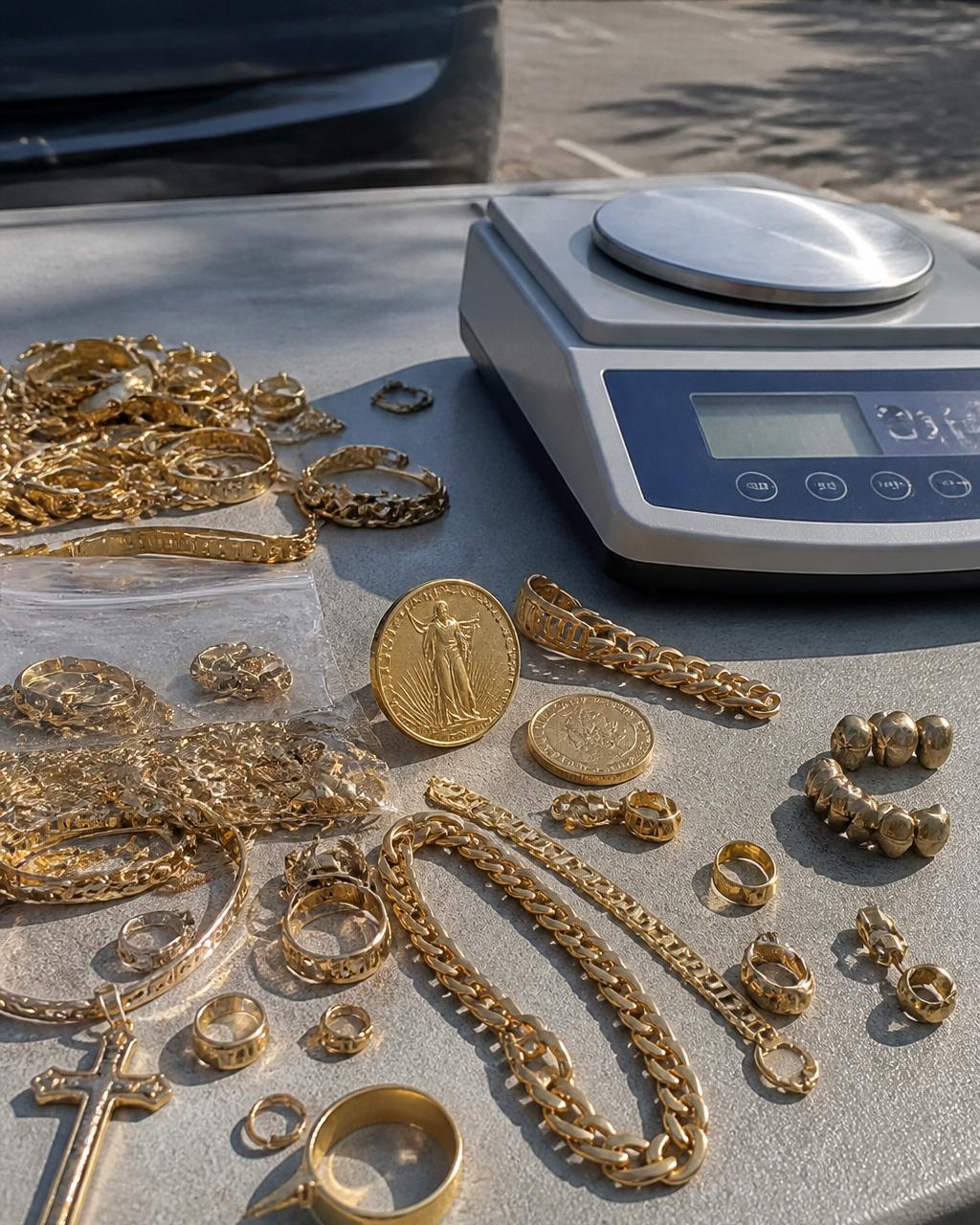
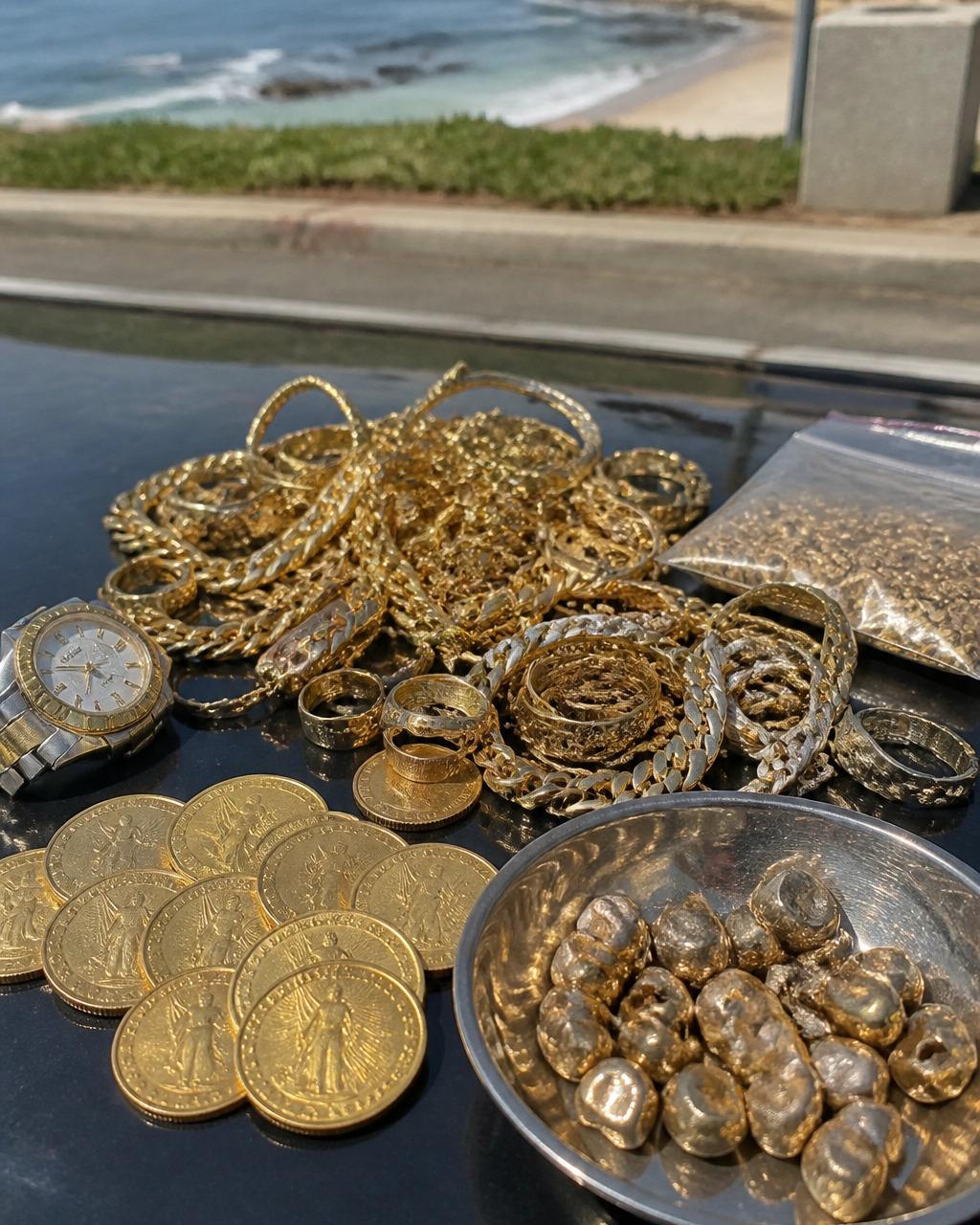
Separate items by category: jewelry, coins (bullion, numismatic, foreign), and other gold items (dental gold, scrap gold, bars or ingots). This organization helps appraisers work efficiently and ensures you don't miss any items.
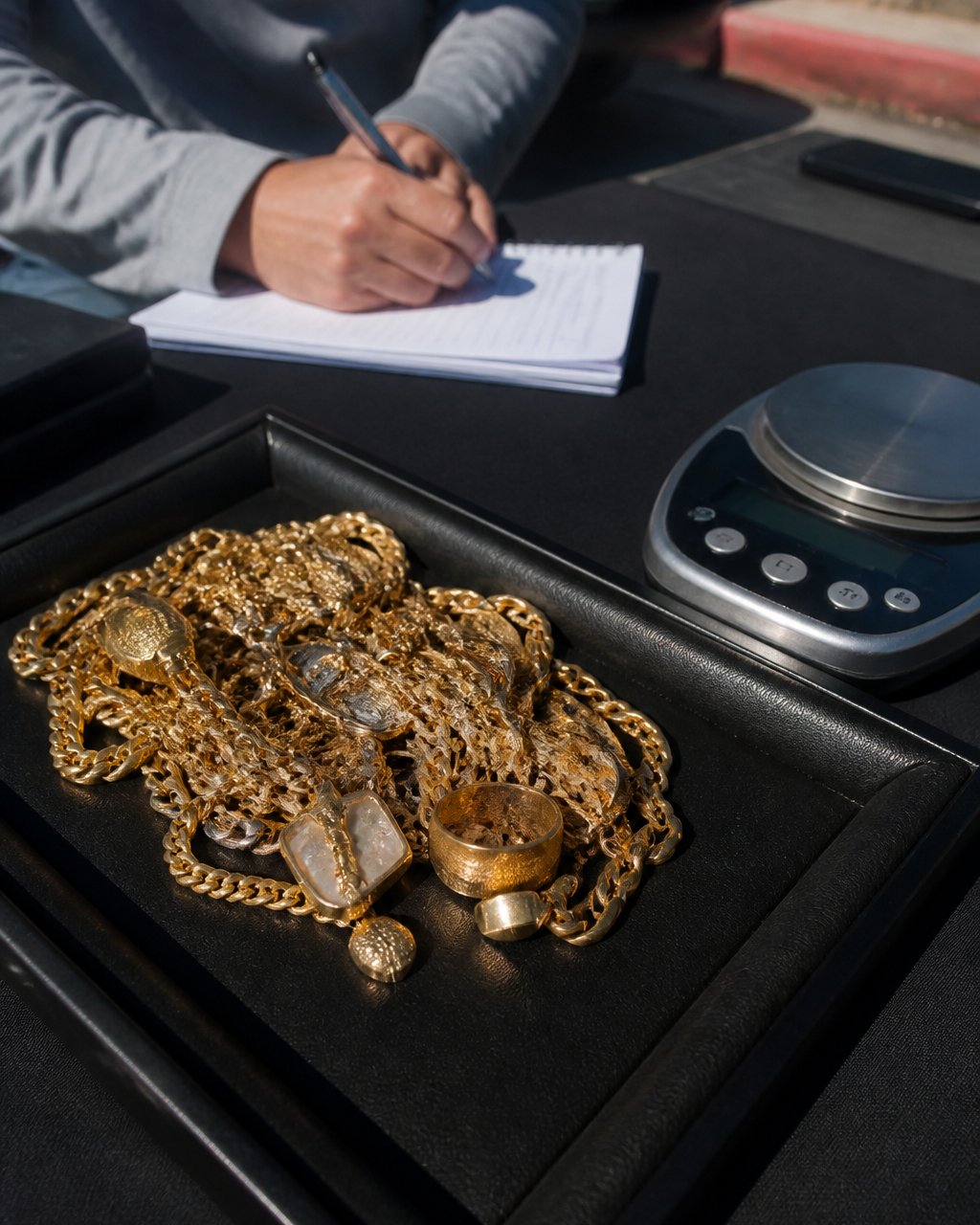
Document each piece in writing or with photos: for jewelry, note type, visible hallmarks, approximate weight, and condition; for coins, record country of origin, denomination, visible date, and condition; for dental gold or scrap, note quantity and markings.
Weight matters significantly in gold valuation. Gather any records of jewelry weights or coin specifications the deceased kept; if none exist, most appraisers can weigh items during their evaluation.
How to Value Inherited Gold Jewelry
Valuing inherited gold jewelry is straightforward: it's based on purity, weight, and the current market price.
Gold value starts with the spot price, the current market price per troy ounce of pure gold, which changes throughout each trading day and is publicly available through financial sites and news outlets.
Karat weight determines purity. 24K gold is pure (100%); 18K is 75% pure; 14K is about 58% pure; 10K is about 42% pure.
Most gold buyers apply a melt value calculation: pure gold content multiplied by the current spot price, then adjusted by a percentage.
Condition and craftsmanship can affect value slightly, but for most inherited jewelry, the gold content drives the price. Designer or antique pieces with significant artistic value may warrant a separate appraisal, but standard inherited jewelry is valued primarily on weight and purity.
Check recent gold price charts to understand market trends. According to APMEX's precious metals guide, comparing current prices with recent months helps you understand whether the market is favorable for selling now or waiting. This context informs your decision about timing the sale.
Estate Jewelry Appraisal Checklist
A professional appraisal documents the fair market value of inherited jewelry for tax and distribution purposes. Use this checklist to prepare.
Before the Appraisal:
- Gather all jewelry items and organize by type (rings, necklaces, etc.)
- Clean items gently with a soft cloth to remove dust and oils
- Document visible hallmarks and maker's marks with photos
- Compile any original receipts, insurance documents, or prior appraisals
- Note the condition of each piece (intact, damaged, missing stones)
- Prepare a list of questions for the appraiser
During the Appraisal:
- Verify the appraiser is certified by a recognized organization
- Watch as items are tested for purity (acid testing or electronic testing)
- Ask the appraiser to explain their valuation methodology
- Request written documentation of each item's weight, purity, and assessed value
- Clarify whether the appraisal is for insurance replacement value or resale value
- Discuss any items with potential collector or antique value
After the Appraisal:
- Obtain a written appraisal report with detailed descriptions and valuations
- Keep copies for the estate's tax records and distribution documentation
- Use the appraisal to inform your decision about which gold buyer to contact
- Share the appraisal with other beneficiaries if the estate is being divided
Selling Inherited Gold Coins
Gold coins fall into two categories: bullion coins (valued primarily for gold content) and numismatic coins (valued for rarity, condition, and collector demand). Knowing which you have determines how to sell them.
Bullion coins like American Gold Eagles, Canadian Maple Leafs, or South African Krugerrands are valued almost entirely on gold content plus a small premium.
Numismatic coins have collector value beyond their gold content. Rare dates, limited mintages, or coins in exceptional condition may be worth significantly more than melt value.
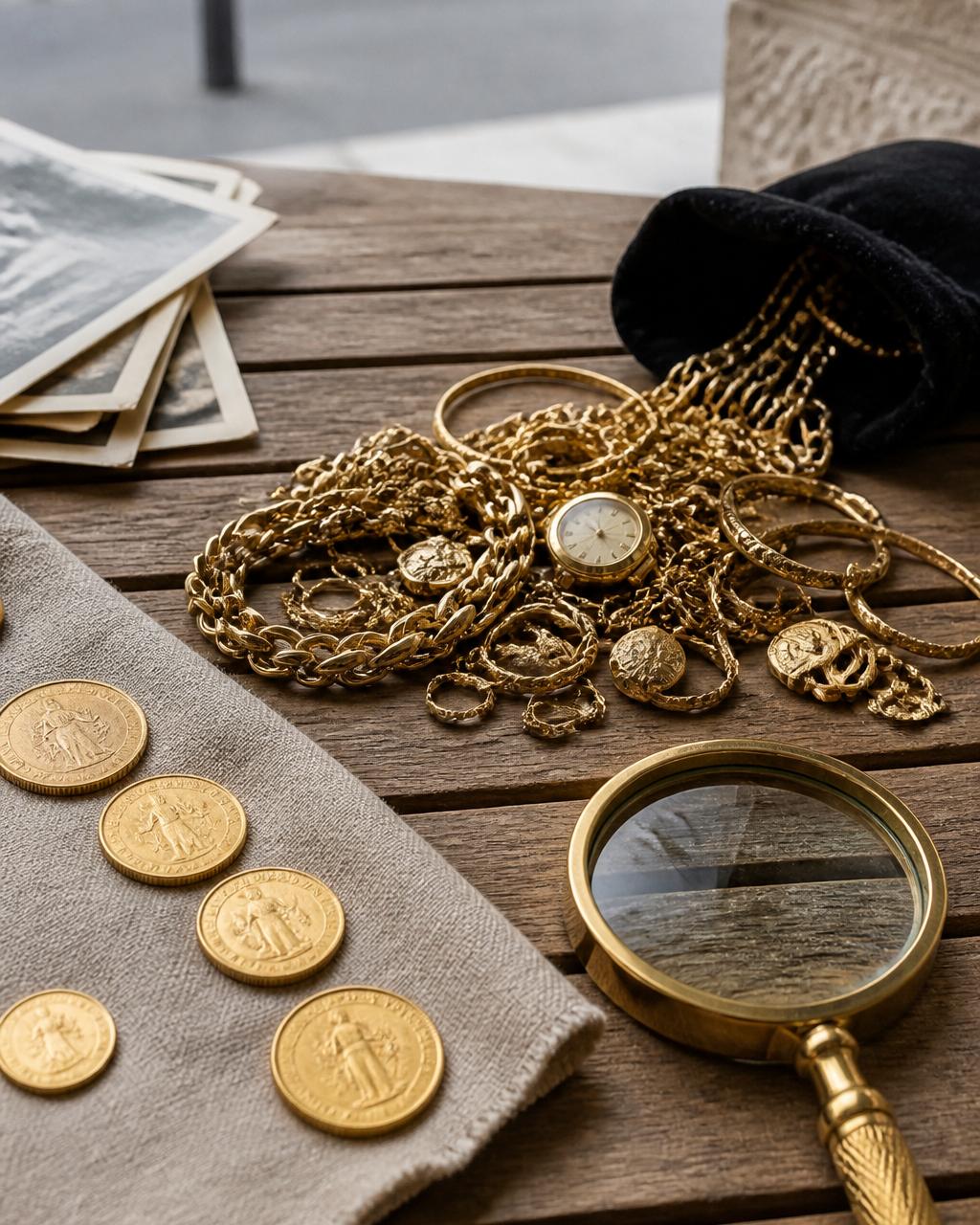
Document coin details before contacting a buyer: country of origin, visible year, denomination, and unique characteristics, with photos of both sides. Gather any receipts, appraisals, or collector records the deceased kept.
Research the current market for the specific coins you're selling. U.S. Gold Bureau's precious metals guide provides background on inherited precious metals and documentation practices that help you understand what information buyers typically request.
Most gold buyers accept coins, but some specialize more in jewelry than numismatic pieces. When comparing offers, clarify whether the buyer is valuing your coins at spot price (bullion approach) or considering collector value (numismatic approach).
Choosing a Gold Buyer and Completing the Sale
Selecting the right gold buyer is critical to fair value and a smooth transaction. Compare multiple buyers, understand their valuation methods, and verify legitimacy.
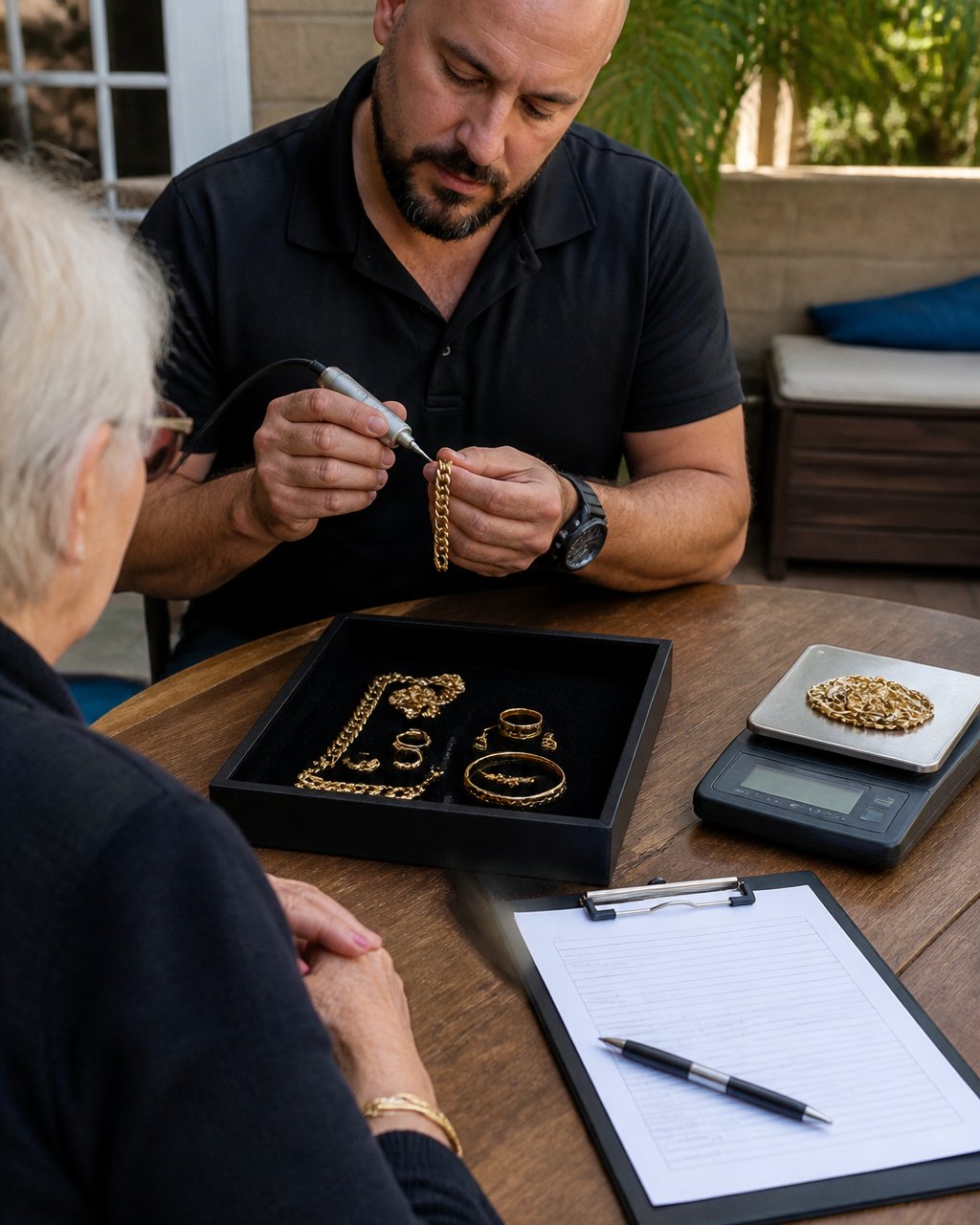
Types of gold buyers include local jewelry stores, pawn shops, online buyers, and estate liquidation services.
Verify legitimacy through business licenses, Better Business Bureau ratings, and customer reviews.
Request multiple quotes. Contact at least three buyers with the same information (weight, purity, item type, condition). This reveals who offers competitive pricing and who may be lowballing.
Understand the testing process. Ask whether the buyer uses acid testing, electronic testing, or X-ray fluorescence to verify purity.
Clarify payment methods. Confirm whether the buyer offers cash, check, bank transfer, or other payment options. Ask about timing, same-day payment, next business day, or longer.
Get everything in writing. Before finalizing the sale, request a written offer that itemizes each piece, its weight, purity, the offered price per gram or troy ounce, and the total payout.
Recording the Sale and Distributing Proceeds
Once the sale is complete, document the transaction thoroughly for tax and estate records so the estate closes properly and beneficiaries receive their distributions.
Obtain a detailed receipt from the gold buyer that includes:
- Itemized list of all gold items sold
- Weight and purity of each item
- Price per gram or troy ounce
- Total amount paid for each item
- Grand total and payment method
- Date of transaction
- Buyer's business name and contact information
File this receipt with the estate's other financial documents. It serves as proof of the sale and the amount received, which is essential for estate tax reporting.
Report the sale to the estate's tax preparer or accountant. Proceeds may affect the estate's tax liability.
Distribute proceeds to beneficiaries according to the will or trust documents. If the estate is simple and the gold sale was the primary asset, distribution may be straightforward.
Maintain records permanently. Keep all documentation related to the gold sale, appraisals, buyer quotes, the final receipt, and correspondence. These protect the estate if questions arise later.
According to American College of Trust and Estate Counsel's estate checklist, organizing estate-related tasks before selling inherited property helps executors stay on track. Proper documentation of the gold sale is part of this broader estate management process.
Following a selling gold from a deceased estate checklist requires careful planning, but the process becomes manageable when you stay organized. At Pirates Finds Gold, we understand that managing an estate while grieving is challenging.
Frequently Asked Questions
What documents do you need to sell gold from a deceased estate?
You'll need the death certificate (certified copy), a will or trust document showing the executor's authority, a photo ID for the person authorized to sell, and an inventory or appraisal of the gold items. If probate is required, a court order or letters testamentary may be needed. Keep financial records, deeds, and any insurance documents related to the gold. Having these organized speeds up the sale process and protects both the estate and the buyer.
How do you value inherited gold before selling it?
Start by identifying the karat weight (stamped on jewelry or coins), then weigh each item separately. Check the current spot price of gold to understand market value. Jewelry typically sells at a discount to spot price because of labor and refining costs, while gold coins may have numismatic value if rare. For accuracy, request a free appraisal from a reputable buyer using certified testing equipment. This gives you a baseline before accepting any offer.
Should estate gold be appraised before it is sold?
Yes, an appraisal protects the estate and beneficiaries. A professional appraisal documents the fair market value at the time of death for tax and distribution purposes. This is especially important if beneficiaries dispute the sale price or if the estate owes taxes. Many gold buyers offer free appraisals on-site, so there's no cost to getting an expert assessment before you commit to a sale.
What should you check before choosing a gold buyer?
Verify the buyer uses certified testing equipment and prices against the live gold spot market. Ask for references or customer reviews. Confirm they offer no-obligation quotes and transparent pricing. Ensure they accept all forms of gold (jewelry, coins, dental gold, bullion) and pay promptly. Avoid buyers who pressure you or offer prices significantly below market rates.