 blog
Leo Hamel vs San Diego Jewelry Buyers: A Seller's Guide
Table of Contents
- Why San Diego Jewelry Buyers Matter When You're Selling Gold
- How to Compare Gold Buyer Offers and Spot Fair Pricing
- Gold Purity Testing: What You Need to Know Before You Sell
- Safe Places to Meet a Gold Buyer and Protect Your Privacy
- Selling Gold Coins and Bullion vs. Jewelry: What Buyers Actually Accept
- What Sets Different San Diego Jewelry Buyers Apart
- Getting a Free Quote and Moving Forward with Confidence
- Frequently Asked Questions
Last Updated: October 13, 2026
Why San Diego Jewelry Buyers Matter When You're Selling Gold
With gold sitting in a drawer, old jewelry, inherited coins, dental work, you can sell locally or ship it away. San Diego jewelry buyers offer a third option: a direct, transparent transaction with someone who comes to you.
You don't have to travel or send valuables through the post.
At Pirates Finds Gold, we've built our service around what sellers want: convenience, honesty, and privacy.
Understanding how buyers operate, and what separates a fair offer from a lowball one, is the foundation of getting paid what your gold is worth.
How to Compare Gold Buyer Offers and Spot Fair Pricing
The biggest mistake sellers make is accepting the first offer. Gold pricing isn't fixed, it moves with the spot market, and buyers use different testing methods, margins, and payment terms.
Get at least two quotes, and compare three areas: purity assessment, weight measurement, and the percentage of spot price offered.
Purity testing should be non-destructive, electronic or acid testing that doesn't damage your items.
Ask each buyer the same questions:
- What testing method do you use?
- What's your offer as a percentage of today's spot price?
- How do you handle payment (cash, check, transfer)?
- What happens if I want to think about it?
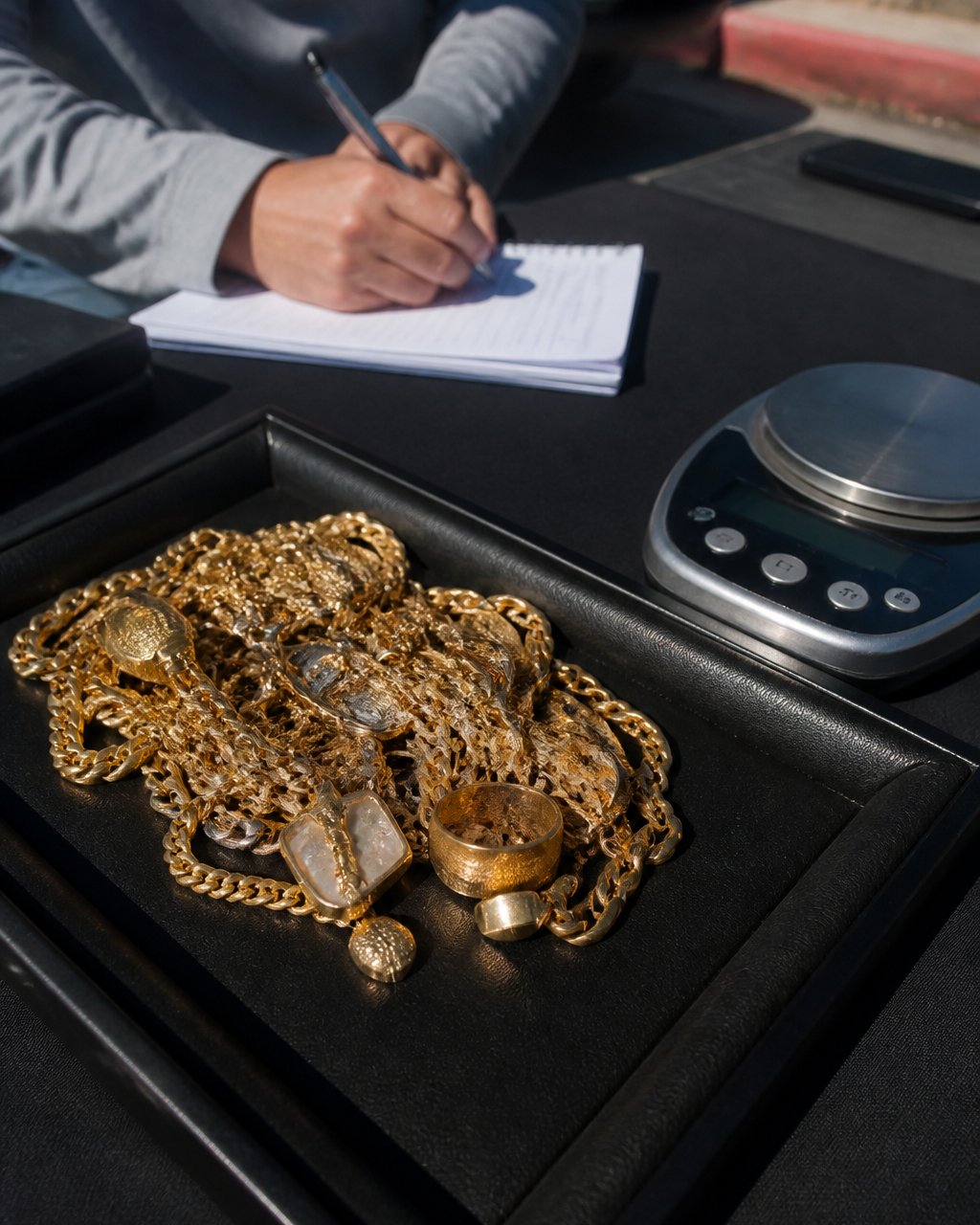
Write down the answers. The buyer willing to explain their process and give you time to decide is usually the one you can trust.
Gold Purity Testing: What You Need to Know Before You Sell
Gold purity determines value. "14K" contains 58.3% pure gold, "18K" contains 75%, and "24K" is pure. Dental gold, coins, and jewelry all have different standard purities that buyers must identify accurately.
Electronic testing is the fastest, safest method: a device measures electrical conductivity to estimate purity.
Acid testing is more involved but non-destructive if done correctly.
Destructive testing (filing, melting, or cutting) should be a last resort. It damages your items and is rarely necessary. Reputable buyers avoid it.
Before any test, ask the buyer to explain what they're doing and why.
Bring any documentation you have, coin certificates, jewelry hallmarks. They don't replace testing but give context and speed up the process.
Safe Places to Meet a Gold Buyer and Protect Your Privacy
Your safety and privacy matter, you're carrying valuables and discussing personal finances. Choose your meeting location carefully.
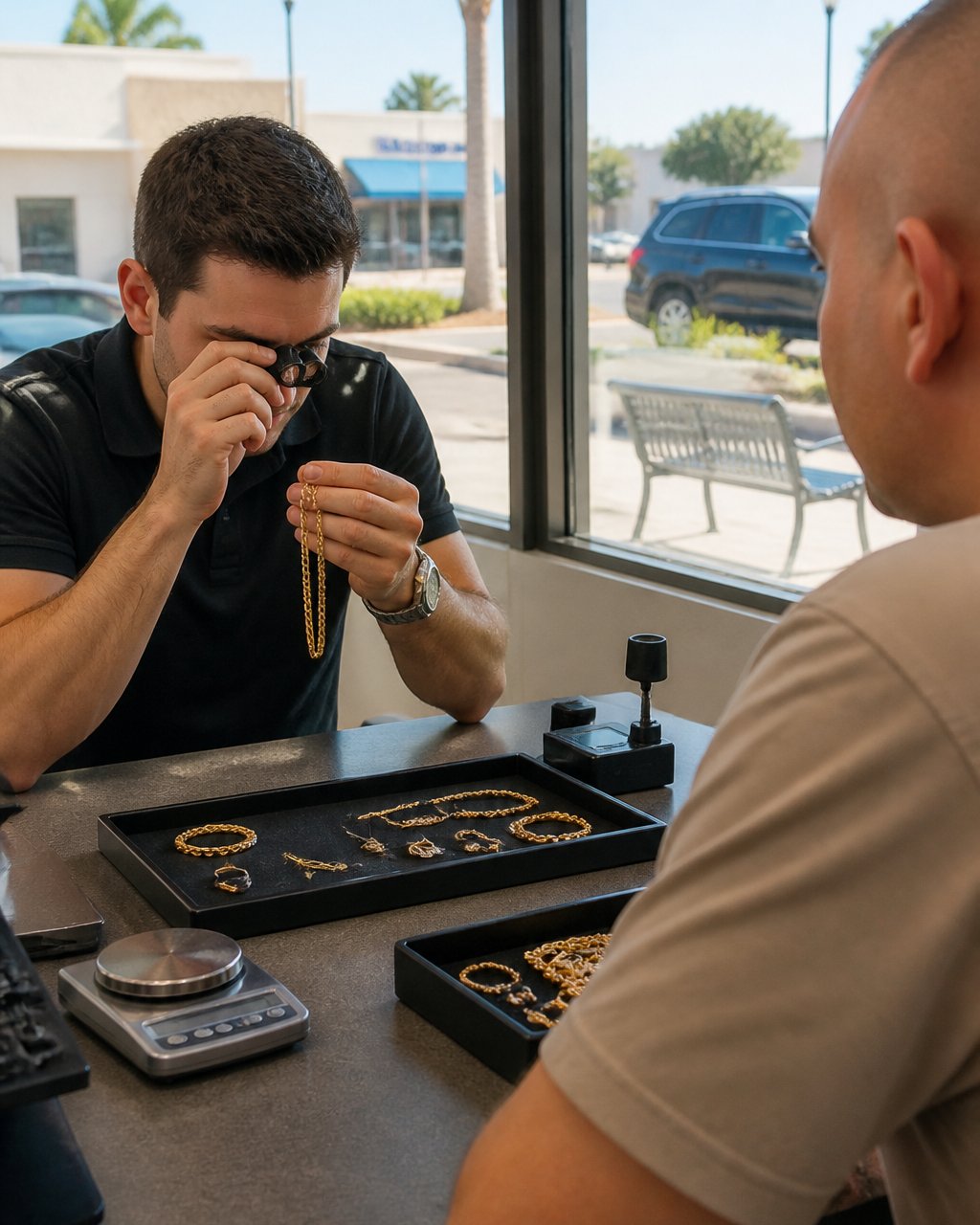
The safest option is a public space with witnesses and a controlled environment. A location near a bank or police station is even better, it signals legitimacy.
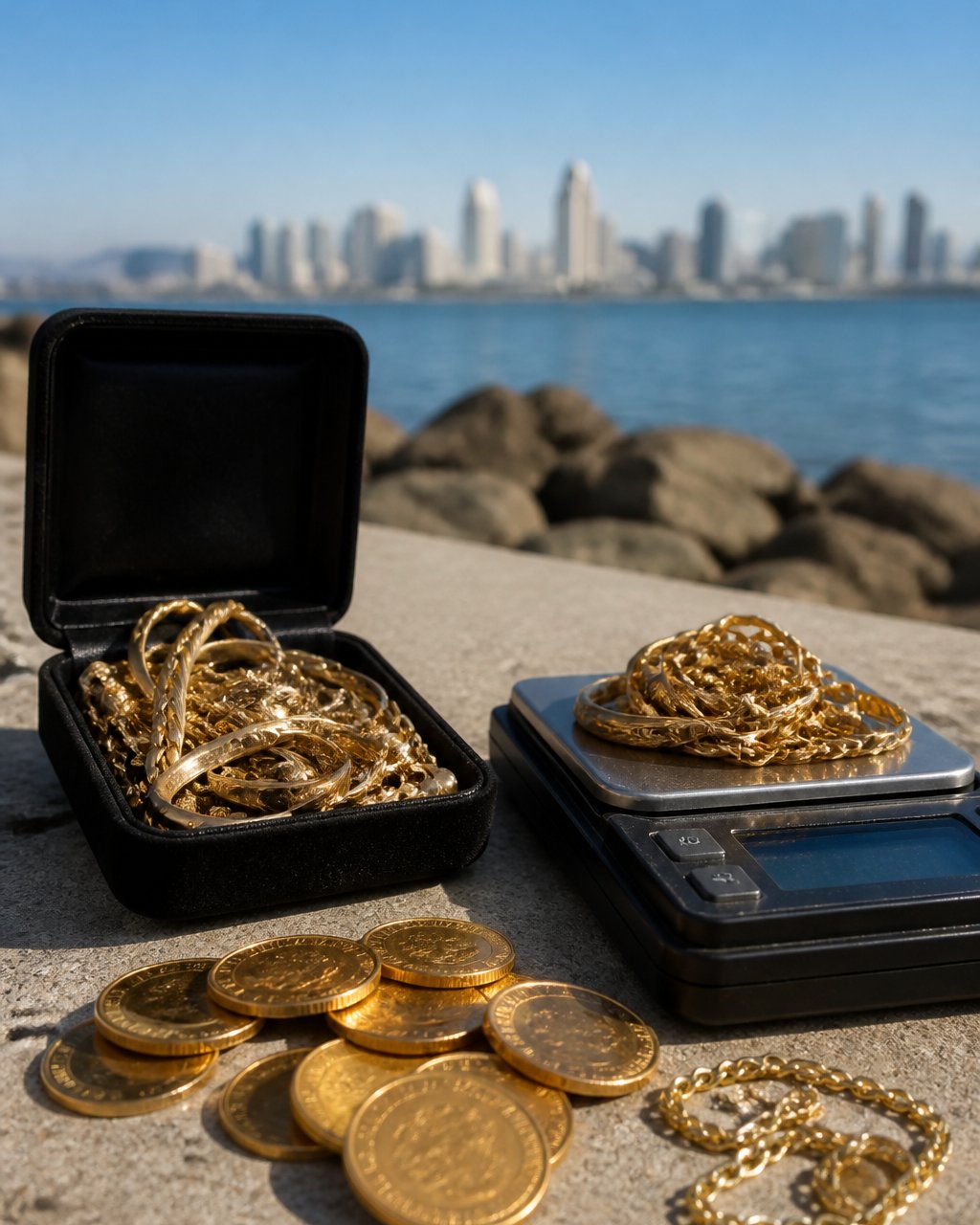
If you prefer not to leave home, a mobile buyer is the next best option. Pirates Finds Gold operates this way throughout the greater San Diego area, we come to your home or office, bring testing equipment, and conduct the transaction there.
If you do meet a buyer at your home, take basic precautions:
- Meet during daylight hours
- Have someone else present if possible
- Ask for identification
- Keep the transaction brief and straightforward
Worried about letting a stranger into your home? That's valid.
Never meet in a private location, late at night, or alone if you're uncomfortable. If something feels off, cancel and call another buyer.
Selling Gold Coins and Bullion vs. Jewelry: What Buyers Actually Accept
Not all gold is the same, and not all buyers accept all forms.
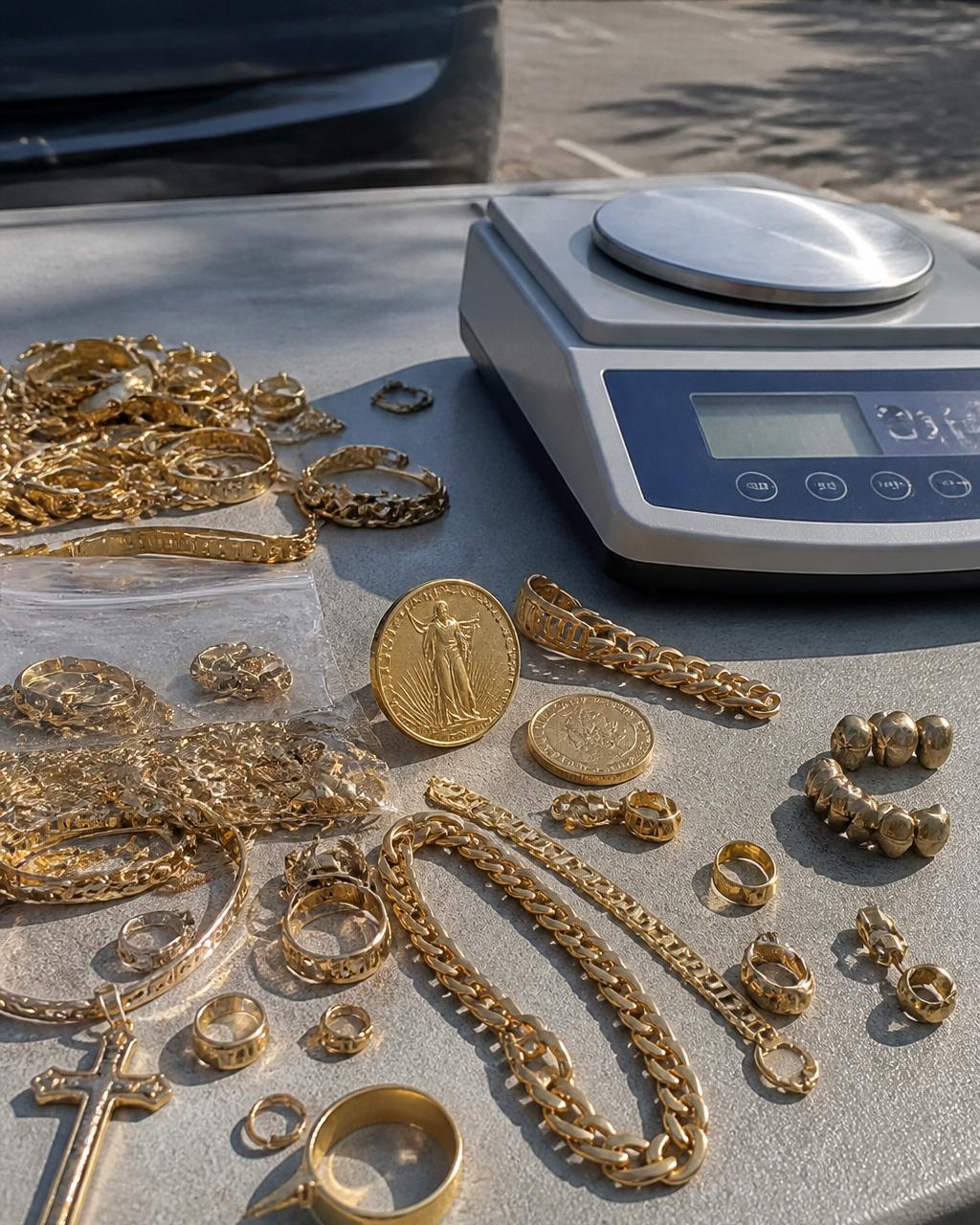
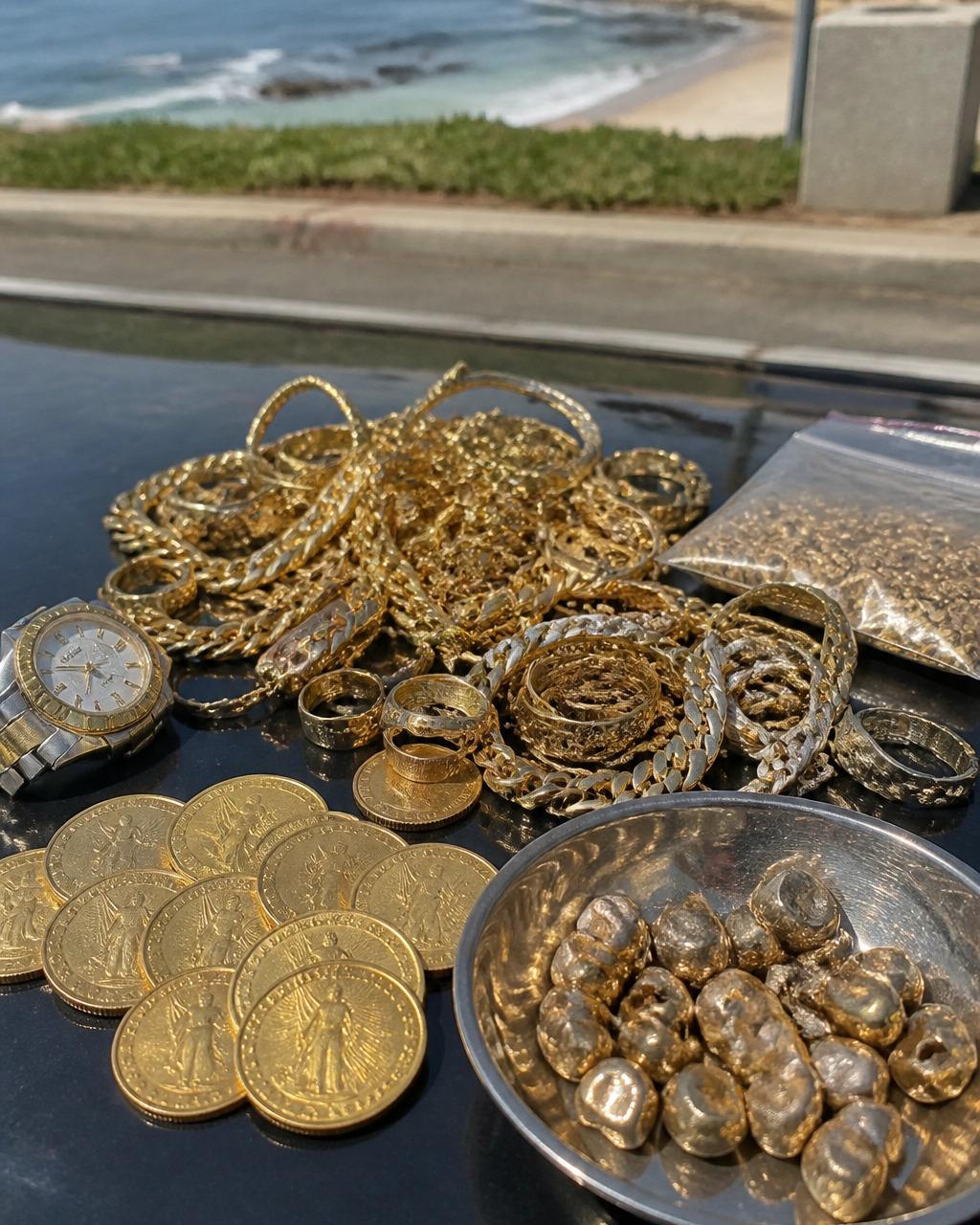
Jewelry (rings, necklaces, bracelets, brooches) is the most common item, usually 10K to 18K gold. Broken, tarnished, or out of style doesn't matter, buyers care about weight and purity, not condition.
Coins vary widely.
Bullion (bars, ingots) is straightforward: weight and purity determine value.
Dental gold (crowns, bridges, inlays) is legitimate gold, usually 14K or higher.
Scrap gold (filings, dust, broken pieces) is harder to price on the spot because it requires melting to determine exact purity.
The key is transparency. Before you meet, tell the buyer what you're bringing and ask if they accept that type of gold.
What Sets Different San Diego Jewelry Buyers Apart
Most pages describe buyers in broad strokes: storefront, mobile, chain, independent. That tells you almost nothing you can act on.
Verifiable facts are things you can confirm before or during the transaction:
- Whether the business is registered and where it operates from
- Whether the buyer carries insurance or a surety bond for mobile visits
- What testing equipment they use and whether they let you watch the test
- Whether they show you the scale, the weight, and the current spot price
- Whether they put the offer in writing on request
- What payment methods they use and how quickly payment clears
Subjective claims are things you can't independently confirm:
- "We pay the most"
- "We've been trusted for years"
- "Our customers love us"
Here's how the common buyer types tend to stack up against those criteria:
| Buyer type | Testing transparency | Written offer | Payment speed | Best for |
|---|---|---|---|---|
| Storefront | Usually high, you're on-site | Often available | Same day | Sellers who want a fixed location and witnesses |
| Mobile | Varies, ask upfront | Ask upfront | Same day if arranged | Sellers who can't or don't want to travel |
| Chain | Standardized, sometimes rushed | Usually available | Same day | Sellers who want a quick, predictable process |
| Independent | Often high, more time per item | Ask upfront | Varies | Sellers with unusual or high-value pieces |
A few practical questions cut through the marketing faster than any review:
- "Can you show me the scale reading before you weigh my items?"
- "What percentage of today's spot price is your offer based on?"
- "Will you put that offer in writing before I decide?"
- "Are you insured or bonded for mobile visits?"
A buyer who answers all four without hesitation is giving you something more valuable than a slogan. A buyer who dodges any of them is telling you something too.
Pirates Finds Gold operates as a mobile buyer. We meet you near a bank or police station, or at a location you choose, bring our testing equipment, and let you watch every step.
Build your comparison around verifiable criteria, not slogans. The buyer who answers specific questions with specific answers is the one worth your time.
Getting a Free Quote and Moving Forward with Confidence
The first step is simple: contact a buyer and describe what you have. Most reputable buyers offer free quotes over the phone or in person. There's no obligation and no cost to you.
When you call or message, be specific:
- Type (jewelry, coins, dental gold, bullion)
- Approximate quantity (number of pieces, estimated weight if you know it)
- Condition (broken, tarnished, pristine)
- Any markings or certificates you have
The buyer will ask follow-up questions and may give you a rough estimate. This isn't binding, it's just a starting point. The real offer comes after they test and weigh your items in person.
Transaction terms worth asking about
Before you commit, get clear answers on the terms that affect what you actually walk away with:
- Appraisal or testing fees. Ask directly if there are any fees for a standard evaluation. A fee that appears after the offer is a red flag.
- Commissions or deductions. Some buyers quote a percentage of spot and then subtract for refining, assay, or handling. Ask whether the quoted percentage is the final number.
- Payment methods and timing. Cash, check, and electronic transfer all have different clearing times. Ask when funds are actually available to you.
- Identification requirements. Federal and state precious-metal rules often require sellers to show a government-issued ID and may require a record of the transaction. This is normal and protects both sides.
- Whether the offer is binding. A verbal estimate is not the same as a written offer. Ask what happens if you change your mind after accepting.
A simple negotiation process
You don't need to be aggressive to get a fair price. You need to be organized:
- Get written offers from at least two buyers for the same items.
- Compare them on the same basis: percentage of spot, purity assessment, weight, and any deductions.
- Ask each buyer to explain any gap between their offer and the highest one you received.
- Don't feel obligated to accept on the spot. A buyer who pressures you to decide immediately is giving you a reason to walk.
- If you're not satisfied, thank them and move on. There's no cost to saying no.
Alternatives to selling outright
Selling for cash isn't always the best option. Depending on what you have, one of these may suit you better:
- Consignment. The buyer or a jeweler sells your piece on your behalf and takes a cut. You may get more for a desirable piece, but you wait for a buyer and share the proceeds.
- Trade-in. Some jewelers apply your gold's value toward a new purchase. Useful if you're already in the market for something.
- Auction. Best for rare, collectible, or signed pieces where competitive bidding can push the price above melt value. You pay seller's fees and wait for the sale.
- Private sale. You keep the full price but handle the risk, the meeting, and the paperwork yourself.
For plain scrap gold, jewelry with no resale appeal, or dental gold, a direct sale is usually the simplest and fastest path. For rare coins, signed pieces, or estate jewelry with brand value, it's worth getting a separate appraisal before you sell for melt.
If you have a piece that might be worth more than its metal content, get it appraised independently before you accept any offer. An appraisal costs little compared to what you might leave on the table.
Once you've compared at least two buyers and understand the terms, you'll have a clear picture of what's fair. The goal isn't the absolute highest number, it's a buyer you trust, who explains their process, and who gives you a fair price.
Frequently Asked Questions
How can I tell if a San Diego jewelry buyer is giving me a fair offer?
Compare multiple offers from different buyers before accepting. Ask each buyer to show you their testing results and explain how they calculated the offer based on the current gold spot price. A fair buyer will be transparent about their process and willing to answer questions. Check customer reviews and ask for references. Legitimate San Diego jewelry buyers should be willing to discuss their credentials and testing standards without pressure.
Is it safe to meet a mobile gold buyer, or should I go to a physical office?
Both can be safe if you take precautions. Mobile buyers who meet near banks, police stations, or public locations offer convenience and privacy. If you choose a physical office, verify the business is established and has good reviews. Always tell someone where you're going and when you expect to return. Meet during business hours. Reputable San Diego jewelry buyers will respect your safety concerns and offer flexible meeting options.
Can I sell gold coins and bullion to a jewelry buyer, or do they only buy jewelry?
Many San Diego jewelry buyers accept gold coins, bullion, and bars alongside jewelry. Ask specifically about what forms of gold they purchase, some specialize in fine jewelry while others buy all types. Coins and bullion are often easier to test and price than damaged or mixed-karat jewelry. Confirm the buyer has experience with precious metals beyond just jewelry before bringing your items in.
What should I bring when I meet with a gold buyer to sell my items?
Bring all gold items you want to sell, including broken jewelry, coins, dental gold, and bullion. Have any original documentation, certificates, or appraisals available. Bring a valid ID. Write down the items beforehand so you have a record of what you're selling. Don't feel pressured to sell everything at once, you can ask to take time and return later if you're uncertain about any items.
Selling gold doesn't have to be stressful or uncertain. You deserve a straightforward transaction with someone who respects your time and your assets. Pirates Finds Gold specializes in exactly this: we come to your location, use certified testing equipment, price fairly against the live gold spot market, and give you the flexibility to decide. Get a free quote today and see how simple the process can be.